A Bibliography of Louis Albert Banks (by Genre)

What follows is a hyperlinked list of the books of Louis Albert Banks, organized by genre.

The list is likely incomplete. Some of these are extremely rare and get only a few hits on Google.

Of the 70 single-author volumes listed here, 55 of them are available for free download at a link below. Most of them are on the Internet Archive, and a few more are on Google Books. Some of those on Google Books or HathiTrust Digital Library are view-only.

SEE RELATED:
A Bibliography of Louis Albert Banks (Chronological)
Free Books by Louis Albert Banks (50+)

Sermons & Spiritual Essays

  1. Bible Soul-Winners [US-access only]
  2. Christ and His Friends: A Series of Revival Sermons [new]
  3. The Christ Brotherhood [Google Books]
  4. The Christ Dream
  5. Common Folks’ Religion: A Volume of Sermons and Addresses [HathiTrust; view only]
  6. David and His Friends: A Series of Revival Sermons [new]
  7. Dramatic Stories of Jesus [new]
  8. The Fisherman and His Friends: A Series of Revival Sermons [new]
  9. The Great Portraits of the Bible
  10. The Great Promises of the Bible
  11. The Great Saints of the Bible [US-access only; also viewable on HathiTrust]
  12. The Great Sinners of the Bible
  13. The Great Themes of the Bible [new]
  14. The Healing of Souls: A Series of Revival Sermons
  15. Heavenly Trade-Winds
  16. Hidden Wells of Comfort [HathiTrust; view only]
  17. The Honeycombs of Life: A Volume of Sermons and Addresses
  18. Illustrative Prayer-Meeting Talks [unavailable]
  19. John and His Friends: A Series of Revival Sermons [new]
  20. The King’s Stewards [essays?]
  21. The Lord’s Arrows [unavailable; very rare]
  22. The Motherhood of God: A Series of Discourses
  23. The New Ten Commandments and Other Sermons [new]
  24. On the Trail of Moses: A Series of Revival Sermons [microfilm] [reprint soon]
  25. Paul and His Friends: A Series of Revival Sermons [new]
  26. The People’s Christ
    [Saints and Sinners of the Bible = compilation/reprint]
  27. Sermons for Reviving: On the Table Talk of Master [unavailable]
  28. Sermons Which Have Won Souls
  29. The Sinner and His Friends: A Volume of Evangelistic Sermons [new]
  30. The Sunday-Night Evangel: A Series of Sunday Evening Discourses
  31. Thirty-One Revival Sermons [unavailable & rare: “on themes drawn from the lives of Elijah and Elisha”]
  32. The Unexpected Christ: A Series of Evangelistic Sermons [new]
  33. Unused Rainbows: Prayer Meeting Talks [new]
  34. The Winds of God [new]
  35. The World’s Childhood [on Genesis 1-3] [new]
  36. Wonderful Bible Conversions
  37. A Year’s Prayer-Meeting Talks

Autobiographical

  1. An Oregon Boyhood
    [Live Boys in Oregon = alternate title of An Oregon Boyhood]
  2. The Revival Quiver: A Pastor’s Record of Four Revival Campaigns [unavailable; currently $40 and up]
  3. Soul Winning Stories

Biographical

  1. Capital Stories about Famous Americans (ed. by Louis Albert Banks)
  2. Heroic Personalities
  3. The Religious Life of Famous Americans
  4. The Story of the Hall of Fame
  5. T. DeWitt Talmage: His Life and Work
  6. Youth of Famous Americans

Hymns

  1. Immortal Hymns and Their Story
  2. Immortal Songs of Camp and Field [also on Gutenberg]

Prohibition & Social Issues

  1. Ammunition for Final Drive on Booze
  2. Censor Echoes, Or Words that Burned [unavailable; extremely rare]
  3. The Lincoln Legion
  4. The Saloon-Keeper’s Ledger
  5. Seven Times around Jericho [microfilm]
  6. White Slaves [also on Gutenberg]

Sermon Illustrations & Anecdotes

  1. Anecdotes and Morals
  2. Christ’s Soul-Searching Parables [Google Books, search only; no view or download]
  3. Fresh Bait for Fishers of Men
  4. Great Archers and Their Weapons
  5. Poetry and Morals
  6. Spurgeon’s Illustrative Anecdotes
  7. Windows for Sermons

Young People

  1. Chats with Young Christians [unavailable]
  2. The Christian Gentleman [Google Books]
  3. Hero Tales from Sacred Story [unavailable]
  4. A Manly Boy [microfilm]
  5. My Young Man
  6. The Problems of Youth
  7. Sermon Stories for Boys and Girls
  8. A Summer in Peter’s Garden [?] [I have no information on this one.]
  9. Twentieth-Century Knighthood

Translations

  1. The Parables of Jesus: A Methodical Exposition (tr. by Louis Albert Banks) [HathiTrust; view only]

Booklets

  1. Lucy Stone: A Heroine of the Struggle for Human Rights [view only; also a chapter in The Honeycombs of Life]

Banks was very prolific; so, if you hear about another book of his that is not listed here, let me know in a comment, and I will update the list.
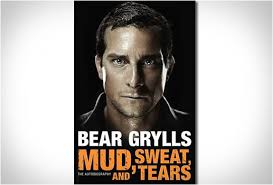
Review: Mud, Sweat and Tears

Rating: ★★★

Author: Bear Grylls is an adventurer and motivational speaker who is driven by his Christian faith. He is best known as a reality television personality (Man vs. Wild, Running Wild); as an adventurer, he is best known for climbing Mount Everest, crossing the Atlantic in a raft, and narrowly surviving a parachute failure while skydiving; but he has a number of ventures under way including numerous books, a growing brand, and survival skills training camps.

Overview:

Grylls came from an aristocratic family. Amazingly, both positive thinking and disaster run in his family: His great-grandfather died in a shipwreck, and, further back, he’s related to Samuel Smiles, who invented the genre of “self-help” with his 1859 book by that title. (F. W. Boreham was a huge fan of Smiles and his motivational biographies.)

Known for his faith and adventures, Bear Grylls is far from a modern Puritan. He is a Special Forces veteran with a lot of close calls under his belt, not all of which are even in this book. This biography is jammed with crazy and amusing stories including prep school hijinx, urban climbing, bullying, and skinny dipping.

In this book, highlights include a very free boyhood, passing selection for the British Special Forces—essentially an endless mountain marathon with full combat gear—and a treacherous Everest bid as he recovered from a skydiving accident which had broken several vertebrae. He also describes the career transition that enabled him to market himself as an “adventurer” and transform that title into a paying job.

Meat:

Grylls is not an effusive or florid writer, and that makes this book a quick read. The book’s main merit is probably just the fascination of the stories he tells. The way he describes British Special Forces, by the way, makes it sound more wearisome than climbing Everest (though certainly not more dangerous).

Though Grylls is not a particularly profound thinker, he makes up for this by expressing himself in historical quotes and simple inspirational aphorisms:

Do the impossible. Climb the impassable—eat the inedible. (p. 393)

Bones:

I disagree with Grylls on several finer points, but his lust for life is definitely inspiring. Overall, our differences almost entirely stem from the fact that he is English, and I am not. Europeans are almost never in your face about their faith, and so Grylls doesn’t talk about his faith nearly as much as I expected in this book.

I think the audience of this book was meant to be very broad and popular; Grylls is not just interested in being pegged as a fixture on the Christian bookstore shelves, and I suppose I can respect that.

Quotes:

Fear forces you to look tough on the outside but makes you weak on the inside. (p. 64)

My dad had always told me that if I could be the most enthusiastic person I knew then I would do well. (p. 89)

Faith in Christ has been the great empowering presence in my life, helping me walk strong when so often I feel so weak. (p. 98)

Dreams, though, are cheap, and the real task comes when you start putting in place the steps needed to make those dreams a reality. (p. 117)

Mental strength was something that had to accompany the physical. And the physical is always driven by the mental. (p. 160)

On public speaking:

Be sincere, be brief, be seated. (loc. 4692, attr. to John Mills)

On finding a sponsor for his Everest bid:

I got lucky. But then again, it took me many hundreds of rejections to manage to find that luck. (p. 269)

On mountains and mountain climbing:

Sir Edmund Hilary, Everest’s first conqueror, once said that the mountains gave him strength. (p. 339)

Statistically, the vast majority of accidents happen on the descent. It is because nothing matters any longer, the goal is attained . . . (p. 347)

There are man for whom the unattainable has a special attraction. (qtd. from Everest: A Mountaineering History)


Note: This review was written November 10, 2015, but published online in 2020.

Free Books by Louis Albert Banks (50+)

Lately, an author that has been getting a lot of attention is Louis Albert Banks. Banks was a Methodist pastor and evangelist who authored around 60 books, making him, at least during his lifetime, the most prolific author in Oregon. (The encyclopedia says he wrote 55 books, but I have around 70 listed here, in addition to one that he translated, and two that he edited.)

In addition to his many books of sermons, Banks also has quite a few books dealing with biblical parables, metaphors, poetry, and anecdotes and illustrations to be used in sermons. He also wrote several books targeted towards young people, one biography (T. DeWitt Talmage), and a few books of biographical anecdotes. Curiously, he was also a vocal proponent of prohibition, wrote several books on the topic, and even ran for governor of Massachusetts under the “Prohibition” ticket.

The following is a quick alphabetical listing of his books (of all genres) that are available on the Internet Archive:

  1. Ammunition for Final Drive on Booze
  2. Anecdotes and Morals
  3. Capital Stories about Famous Americans (ed. by Louis Albert Banks)
  4. Christ and His Friends: A Series of Revival Sermons
  5. The Christ Brotherhood [Google Books]
  6. The Christ Dream
  7. The Christian Gentleman [Google Books]
  8. David and His Friends: A Series of Revival Sermons
  9. The Fisherman and His Friends: A Series of Revival Sermons
  10. Fresh Bait for Fishers of Men
  11. Great Archers and Their Weapons
  12. The Great Portraits of the Bible
  13. The Great Promises of the Bible
  14. The Great Sinners of the Bible
  15. The Great Themes of the Bible
  16. The Healing of Souls: A Series of Revival Sermons
  17. Heavenly Trade-Winds
  18. Heroic Personalities
  19. The Honeycombs of Life
  20. Immortal Hymns and Their Story
  21. Immortal Songs of Camp and Field
  22. John and His Friends: A Series of Revival Sermons
  23. The King’s Stewards
  24. The Lincoln Legion
    [Live Boys in Oregon = alternate title of An Oregon Boyhood]
  25. A Manly Boy [microfilm]
  26. The Motherhood of God: A Series of Discourses
  27. My Young Man
  28. The New Ten Commandments and Other Sermons
  29. On the Trail of Moses
  30. An Oregon Boyhood
  31. Paul and His Friends: A Series of Revival Sermons
  32. The People’s Christ
  33. Poetry and Morals
  34. The Problems of Youth
  35. The Religious Life of Famous Americans
  36. The Saloon-Keeper’s Ledger
  37. Sermon Stories for Boys and Girls
  38. Sermons Which Have Won Souls
  39. Seven Times around Jericho [microfilm]
  40. Soul Winning Stories
  41. Spurgeon’s Illustrative Anecdotes (ed. by Louis Albert Banks)
  42. The Story of the Hall of Fame
  43. The Sunday-Night Evangel
  44. T. DeWitt Talmage: His Life and Work
  45. Twentieth-Century Knighthood
  46. The Unexpected Christ: A Series of Evangelistic Sermons
  47. Unused Rainbows: Prayer Meeting Talks
  48. White Slaves
  49. The Winds of God
  50. Windows for Sermons
  51. Wonderful Bible Conversions
  52. The World’s Childhood
  53. A Year’s Prayer-Meeting Talks
  54. Youth of Famous Americans

In addition to the above, the following ten books are also listed elsewhere, but not freely available. (Most of these are viewable, but not downloadable, on HathiTrust Digital Library, and I found them listed on the Online Books Page for Louis Albert Banks.) Those marked by [?] are listed somewhere but have very few Google hits.

  1. Bible Soul-Winners [restricted, Google Books]
  2. Censor Echoes, Or Words that Burned [unavailable]
  3. Chats with Young Christians [unavailable]
  4. The Child’s World [scarce; unavailable]
  5. Christ’s Soul-Searching Parables [restricted, Google Books]
  6. Common Folks’ Religion [view only]
  7. Dramatic Stories of Jesus [unavailable]
  8. The Great Saints of the Bible [restricted, Google Books; also viewable on HathiTrust]
  9. Hero Tales from Sacred Story [unavailable]
  10. Hidden Wells of Comfort [view only]
  11. Illustrative Prayer-Meeting Talks [unavailable]
  12. The Lord’s Arrows [?]
  13. Lucy Stone: A Heroine of the Struggle for Human Rights [a booklet; ch. in Honeycombs of Life]
  14. The Revival Quiver [unavailable]
    [Saints and Sinners of the Bible = compilation/reprint]
  15. Sermons for Reviving, on the Table Talk of the Master [rare; unavailable]
  16. The Sinner and His Friends: A Volume of Evangelistic Sermons [Google Books, US-only; also viewable on HathiTrust]
  17. A Summer in Peter’s Garden [?]
  18. Thirty-One Revival Sermons [unavailable: “on themes drawn from the lives of Elijah and Elisha”]

Banks was very prolific; so, if you hear about another book of his that is not listed here, let me know in a comment, and I will update the list.
Review: The Queen of Seven Swords

Rating: ★

Author: G. K. Chesterton was a devoutly Catholic journalist, poet and novelist of the early 20th century. His most apt nickname is “The Prince of Paradox.”

Overview:

Despite its humble length (50 pages), this book was an admittedly difficult read for theological reasons, focusing as it does on adoration to Mary. (Other reviews mentioned this, but most lack enough detail to deter a serious, though Protestant, Chestertonian, such as myself.) The poetry itself was beautiful; much of it has the same lilting meter found in Myers’ famous Saint Paul. In its prosody, it follows the same sort of patterns seen in Chesterton’s general collections like The Wild Knight and Other Poems. But unlike the others, it lacks variety of subject matter.

Most readers will either love or hate this book, depending solely on whether they allow for prayer to Mary. For my part, I have always found prayer to the departed saints (including Mary) to have no biblical backing whatsoever; the practice stems from culture and custom, not from wholesome spirituality. The New Testament authors ring with one accord the glorious news that we have become “a kingdom of priests,” fully entitled to “boldly approach the throne” on our own behalf but not on our merits, needing no other surety than the blood of the Lamb.

The eponymous cycle of poems turns on a metaphor of Mary having seven swords in her (see Luke 2:35), which are the swords of seven saints (which he admits are purely fanciful, not reflecting a historical reality).

Favorites were “St. George of England,” and “A Little Litany.” Other than these, there is almost nothing in the book that doesn’t relate directly to the honor of Mary. There are romantic, medieval-sounding themes and Robin Hood and King Arthur receive prominent mention, but mainly as adorers of Mary, whom the author calls by various honorifics, such as “Our Lady,” “Our Mother,” “the Queen of Angels” and “the Mother of the Maker”—an unbiblical falsehood that has been the constant stumbling block of millions of Muslims, who are told in the Quran that we believe God and Mary literally begot Jesus together.

Of the hymns to Mary, “The Black Virgin” was probably the most interesting for theological reasons, dealing with cultural expression of religion.

Overall, I don’t recommend this book at all to Protestant readers. Let not its rarity make it seem a jewel to you; not all rarities are precious.

Review: The Innocence of Father Brown

Rating: ★★★

Author: G. K. Chesterton was a devoutly Catholic journalist, poet and novelist of the early 20th century. His most apt nickname is “The Prince of Paradox.”

Series: The “Father Brown” series of short stories was collected into five books:

  1. The Innocence of Father Brown (1911)
  2. The Wisdom of Father Brown (1914)
  3. The Incredulity of Father Brown (1926)
  4. The Secret of Father Brown (1927)
  5. The Scandal of Father Brown (1935)

One additional story, “The Mask of Midas” (1936), was not included. (The author died in 1936.)

Overview:

Father Brown epitomizes one key of Chestertonian thought: the triumph of common sense over intellect. While Sherlock Holmes—especially in modern interpretations—glorifies uncommon intellect, Father Brown glorifies the common man. Here is how he is introduced in “The Blue Cross”:

The little priest had a face as round and dull as a Norfolk dumpling; he had eyes as empty as the North Sea; he had several brown paper parcels, which he was quite incapable of collecting.

He is no Sherlock Holmes. In many places in the stories, he summarizes his method of solving crimes, and it is inductive rather than deductive. He solves crimes mainly by his intuitive, priestly knowledge of people, not a knowledge of facts.

“‘How do you know all this?’ he cried. ‘Are you a devil?’
“‘I am a man,’ answered Father Brown gravely; ‘and therefore have all devils in my heart.'” (p. 140)

The above quote summarizes the message of Father Brown. The “Father Brown” corpus carries an intrinsically personal vision of life on earth, and in that way it acts as a weighty supplement to Chesterton’s other writings.

Meat:

My favorite stories from this collection were “The Blue Cross,” “The Invisible Man,” “The Honour of Israel Gow,” “The Hammer of God,” and “The Three Tools of Death.”

In 1910, “The Blue Cross” became the first “Father Brown” story to be published, and in many ways it exemplifies his humble character, and has less violence than many of the others. “The Hammer of God” is also classic Chesterton as well as a thrilling mystery.

Chesterton masterfully utilizes the Scottish castle setting in “The Honour of Israel Gow,” to set the tone of a horror story. In general, I really enjoyed his use of setting. The modern BBC series ties Father Brown down to the Cotswolds (SW England), but this book alone has numerous and varied settings.

Bones:

Although I know it is par for the field, I did not like that nearly all of the stories involved a murder. I felt that Chesterton displayed his unique cleverness whenever there was no violence in the story at all, as in “The Blue Cross,” or Father Brown’s whimsical prelude, The Club of Queer Trades. I wanted more variety.

Quotes:

“Men may keep a sort of level of good, but no man has ever been able to keep on one level of evil. That road goes down and down.” (p. 65)

“I never said it was always wrong to enter fairyland. I only said it was always dangerous.” (p. 111)

“‘How do you know all this?’ he cried. ‘Are you a devil?’
“‘I am a man,’ answered Father Brown gravely; ‘and therefore have all devils in my heart.'” (p. 140)

“There is this about such evil, that it opens door after door in hell, and always into smaller and smaller chambers. This is the real case against crime, that a man does not become wilder and wilder, but only meaner and meaner.” (p. 167)

“Even the most murderous blunders don’t poison life like sins.” (p. 183)

Read (free): Internet Archive (pdf), LibriVox (audio), Project Gutenberg (epub/mobi/html)

FREE PDF: Faber’s Hymns (edited by Pioneer Library)

In the current crisis, many are quarantined either by choice or force, and others are practicing “social distancing” or attending church only remotely. I thought it would be helpful to offer a free ebook, so I’ve attached our 2017 edition of Faber’s Hymns, edited from an 1894 volume, partly to better accommodate Protestant worship.

Many hymns in this book deal with God’s character, God’s holiness, spiritual dryness, and eternity. I thought they might be a comfort to our readers.

Faber’s Hymns (edited by Pioneer Library) (0.4 MB)

Please feel free to share, copy, or re-use the hymns, with or without crediting us. They are in the public domain.

Review: The Napoleon of Notting Hill

Rating: ★★★

Author: G. K. Chesterton was a devoutly Catholic journalist, poet and novelist of the early 20th century. His most apt nickname is “The Prince of Paradox.”

Overview:

Like its more famous cousin The Man Who Was Thursday, The Napoleon of Notting Hill is a tale of paradoxes and dichotomies. It was published in 1904 (his first novel) and set in semi-utopian future, and the tale arcs around two central characters.

The first central character is Auberon Quin, described in the following way:

When he entered a room of strangers, they mistook him for a small boy, and wanted to take him on their knees, until he spoke, when they perceived that a boy would have been more intelligent.

Auberon is selected by a kind of hyper-democratic lottery as the King of England while he is ludicrously babbling about Nicaragua. This plot device—the selecting of monarchs at random—was not a mere gimmick for Chesterton, but was his actual explanation of dynastic monarchy, as he had stated in his chapter of Robert Browning’s philosophy:

The great compliment which monarchy paid to mankind [is] the compliment of selecting from it almost at random. (Robert Browning, p. 94)

The second central character (to whom the title alludes) is Adam Wayne, who lives his whole life in Notting Hill, and grows an obsessive patriotic loyalty for the London borough that he calls his home.

He still retained his feeling about the town of Notting Hill . . . He was a genuine natural mystic, one of those who live on the border of fairyland. But he was perhaps the first to realise how often the boundary of fairyland runs through a crowded city. Twenty feet from him (for he was very short-sighted) the red and white and yellow suns of the gas-lights [i.e. street lamps] thronged and melted into each other like an orchard of fiery trees, the beginning of the wood of elf-land.

The playful competition and opposition of these two characters comprises the whole plot of this novel.

Meat:

Without spoiling the plot, there are some themes worth mentioning. One is the nearness of fairyland. “Fairyland” or “Elfland” in Chesterton (and the Inklings who read him) refer to a hypothetical land visited by imagination. The theme is the precise precursor to Lewis’ Narnia and functions like another dimension, visited in vision by the most childlike characters. In Napoleon of Notting Hill, the narrator references “fairyland” quite a few times through the course of the novel (for example, see the above quotation). This is important because these are some of his earliest published references to an idea that became integral to Chesterton’s view of life. “Fairyland” figures most prominently in Chesterton’s works Magic: A Fantastic Comedy and Orthodoxy, but I have yet to find a book in which it is not mentioned.

Another theme is the vindication of humor. (See also “A Defence of Nonsense”!) Auberon Quin seems to take nothing seriously, and Adam Wayne seems to take everything seriously. As the novel proceeds, positive and negative judgments are given on both characters, and the reader is left wondering who is the hero.

“Madmen are always serious; they go mad from lack of humour. You are looking serious yourself, James.” (Auberon Quin)

Chesterton also has an interesting take on patriotism, which I give here at length, since it does not in any way spoil the novel, and is a characteristic sample:

Upwards from his abstracted childhood, Adam Wayne had grown strongly and silently in a certain quality or capacity which is in modern cities almost entirely artificial, but which can be natural, and was primarily almost brutally natural in him, the quality or capacity of patriotism. . . . He knew that in proper names themselves is half the poetry of all national poems. Above all, he knew . . . that the patriot never under any circumstances boasts of the largeness of his country, but always, and of necessity, boasts of the smallness of it.

All this he knew, not because he was a philosopher or a genius, but because he was a child. Any one who cares to walk up a side slum like Pump Street, can see a little Adam claiming to be king of a paving-stone. And he will always be proudest if the stone is almost too narrow for him to keep his feet inside it.

It is almost impossible to convey to any ordinary imagination the degree to which he had transmitted the leaden London landscape to a romantic gold. . . . To this man, at any rate, the inconceivable had happened. The artificial city had become to him nature, and he felt the curbstones and gas-lamps as things as ancient as the sky. (p. 134-136)

Political themes are also important to Napoleon of Notting Hill, but there is nothing there I haven’t written about in my review of What I Saw in America. His stance on “internationalism” is obvious in Napoleon from the semi-utopian setting of the book; ultimately, he sees efforts to unite the world in peace to be idealistic and misguided. He also mocks pure democracy in the setup to the novel (again, he wrote about this in his writings on America).

Bones:

This novel is not as fast-moving as The Man Who Was Thursday. Admittedly, during the first few chapters, I was quite lost as to where the novel was going, or who the “Napoleon of Notting Hill” could be. The first chapter is essentially an essay. But the novel does start to get interesting after “The Charter of the Cities,” and it does have its fair share of action in the second half. Take heart; patience is rewarded in this one.

When I saw how the plot turned in this novel, I was inclined to think that it could have been a short story. The short story usually turns on one key dilemma or plot device (in this case, a monarch selected at random), and so far that has been true of Chesterton’s novels. At least they are interesting, and Chesterton’s narration has many intriguing asides.

Review: Notes on the Psalms

Rating: ★★★

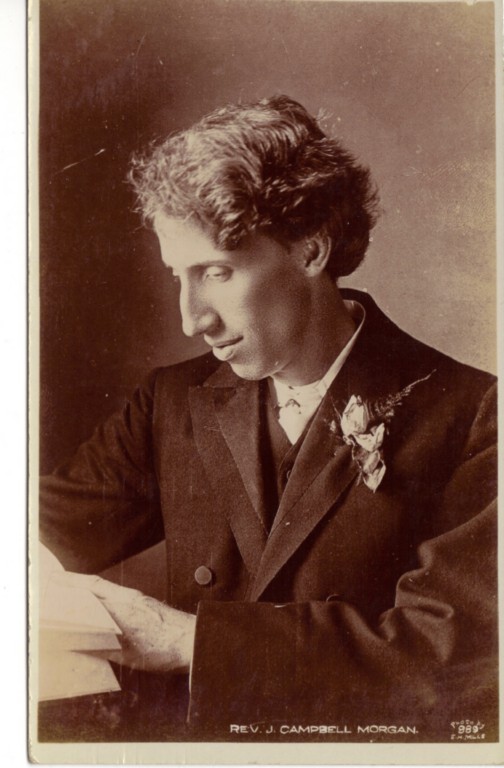
Author: G. Campbell Morgan was a British Congregational preacher, active from 1883 to 1943, mostly at Westminster Chapel in London. Nicknamed “the Prince of Expositors,” Morgan’s accessible expository preaching gained him a wide audience on both sides of the Atlantic. During his long life of ministry, he published more than 60 books, many of which were sermons.

Overview:

The first edition of Morgan’s Notes on the Psalms (1947; posthumous) contains brief notes on all 150 psalms, as well as the full English text of the Psalms (in a metrical layout, two columns). I believe the Bible version used is the American Standard Version. For each psalm, Morgan gives a kind of outline or summary, with a few devotional comments. Most psalms have only one or two paragraphs, meant to give you the core of the psalm. Where needed, he sometimes adds brief notes related to translation problems.

Meat:

I really liked the way this book was laid out. Including the full text of the Psalms, while unusual, made the book extremely useful as devotional reading. I was amazed how much poignant historical and textual information he was able to fit in such a short book. I also felt that his summaries of each psalm were weighty. I did not feel—as I often feel in reading a modern Bible with headings—that the heading given to each psalm was overly modern and fell short of the author’s intended theme.

Bones:

Probably the most distracting thing about this book (for me) is the charts that divided the psalms into sections or “books”. Morgan himself admits in his preface that attempts to classify the psalms are “arbitrary,” but I felt that the book divisions in particular did not provide any helpful index to interpreting the individual psalms within them. There are differences in authorship and perhaps linguistic differences, but thematic differences were just too broad to detect over as many as 30 or 40 psalms. It distracts the reader from the fact that each of them has a unique origin, and even the traditional grouping and ordering was probably, to some extent, arbitrary.

For this reason, in my own summary of the Psalms, I recommend a variety of methods of classifying the Psalms, the best of which was the one I found on Dennis Bratcher’s website.

Read: At the time of writing, this book is freely available in PDF format here.

God never sends a man into the world without first preparing the world for his coming. He even gives our parents a few months’ notice so that they may have everything ready.

The quote comes from “Dinna Forget Spurgeon!”, one of the chapters in Ships of Pearl by F. W. Boreham. Find out how you can help us bring this book back to print by visiting our Kickstarter page.

Ships of Pearl: Funding Update & SAMPLE PAGES

If you are following our journey to keep F. W. Boreham in print, you know we have designed a brand new hardback edition of Ships of Pearl. We are currently 19% funded on this project. We believe Boreham’s books are a gold mine of insight and illustrations for Bible teachers and small group leaders, and Ships of Pearl is one of the best.

Let me walk you through what is different about this new edition:

  • It will be the first print run of Ships of Pearl since 1935—that’s 85 years! We hope that 2020 marks a new era of bringing F. W. Boreham’s classic devotional reading to a new generation.
  • Ships of Pearl: The Signature Edition will be bound in a cranberry linen cloth hardcover, with Boreham’s unique signature embossed into the cloth in gold lettering.
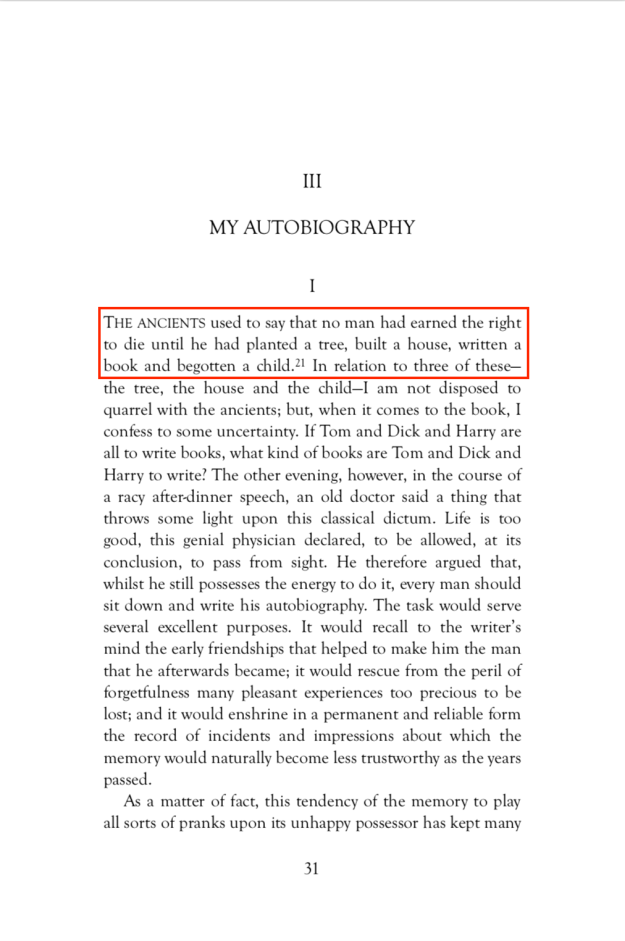
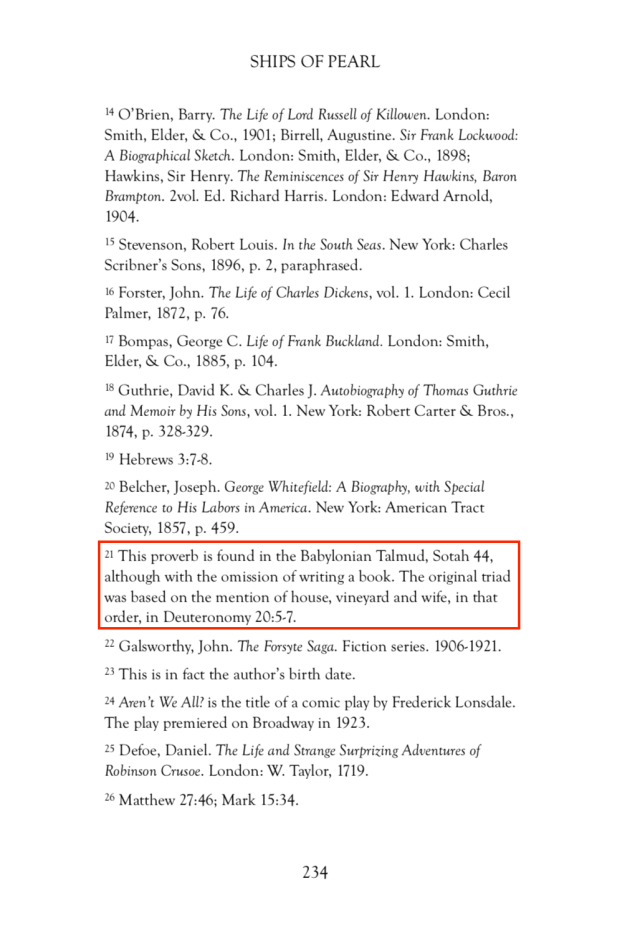
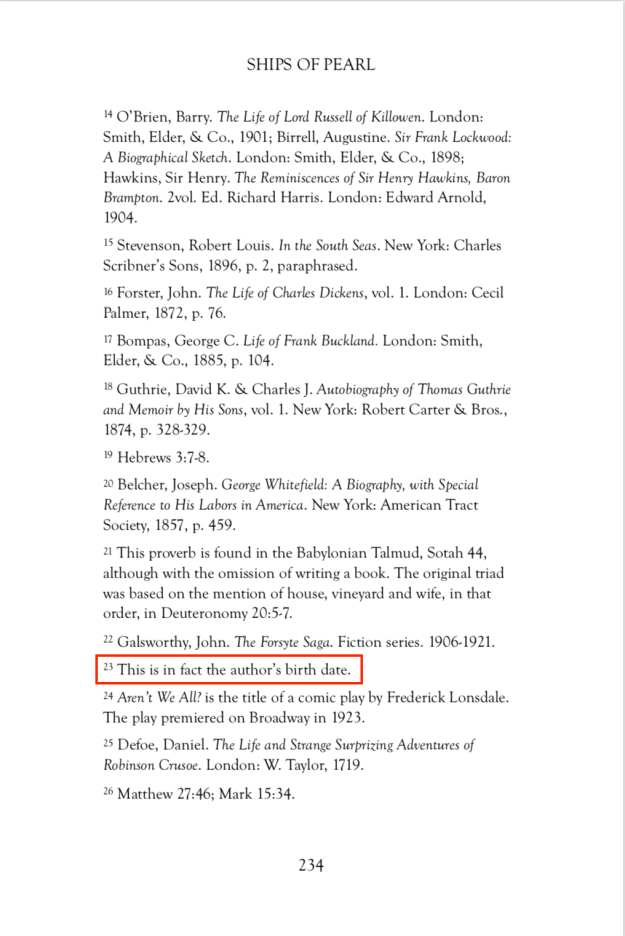
  • The new edition has over 100 footnotes explaining Boreham’s sources. Aside from merely noting what Boreham was quoting from, these footnotes bring a new depth of insight about his stories and the author himself. Below are some sample pages, showing the kind of footnotes we have added to the essay called “My Autobiography”:

3131b

35.png35b.png

And now, let’s take a look at what is the same between the 2020 edition and the 1935 edition:

  • We have kept all the original wording and punctuation, including British spelling and dialogue in various English dialects. Occasional footnotes help make Boreham’s original writings accessible to modern and American audiences.
  • For years we have imitated the font and layout of Boreham’s classic books. In fact, we have matched the fonts so closely that in some of our books the page numbers in the table of contents are nearly identical between editions.
  • The paper used will be a thick 60-weight in a natural or “cream” color rather than stark white. This is easier on the eyes, and will give the pages a warm and vintage feel.

If this edition succeeds, it will kickstart us towards getting more hardback Boreham in circulation. Please consider supporting this important project as we seek to provide quality biblical and theological resources to new generations or readers and seekers.