Category Archives: Book Reviews

Review: Eugenics and Other Evils

Rating: ★★★

Author: G. K. Chesterton was a devoutly Catholic journalist, poet and novelist of the early 20th century. His most apt nickname is “The Prince of Paradox.”

Overview:

Eugenics and Other Evils (1922) delineates the scientific and ethical fallacies of “eugenics,” the science of human breeding to improve the race, which was called by its proponents “the self-direction of human evolution.” The first English proponent of these ideas was Francis Galton, half-cousin of Charles Darwin, who coined the term ‘eugenics’ in 1883. Chesterton is today known as one of the earliest and most vocal opponents of this pseudo-science.

Here it’s necessary to give some background on what eugenics is, before I can break down Chesterton’s objections to it, and what it means for us today.

The History of Eugenics

Many reviewers have started out by saying that eugenics is now defunct, but this is not exactly true. During a period extending until 1952, as many as 20,000 mentally ill patients were sterilized in the United States. This happened after the post-WWII Nuremberg Trials had declared such acts “crimes against humanity.” In the Arabian Peninsula, where cousin marriage is considered ideal among many families, screenings are frequently given that determine the likelihood of birth defects; so, in that sense, a soft form of genetic planning is being practiced in some of the world’s richest societies, and it is not without controversy.

Eugenics was also a key motivator in the promotion of the birth control movement. Margaret Sanger, founder of Planned Parenthood, “increasingly rationalized birth control as a means of reducing genetically transmitted mental or physical defects, and at times supported sterilization for the mentally incompetent.” The biographer adds, “While she did not advocate efforts to limit population growth solely on the basis of class, ethnicity or race, and refused to encourage positive race-based eugenics, Sanger’s reputation was permanently tainted by her association with the reactionary wing of the eugenics movement.” [1] This last sentence is very controversial; others have written elsewhere that Sanger did promote race-based eugenics, but here I am getting too far afield.

Chesterton’s Objections to Eugenics

Chesterton’s arguments against eugenics are somewhat scattered in his book, but they may be grouped into ethical, economic, practical, and political objections.

The ethical objections are the most obvious. In Chesterton’s time, eugenics was being pegged as the end of “feeble-mindedness”; the thought was, mentally ill parents have mentally ill children, so all we need to do is prevent the mentally ill from copulating. In contemporary terminology, this leaves little or no room for those who are “disabled” or “differently abled.” It was unashamed ableism, and it was being promoted by great minds like H. G. Wells, George Bernard Shaw, Winston Churchill, Theodore Roosevelt, and Bertrand Russell. Eugenists believed that the disabled were merely a burden on the rest of society; in capitalist thought, they provided no value inasmuch as they could not contribute to industry.

The economic objections are just as damaging. Here it may be pointed out that abortion, in common with eugenics, is touted as a way of aiding the poor by decreasing their family responsibilities. In fact, Chesterton points out, In America, black women have almost triple the abortion rate that white women have (27.1 / 1000 among blacks; 10 / 1000 among whites). Classism can easily masquerade as either eugenics or abortion, and it can be a way of keeping minorities minorities. Both are destructive for diversity.

As a practical objection, Chesterton points out that eugenics was on shaky ground scientifically, and almost carried the absurdity of the famous statement, “we have to pass the bill to find out what’s in it.” In Chesterton’s day, there simply was not sufficient knowledge of the genome to even attempt such widespread changes as some were promoting.

There cannot be such a thing as the health adviser of the community, because there cannot be such a thing as one who specialises in the universe. (p. 26)

Again, a policy of eugenics would require a vast quantity of knowledge that, even in 2020, evades us. Even with modern genome mapping, there is still much that we do not know and cannot predict:

I simply cannot conceive any responsible person proposing to legislate on our broken knowledge and bottomless ignorance of heredity. (p. 31)

Eugenics also operates under the assumption that we know what the results will be.

Marry two handsome people whose noses tend to the aquiline, and their baby (for all you know) may be a goblin with a nose like an enormous parrot’s. (p. 32)

Chesterton’s political objections mainly refer to the limitation of state power. Chesterton considered himself a democrat in the most literal, non-partisan sense of the word; that is, he believed in “the common people.” As such, he could not support a politicized pseudo-scientific movement, like eugenics, that would lead to a rapid expansion of state power. He did advocate the expansion of power in special circumstances—such as the 2019-2020 coronavirus pandemic—provided that these were regarded as special circumstances. For more on this, read what follows.

Meat:

On its most basic level, this book is a statement of the value of human life. This is a topic where American Catholics have been, I believe, more consistent in contemporary thought than American Protestants. Wherever else our philosophy turns, it must begin with the axiom of the great value, not of people or personhood, but of a person.

In the matter of fundamental human rights, nothing can be above Man, except God. (p. 27)

There were two other sections of the book that I thought any modern reader would find very interesting.

The first was Chesterton’s thoughts on the limitation of state power. Libertarians will be licking their lips when the read chapter titles like “The Eclipse of Liberty” and “The Transformation of Socialism”; however, what Chesterton espouses here is not libertarianism, or socialism, or capitalism. He does point out eugenic policies could lead to the bloating of state power, and would also be oppressive to the poor. What he says is happening instead, is that we are losing our liberties to the state, and we are oppressing the poor, and therefore are getting the worst of both socialism and capitalism, without getting the benefits of either.

The compromise eventually made was one of the most interesting and even curious cases in history. It was decided to do everything that had ever been denounced in Socialism, and nothing that had ever been desired in it. Since it was supposed to gain equality at the sacrifice of liberty, we proceeded to prove that it was possible to sacrifice liberty without gaining equality. (p. 71)

The second section of the book that intrigued me was in the very last chapter. There, the author tells the strange and true anecdote of “Eugenette,” a poster-child of eugenics in its heyday:

Round about the year 1913 Eugenics was turned from a fad to a fashion. Then, if I may so summarise the situation, the joke began in earnest. The organising mind which we have seen considering the problem of slum population, the popular material and the possibility of protests, felt that the time had come to open the campaign. Eugenics began to appear in big headlines in the daily Press, and big pictures in the illustrated papers. A foreign gentleman named Bolce, living at Hampstead, was advertised on a huge scale as having every intention of being the father of the Superman. It turned out to be a Superwoman, and was called Eugenette. The parents were described as devoting themselves to the production of perfect pre-natal conditions. They “eliminated everything from their lives which did not tend towards complete happiness.” Many might indeed be ready to do this; but in the voluminous contemporary journalism on the subject I can find no detailed notes about how it is done. Communications were opened with Mr. H.G. Wells, with Dr. Saleeby, and apparently with Dr. Karl Pearson. Every quality desired in the ideal baby was carefully cultivated in the parents. (p. 78)

Bones:

This was not by any means a favorite among Chesterton’s many wonderful writings. It was mainly worth reading simply because Chesterton wrote it. I recommend beginning with his other books of non-fiction.

Chesterton associates eugenics with several German authors, and it is today associated with the evils of Nazi Germany. Ironically, modern sources associate the twentieth-century popularization of eugenics with the United Kingdom. (On this point, you can compare my reviews of The Crimes of England and The Appetite of Tyranny.)

Some of Chesterton’s objections to eugenics have weaknesses that would not have been apparent in 1922. For instance, although our knowledge is very limited, we do have a much more certain knowledge of the causes of certain birth defects than we did in 1922, and we are capable of avoiding some of them.

Quotes:

On expansion of state power in exceptional circumstances, such as war or plague:

“Now it is perfectly plain that government ought to have, and must have, the same sort of right to use exceptional methods occasionally that the private householder has to have a picnic or to sit up all night on New Year’s Eve. The State, like the householder, is sane if it can treat such exceptions as exceptions. Such desperate remedies may not even be right; but such remedies are endurable as long as they are admittedly desperate. Such cases, of course, are the communism of food in a besieged city; the official disavowal of an arrested spy; the subjection of a patch of civil life to martial law; the cutting of communication in a plague; or that deepest degradation of the commonwealth, the use of national soldiers not against foreign soldiers, but against their own brethren in revolt. Of these exceptions some are right and some wrong; but all are right in so far as they are taken as exceptions. The modern world is insane, not so much because it admits the abnormal as because it cannot recover the normal.” (p. 12)

Read: This book is available for free in multiple formats on Project Gutenberg, LibriVox, and the Kindle Store.
Review: Mud, Sweat and Tears

Rating: ★★★

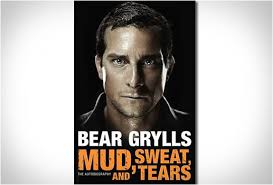
Author: Bear Grylls is an adventurer and motivational speaker who is driven by his Christian faith. He is best known as a reality television personality (Man vs. Wild, Running Wild); as an adventurer, he is best known for climbing Mount Everest, crossing the Atlantic in a raft, and narrowly surviving a parachute failure while skydiving; but he has a number of ventures under way including numerous books, a growing brand, and survival skills training camps.

Overview:

Grylls came from an aristocratic family. Amazingly, both positive thinking and disaster run in his family: His great-grandfather died in a shipwreck, and, further back, he’s related to Samuel Smiles, who invented the genre of “self-help” with his 1859 book by that title. (F. W. Boreham was a huge fan of Smiles and his motivational biographies.)

Known for his faith and adventures, Bear Grylls is far from a modern Puritan. He is a Special Forces veteran with a lot of close calls under his belt, not all of which are even in this book. This biography is jammed with crazy and amusing stories including prep school hijinx, urban climbing, bullying, and skinny dipping.

In this book, highlights include a very free boyhood, passing selection for the British Special Forces—essentially an endless mountain marathon with full combat gear—and a treacherous Everest bid as he recovered from a skydiving accident which had broken several vertebrae. He also describes the career transition that enabled him to market himself as an “adventurer” and transform that title into a paying job.

Meat:

Grylls is not an effusive or florid writer, and that makes this book a quick read. The book’s main merit is probably just the fascination of the stories he tells. The way he describes British Special Forces, by the way, makes it sound more wearisome than climbing Everest (though certainly not more dangerous).

Though Grylls is not a particularly profound thinker, he makes up for this by expressing himself in historical quotes and simple inspirational aphorisms:

Do the impossible. Climb the impassable—eat the inedible. (p. 393)

Bones:

I disagree with Grylls on several finer points, but his lust for life is definitely inspiring. Overall, our differences almost entirely stem from the fact that he is English, and I am not. Europeans are almost never in your face about their faith, and so Grylls doesn’t talk about his faith nearly as much as I expected in this book.

I think the audience of this book was meant to be very broad and popular; Grylls is not just interested in being pegged as a fixture on the Christian bookstore shelves, and I suppose I can respect that.

Quotes:

Fear forces you to look tough on the outside but makes you weak on the inside. (p. 64)

My dad had always told me that if I could be the most enthusiastic person I knew then I would do well. (p. 89)

Faith in Christ has been the great empowering presence in my life, helping me walk strong when so often I feel so weak. (p. 98)

Dreams, though, are cheap, and the real task comes when you start putting in place the steps needed to make those dreams a reality. (p. 117)

Mental strength was something that had to accompany the physical. And the physical is always driven by the mental. (p. 160)

On public speaking:

Be sincere, be brief, be seated. (loc. 4692, attr. to John Mills)

On finding a sponsor for his Everest bid:

I got lucky. But then again, it took me many hundreds of rejections to manage to find that luck. (p. 269)

On mountains and mountain climbing:

Sir Edmund Hilary, Everest’s first conqueror, once said that the mountains gave him strength. (p. 339)

Statistically, the vast majority of accidents happen on the descent. It is because nothing matters any longer, the goal is attained . . . (p. 347)

There are man for whom the unattainable has a special attraction. (qtd. from Everest: A Mountaineering History)


Note: This review was written November 10, 2015, but published online in 2020.

Review: The Queen of Seven Swords

Rating: ★

Author: G. K. Chesterton was a devoutly Catholic journalist, poet and novelist of the early 20th century. His most apt nickname is “The Prince of Paradox.”

Overview:

Despite its humble length (50 pages), this book was an admittedly difficult read for theological reasons, focusing as it does on adoration to Mary. (Other reviews mentioned this, but most lack enough detail to deter a serious, though Protestant, Chestertonian, such as myself.) The poetry itself was beautiful; much of it has the same lilting meter found in Myers’ famous Saint Paul. In its prosody, it follows the same sort of patterns seen in Chesterton’s general collections like The Wild Knight and Other Poems. But unlike the others, it lacks variety of subject matter.

Most readers will either love or hate this book, depending solely on whether they allow for prayer to Mary. For my part, I have always found prayer to the departed saints (including Mary) to have no biblical backing whatsoever; the practice stems from culture and custom, not from wholesome spirituality. The New Testament authors ring with one accord the glorious news that we have become “a kingdom of priests,” fully entitled to “boldly approach the throne” on our own behalf but not on our merits, needing no other surety than the blood of the Lamb.

The eponymous cycle of poems turns on a metaphor of Mary having seven swords in her (see Luke 2:35), which are the swords of seven saints (which he admits are purely fanciful, not reflecting a historical reality).

Favorites were “St. George of England,” and “A Little Litany.” Other than these, there is almost nothing in the book that doesn’t relate directly to the honor of Mary. There are romantic, medieval-sounding themes and Robin Hood and King Arthur receive prominent mention, but mainly as adorers of Mary, whom the author calls by various honorifics, such as “Our Lady,” “Our Mother,” “the Queen of Angels” and “the Mother of the Maker”—an unbiblical falsehood that has been the constant stumbling block of millions of Muslims, who are told in the Quran that we believe God and Mary literally begot Jesus together.

Of the hymns to Mary, “The Black Virgin” was probably the most interesting for theological reasons, dealing with cultural expression of religion.

Overall, I don’t recommend this book at all to Protestant readers. Let not its rarity make it seem a jewel to you; not all rarities are precious.

Review: The Innocence of Father Brown

Rating: ★★★

Author: G. K. Chesterton was a devoutly Catholic journalist, poet and novelist of the early 20th century. His most apt nickname is “The Prince of Paradox.”

Series: The “Father Brown” series of short stories was collected into five books:

  1. The Innocence of Father Brown (1911)
  2. The Wisdom of Father Brown (1914)
  3. The Incredulity of Father Brown (1926)
  4. The Secret of Father Brown (1927)
  5. The Scandal of Father Brown (1935)

One additional story, “The Mask of Midas” (1936), was not included. (The author died in 1936.)

Overview:

Father Brown epitomizes one key of Chestertonian thought: the triumph of common sense over intellect. While Sherlock Holmes—especially in modern interpretations—glorifies uncommon intellect, Father Brown glorifies the common man. Here is how he is introduced in “The Blue Cross”:

The little priest had a face as round and dull as a Norfolk dumpling; he had eyes as empty as the North Sea; he had several brown paper parcels, which he was quite incapable of collecting.

He is no Sherlock Holmes. In many places in the stories, he summarizes his method of solving crimes, and it is inductive rather than deductive. He solves crimes mainly by his intuitive, priestly knowledge of people, not a knowledge of facts.

“‘How do you know all this?’ he cried. ‘Are you a devil?’
“‘I am a man,’ answered Father Brown gravely; ‘and therefore have all devils in my heart.'” (p. 140)

The above quote summarizes the message of Father Brown. The “Father Brown” corpus carries an intrinsically personal vision of life on earth, and in that way it acts as a weighty supplement to Chesterton’s other writings.

Meat:

My favorite stories from this collection were “The Blue Cross,” “The Invisible Man,” “The Honour of Israel Gow,” “The Hammer of God,” and “The Three Tools of Death.”

In 1910, “The Blue Cross” became the first “Father Brown” story to be published, and in many ways it exemplifies his humble character, and has less violence than many of the others. “The Hammer of God” is also classic Chesterton as well as a thrilling mystery.

Chesterton masterfully utilizes the Scottish castle setting in “The Honour of Israel Gow,” to set the tone of a horror story. In general, I really enjoyed his use of setting. The modern BBC series ties Father Brown down to the Cotswolds (SW England), but this book alone has numerous and varied settings.

Bones:

Although I know it is par for the field, I did not like that nearly all of the stories involved a murder. I felt that Chesterton displayed his unique cleverness whenever there was no violence in the story at all, as in “The Blue Cross,” or Father Brown’s whimsical prelude, The Club of Queer Trades. I wanted more variety.

Quotes:

“Men may keep a sort of level of good, but no man has ever been able to keep on one level of evil. That road goes down and down.” (p. 65)

“I never said it was always wrong to enter fairyland. I only said it was always dangerous.” (p. 111)

“‘How do you know all this?’ he cried. ‘Are you a devil?’
“‘I am a man,’ answered Father Brown gravely; ‘and therefore have all devils in my heart.'” (p. 140)

“There is this about such evil, that it opens door after door in hell, and always into smaller and smaller chambers. This is the real case against crime, that a man does not become wilder and wilder, but only meaner and meaner.” (p. 167)

“Even the most murderous blunders don’t poison life like sins.” (p. 183)

Read (free): Internet Archive (pdf), LibriVox (audio), Project Gutenberg (epub/mobi/html)

Review: The Napoleon of Notting Hill

Rating: ★★★

Author: G. K. Chesterton was a devoutly Catholic journalist, poet and novelist of the early 20th century. His most apt nickname is “The Prince of Paradox.”

Overview:

Like its more famous cousin The Man Who Was Thursday, The Napoleon of Notting Hill is a tale of paradoxes and dichotomies. It was published in 1904 (his first novel) and set in semi-utopian future, and the tale arcs around two central characters.

The first central character is Auberon Quin, described in the following way:

When he entered a room of strangers, they mistook him for a small boy, and wanted to take him on their knees, until he spoke, when they perceived that a boy would have been more intelligent.

Auberon is selected by a kind of hyper-democratic lottery as the King of England while he is ludicrously babbling about Nicaragua. This plot device—the selecting of monarchs at random—was not a mere gimmick for Chesterton, but was his actual explanation of dynastic monarchy, as he had stated in his chapter of Robert Browning’s philosophy:

The great compliment which monarchy paid to mankind [is] the compliment of selecting from it almost at random. (Robert Browning, p. 94)

The second central character (to whom the title alludes) is Adam Wayne, who lives his whole life in Notting Hill, and grows an obsessive patriotic loyalty for the London borough that he calls his home.

He still retained his feeling about the town of Notting Hill . . . He was a genuine natural mystic, one of those who live on the border of fairyland. But he was perhaps the first to realise how often the boundary of fairyland runs through a crowded city. Twenty feet from him (for he was very short-sighted) the red and white and yellow suns of the gas-lights [i.e. street lamps] thronged and melted into each other like an orchard of fiery trees, the beginning of the wood of elf-land.

The playful competition and opposition of these two characters comprises the whole plot of this novel.

Meat:

Without spoiling the plot, there are some themes worth mentioning. One is the nearness of fairyland. “Fairyland” or “Elfland” in Chesterton (and the Inklings who read him) refer to a hypothetical land visited by imagination. The theme is the precise precursor to Lewis’ Narnia and functions like another dimension, visited in vision by the most childlike characters. In Napoleon of Notting Hill, the narrator references “fairyland” quite a few times through the course of the novel (for example, see the above quotation). This is important because these are some of his earliest published references to an idea that became integral to Chesterton’s view of life. “Fairyland” figures most prominently in Chesterton’s works Magic: A Fantastic Comedy and Orthodoxy, but I have yet to find a book in which it is not mentioned.

Another theme is the vindication of humor. (See also “A Defence of Nonsense”!) Auberon Quin seems to take nothing seriously, and Adam Wayne seems to take everything seriously. As the novel proceeds, positive and negative judgments are given on both characters, and the reader is left wondering who is the hero.

“Madmen are always serious; they go mad from lack of humour. You are looking serious yourself, James.” (Auberon Quin)

Chesterton also has an interesting take on patriotism, which I give here at length, since it does not in any way spoil the novel, and is a characteristic sample:

Upwards from his abstracted childhood, Adam Wayne had grown strongly and silently in a certain quality or capacity which is in modern cities almost entirely artificial, but which can be natural, and was primarily almost brutally natural in him, the quality or capacity of patriotism. . . . He knew that in proper names themselves is half the poetry of all national poems. Above all, he knew . . . that the patriot never under any circumstances boasts of the largeness of his country, but always, and of necessity, boasts of the smallness of it.

All this he knew, not because he was a philosopher or a genius, but because he was a child. Any one who cares to walk up a side slum like Pump Street, can see a little Adam claiming to be king of a paving-stone. And he will always be proudest if the stone is almost too narrow for him to keep his feet inside it.

It is almost impossible to convey to any ordinary imagination the degree to which he had transmitted the leaden London landscape to a romantic gold. . . . To this man, at any rate, the inconceivable had happened. The artificial city had become to him nature, and he felt the curbstones and gas-lamps as things as ancient as the sky. (p. 134-136)

Political themes are also important to Napoleon of Notting Hill, but there is nothing there I haven’t written about in my review of What I Saw in America. His stance on “internationalism” is obvious in Napoleon from the semi-utopian setting of the book; ultimately, he sees efforts to unite the world in peace to be idealistic and misguided. He also mocks pure democracy in the setup to the novel (again, he wrote about this in his writings on America).

Bones:

This novel is not as fast-moving as The Man Who Was Thursday. Admittedly, during the first few chapters, I was quite lost as to where the novel was going, or who the “Napoleon of Notting Hill” could be. The first chapter is essentially an essay. But the novel does start to get interesting after “The Charter of the Cities,” and it does have its fair share of action in the second half. Take heart; patience is rewarded in this one.

When I saw how the plot turned in this novel, I was inclined to think that it could have been a short story. The short story usually turns on one key dilemma or plot device (in this case, a monarch selected at random), and so far that has been true of Chesterton’s novels. At least they are interesting, and Chesterton’s narration has many intriguing asides.

Review: Notes on the Psalms

Rating: ★★★

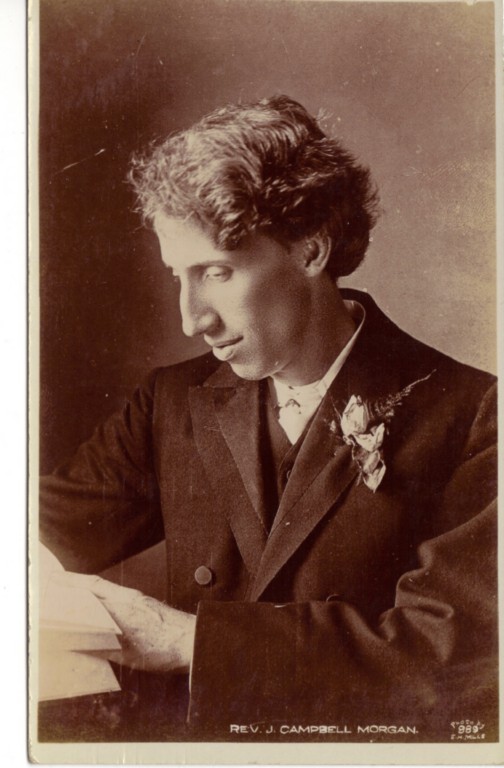
Author: G. Campbell Morgan was a British Congregational preacher, active from 1883 to 1943, mostly at Westminster Chapel in London. Nicknamed “the Prince of Expositors,” Morgan’s accessible expository preaching gained him a wide audience on both sides of the Atlantic. During his long life of ministry, he published more than 60 books, many of which were sermons.

Overview:

The first edition of Morgan’s Notes on the Psalms (1947; posthumous) contains brief notes on all 150 psalms, as well as the full English text of the Psalms (in a metrical layout, two columns). I believe the Bible version used is the American Standard Version. For each psalm, Morgan gives a kind of outline or summary, with a few devotional comments. Most psalms have only one or two paragraphs, meant to give you the core of the psalm. Where needed, he sometimes adds brief notes related to translation problems.

Meat:

I really liked the way this book was laid out. Including the full text of the Psalms, while unusual, made the book extremely useful as devotional reading. I was amazed how much poignant historical and textual information he was able to fit in such a short book. I also felt that his summaries of each psalm were weighty. I did not feel—as I often feel in reading a modern Bible with headings—that the heading given to each psalm was overly modern and fell short of the author’s intended theme.

Bones:

Probably the most distracting thing about this book (for me) is the charts that divided the psalms into sections or “books”. Morgan himself admits in his preface that attempts to classify the psalms are “arbitrary,” but I felt that the book divisions in particular did not provide any helpful index to interpreting the individual psalms within them. There are differences in authorship and perhaps linguistic differences, but thematic differences were just too broad to detect over as many as 30 or 40 psalms. It distracts the reader from the fact that each of them has a unique origin, and even the traditional grouping and ordering was probably, to some extent, arbitrary.

For this reason, in my own summary of the Psalms, I recommend a variety of methods of classifying the Psalms, the best of which was the one I found on Dennis Bratcher’s website.

Read: At the time of writing, this book is freely available in PDF format here.

Review: Oswald Chambers: Abandoned to God

Rating: ★★★★★

Author: David McCasland is an American educator whose books include Blind Courage, co-authored with Bill Irwin, the first blind person to thru-hike the 2,162 mile Appalachian Trail; Oswald Chambers: Abandoned to God; and Eric Liddell: Pure Gold. David writes for Our Daily Bread and also develops biographical television documentaries as a writer and co-producer for Day of Discovery.

Subject: Oswald Chambers was a teacher of the Bible in the United Kingdom, a chaplain to World War I soldiers in Egypt, and author of numerous devotional books, mostly compiled posthumously by his indefatigable wife, Biddy. Chambers’ intense and thought-provoking style has made his book My Utmost for His Highest (again, Biddy’s compilation) the best-selling devotional book of the 20th century.

Overview:

In the introduction, McCasland skillfully portrays the feeling of incompleteness that haunted “Biddy” Chambers after her husband died, seemingly needlessly, at the age of 43. She could not have known that through her work, her husband would be become the best-selling devotional author of the century.

Chambers’ life has much more of adventure to it than one might expect. Knowing something of Chambers’ inimitable writing, I half-suspected him to be a brooding Scotsman, dreary and intense. But McCasland ably portrays Chambers as tall, open-faced, and lithe, someone who loves children, games, and even pranks. In his younger days, he trained to be an artist. He also travelled widely in later years, doing preaching and teaching tours with ministry partners in the United States (mainly Cincinnati) and in Japan.

His early ministry (in his late twenties and early thirties) involves well-known Christians across a broad theological spectrum. He heard Alexander Whyte preach in Edinburgh; Reader Harris (Pentecostal League of Prayer) had a great influence on him in his early years; G. Campbell Morgan spoke at the first anniversary of his school; and he worked with Charles and Lettie Cowman in Japan. He took an interestingly moderate position when the “tongues” movement hit England, neither despising them nor imposing them as a necessity.

From 1911 to 1915, Chambers was the founding principal of the Bible Training College in London. They had 106 students during that time, and at the end of the period, 40 of them were serving as missionaries. Chambers was also extremely productive. During this short period, the sermons, lectures, and notes that he produced comprised a formidable body of work, including the bulk of the following books: Biblical Ethics, Biblical Psychology, Bringing Sons unto Glory, He Shall Glorify Me (lectures on the Holy Spirit), Not Knowing Whither (from the Old Testament Studies class), Our Portrait in Genesis (also from the OT class), The Psychology of Redemption, and So Send I You.

Chambers did not work from a writer’s cabin. He sowed in faithfulness for many years as a Bible teacher in Scotland and England. He taught Bible concepts faithfully but was very innovative in the way he presented them, using alliterative headings, terse explanations, and modern metaphors.

In 1915, the work of the school was suspended because of World War I, and Chambers went to Egypt to serve as a YMCA chaplain to soldiers. During this time he continued his labor of love, writing, preaching, and teaching evening classes to soldiers. The materials produced during this time became the books Baffled to Fight Better (on Job), The Shadow of an Agony (on redemption), and Shade of His Hand (on Ecclesiastes).

Chambers died of appendicitis in 1917, at the age of 43. What must have made it more difficult for his family was that he could have availed himself of better medical assistance, but he did not want to take a hospital bed from a wounded soldier.

Meat:

One of the key insights of this book is the unforgettable role that Biddy Chambers had in bringing her husband’s works to light. Oswald Chambers himself did, as far as we can tell, very little actual writing during his lifetime, and nearly all of his published works are arranged from various talks, lectures, and sermons, mostly from the years between 1911 and 1917. Christians owe a great debt to this woman who turned the bitter years of widowhood into a sweet ministry that has blessed the globe.

Bones:

This is one of the best biographies I have ever read, and should be ranked with God’s Smuggler and Bruchko though with not quite so much intrigue or scandal to attract sleepy readers. I find very little fault in it, though it is quite long. The story is a bit slow near the beginning when Chambers has not really embarked on his life’s work yet, but otherwise the book flows from episode to episode, and paints as personal a picture as could possibly be drawn more than 70 years after Chambers’ death.

McCasland is a masterful biographer, and my chief regret in reading this was to find out that he has published so few biographies: only this and two others.

Review: God’s Joyful Runner

Rating: ★★★★★

Author: Russell Wilcox Ramsey is an American athlete, writer, and a national security educator. He was decorated with the Bronze Star and is a National Record Holder in swimming (men, 55-59 age group). In addition to many books on national security, he has written several books related to Christian athletes and the Olympics, including God’s Joyful Runner: The Story of Eric Liddell (1987), the novel A Lady, A Peacemaker (1988), and the Christian living book From Mount Olympus to Calvary (2014).

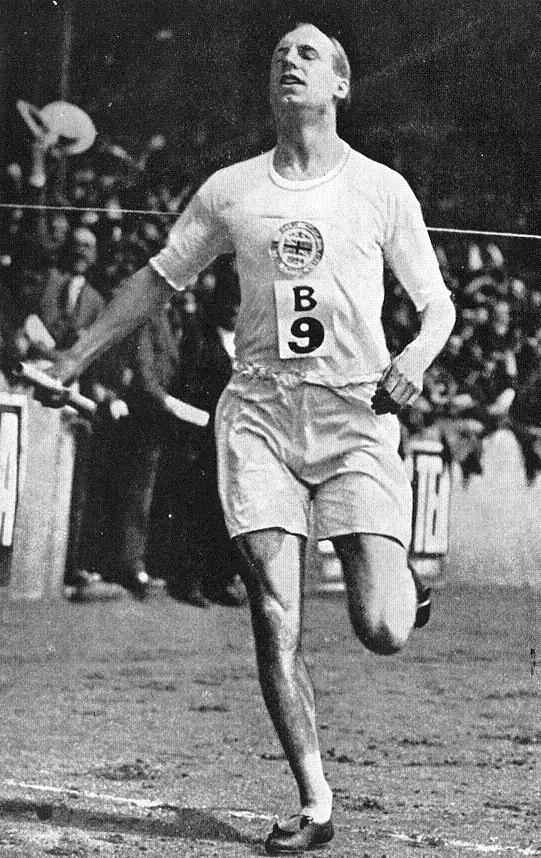
Subject: Eric Liddell (1902-1945) was an Olympic Gold Medalist (400m, 1924) and a missionary in Northern China, from 1925 until he was put into a Japanese internment camp, where he later died. He was famously (although somewhat sensationally) portrayed in the film Chariots of Fire, which won Best Picture for 1982.

Overview:

This story really starts where Chariots of Fire ends: with Liddell’s missionary call. Eric Liddell not only overcame obstacles at the 1924 Olympics; he served the people of China dauntlessly in the 1930s and on into World War II, giving up any shot at an Olympic return. He served for two decades in a rural and poor area of Hebei Province, in northern China, and stayed there even after the United Kingdom advised its citizens to leave in 1941. Somewhat over against the strong sacred-secular divide that may result from misinterpreting the 1982 film, Liddell did also compete in athletics during his missionary service, but he only did so in East Asia, and in ways that did not interfere with his other duties.

Eventually, after several close calls, Liddell was placed in an internment camp in 1943, on a school compound, and he spent the last two years of his life there. He died suddenly of a brain tumor in 1945, at the age of 43, but with much more to show for his life than any gold medal could offer: many lives changed for God. He took the same physical determination and sense of duty to the mission field, and bore it without complaint, cheerful yet self-effacing, devout but without pretense.

Meat:

I was impressed, as I read this book, that Liddell’s physical prowess served him well in the mission field. He was in rural China, without much access to modern transportation methods. Ramsey tells several anecdotes which show what an asset his physical endurance was in serving the poor on the mission field. I remember in particular that Liddell had to carry an injured man by wheelbarrow for many miles.

There were two athletic anecdotes in this book that literally made my jaw drop:

The first occurs in the film Chariots of Fire. During a race (I believe it was only 400m, but I am not able to verify), Liddell was knocked to the ground. Not only did he get back up and keep running, he won the race. (Movie clip here.)

The second is not mentioned in the film because it occurs after Liddell left for the mission field. Liddell did not give up running forever when he left Scotland—in fact, he competed in the Asian Games in Japan while he was living in China. However, he had a steamer to catch so that he could teach Sunday school the next day. Having placed at the games, he stood and saluted while they played through British national anthem, and then the French national anthem. Finally, he said his goodbyes and ran out of the stadium. Arriving at the pier, the ferry had just cast off. Not willing to be stuck in Japan two more days, Liddell reared back, got a running start, and jumped onto the ship as it was departing the pier.

Bones:

God’s Joyful Runner is a great introduction to Eric Liddell’s life and has much more than can be summarized in a brief article like this. But there are some aspects of Liddell’s life that it doesn’t tell us much about. It doesn’t say much, for instance, about Liddell’s writings. If readers want greater detail, though, I believe they could find that in David McCasland’s longer book, Eric Liddell: Pure Gold.

Review: Hosea: The Heart and Holiness of God

Rating: ★★★★★

Author: G. Campbell Morgan was a British Congregational preacher, active from 1883 to 1943, mostly at Westminster Chapel in London. Nicknamed “the Prince of Expositors,” Morgan’s accessible expository preaching gained him a wide audience on both sides of the Atlantic. During his long life of ministry, he published more than 60 books, many of which were sermons.

Overview:

Hosea: The Heart and Holiness of God (1934) is a masterful exposition of the prophecy of Hosea. Morgan’s style of exposition is not verse-by-verse, but rather utilizes thematic verses that summarize the key points of a chapter.

As implied in the title, his summary of Hosea is that it is about the union of God’s compassion and his holiness. G. Campbell Morgan is able to paint such a beautiful picture of God because he learns the brushstrokes from the Bible itself. In this book he will stretch your heart and stretch your theology as you see the suffering heart of God, longing to see his redeemed people walking in holiness, walking with him. But as always he exposits the Word with reverence and simplicity.

The first couple of sermons deal with Hosea’s suffering as prophet. There are many in the middle dealing with the defection of the people and its causes and course. The last few sermons were in my opinion the best as he talks about the love of God for his people, how he cannot give them up to a life without Him, but sent His missionary Son to pursue His straying lover, His prodigal son—His people.

Meat:

Morgan’s sermons are almost always simple, readable, applicable, and committed to the biblical text.

In much of his exposition, Morgan dwells long on the themes of God’s grief in Hosea, a prominent topic that is often shied away from because of its doctrinal difficulties. See for instance, the chapter entitled “The Difficulty of God”, on Hosea 6:4; while such language entangles systematic theologians in a thicket of complications, Morgan resolutely and simply discusses its meaning as it stands. He also does so without making God sound spineless or desperate. It illustrates Morgan’s commitment to the text, and vindicates him as an important preacher and writer for those interested in doing practical, biblical theology (as opposed to “systematics”).

Bones:

Morgan’s strength is how he deals with the text, but if he has a weakness, it would be in spiritualizing what were meant to be historical events in the text.

Review: The Crimes of England

Rating: ★½

Author: G. K. Chesterton was a devoutly Catholic journalist, poet and novelist of the early 20th century. His most apt nickname is “The Prince of Paradox.”

Genre: Non-fiction, wartime essays.

Overview:

After the publications of The Barbarism of Berlin and its expanded edition, The Appetite of Tyranny, Chesterton wrote this longer work (published in January 1916) in defense of the same ideas. Ostensibly, the book is a confessional of England’s “crimes” in recent history, meaning the late nineteenth century:

I have thought it advisable to provide you with a catalogue of the real crimes of England. (p. 9)

In reality, though, the title is an ironic jab against England’s then-recent policy of having Germany as an ally. He means to recount how badly Germany has treated England and Europe, and England’s “crime” of being all too forbearing with Germany.

Long and weary as may be the records of our [England’s] wickedness, in one direction we have done nothing but good. Whoever we may have wronged, we have never wronged Germany. (p. 53)

Chesterton held to what some reviewers have called “Teutonophobia,” and his account of England’s so-called crimes amounts mainly to not throwing Prussia under the bus when they had a chance.

For all readers except those most keenly fascinated by European history and politics, this book will make undoubtedly dull reading, set as it is in a balance of power that is no longer relevant, and dealing with the emotions of a war that not even centegenarians would recall directly.

Meat:

This book has one minor advantage over Appetite of Tyranny in that his anger over the outbreak of World War I had had another year to mellow, and he tries to substantiate his position historically, rather than through cultural generalizations.

Modern reviewers may be interested in Chesterton’s occasional reference to German race theory, called by him “Teutonism”—as well as the related idea which he calls “pan-Germanism,” that every great genius must have been Prussian. Chesterton calls this Germany ideology “a religion”:

Not a race, but rather a religion, the thing [Teutonism] exists; and in 1870 its sun was at noon. (p. 49)

Here he was referring back to the Franco-Prussian War, in which Germany achieved its unification and changed the balance of power in Europe. Chesterton didn’t know, of course, that pro-Aryan ideology would lead to another world war and millions more deaths just 23 years later.

As an aside, Chesterton takes the pro-Irish side on “the Irish question” in this book, a stance solidified soon after in his 1919 book Irish Impressions and also mentioned in What I Saw in America (1922).

Bones:

The Crimes of England mainly suffers from the same defects as The Appetite of Tyranny, so I refer my readers to that review.

I add to those criticisms as well that it was a deplorably dull read. Chesterton handles most topics well, but neat chronological accounts were not his forte, and so his account of historical relations between England and Germany is barely readable to someone who is not deeply acquainted with the time period.

Quotes:

These below are given to exemplify the author’s opinions in this book, not those of the reviewer:

I have passed the great part of my life in criticising and condemning the existing rulers and institutions of my country: I think it is infinitely the most patriotic thing that a man can do. . . . I think our whole history in Ireland has been a vulgar and ignorant hatred of the crucifix, expressed by a crucifixion. I think the South African War was a dirty work which we did under the whips of moneylenders. I think Mitchelstown was a disgrace; I think Denshawi was a devilry. (p. 53)

The German superiority has been in a certain thing and of a certain kind. It is not unity; it is not, in the moral sense, discipline. Nothing can be more united in a moral sense than a French, British, or Russian regiment. Nothing, for that matter, could be more united than a Highland clan at Killiecrankie or a rush of religious fanatics in the Soudan. What such engines, in such size and multiplicity, really meant was this: they meant a type of life naturally intolerable to happier and more healthy-minded men, conducted on a larger scale and consuming larger populations than had ever been known before. (p. 61)