Tag Archives: Russia

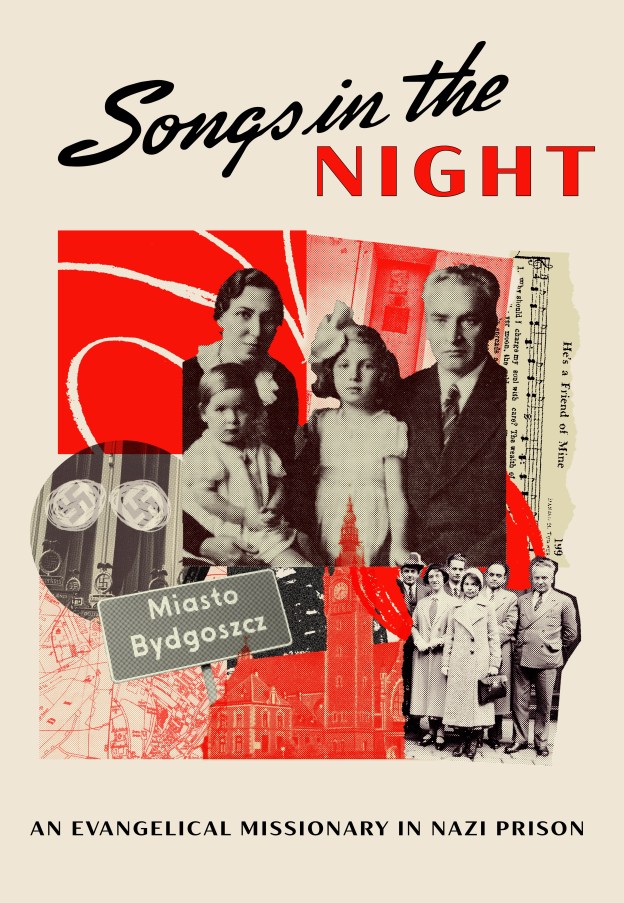
An Evangelical Missionary in Nazi Prison

He transformed his cell into a sanctuary.

The story of Herbert Schmidt in Nazi prison is returning to print after more than fifty years. The paperback price is $14.99.

“This book should be in every Pentecostal home.”

The Pentecostal Evangel

Herbert Schmidt was the first Assemblies of God missionary to eastern Europe and founded the region’s first Pentecostal Bible school. When he returned from furlough in 1939, little did he know that a Nazi prison cell awaited him. But in the midst of tragedy and war, God preserved his life and filled his heart with songs of praise in prison. This is a story of hairbreadth escapes and answers to prayer that you will not want to put down.

“In my heart a desperate cry rang out for deliver­ance, but I seemed to lack a strong grip in the prayer for my liberation. It was because the Holy Spirit did not back up that prayer at all, still I prayed and cried to God for my release. He however was not to deliver me but manifest his power and his great love which would transform my cell into a sanctuary. I was destined to learn to know my God from an entirely new angle.”

Herbert Schmidt’s prayer from the Gestapo prison (Danzig)

This is a testimony of God’s faithfulness in suffering. It was lost in the sands of time and has been recovered and reprinted thanks to missionaries currently serving in central Europe.

The original advertisement from the 1940s compares the story to “a modern detective story”!

“It is as thrillingly interesting as a modern detective story, with heartbreaking separations, hair-breadth escapes, and breathtaking times when discovery and death seem momentarily ready to happen. One cannot lay the book down until it has been read from cover to cover.”

Gospel Publishing House

Review: Memoir of Mrs. Stallybrass

Rating: ★★★

Who: A memoir of Sarah Stallybrass, wife of Edward Stallybrass and British Congregational missionary to Siberia. Sarah taught (Mongolian) Buryat children while Edward worked on the translation of the Bible into Mongolian with a few colleagues.

When: 1789-1832.

Overview: This memoir is composed mostly of Sarah’s letters and journal entries, many of which focus on the trials that she went through and her lessons in submission to the Lord’s will in hard times. We follow the Stallybrasses as they sail through the Baltic Sea to St. Petersburg, where they trained in Russian, then thousands of miles overland across Russia to the far reaches of Siberia. After receiving the blessing of the Russian Emperor Alexander I, the Stallybrasses settled at Novoselenginsk near Lake Baikal. They later resettled even further out in Siberia. Sarah struggled with many medical problems, but toiled in raising her children and educating young Buryat children. Four months after they had resettled on the Khodon River with five children, their house burned down in the Siberian winter.

Meat: This biography focuses on Stallybrass’ personal thoughts and walk with the Lord during her travels to Siberia, and her stay there. Under the shadow of health issues and the toil of raising a family in one of the remotest parts of the earth, she maintained her life of prayer and her walk of faith.

Bones: Sarah Stallybrass quotes a wealth of hymns and draws on the richness of Christian tradition; but her view of Providence is one-sided, and makes no mention of spiritual warfare. For example, if we acknowledge that Jesus was sovereign over the weather, and commanded a storm to be calm, we should also admit that other forces had imposed upon this weather before Jesus commanded it.

Quotes: “The danger lies in confounding our success with the success of the great object we professedly regard.” (Joseph Fletcher, p. viii)

“If I have learnt anything more in the past year than in former ones, it has been that happiness dwells not in the throng; my happiest moments I find to be those spent in the [prayer] closet.” (p. 24)

“The Christian must not expect a cessation of his trials till he rests in the bosom of his God. The life of the Son of God was one of sufferings, from the manger to the grave.” (p. 64)