Tag Archives: George MacDonald (1824-1905)

Why Jesus Healed

Surely, no one who honours the Saviour will for a moment imagine him, as he entered the chamber where the woman lay tormented, saying to himself, “Here is an opportunity of showing how mighty my Father is!” No. There was suffering; here was healing. What I could imagine him saying to himself would be, “Here I can help! Here my Father will let me put forth my healing, and give her back to her people.” What should we think of a rich man, who, suddenly brought into contact with the starving upon his own estate, should think within himself, “Here is a chance for me! Now I can let them see how rich I am!” and so plunge his hands in his pockets and lay gold upon the bare table? The receivers might well be grateful; but the arm of the poor neighbour put under the head of the dying man, would gather a deeper gratitude, a return of tenderer love. It is heart alone that can satisfy heart. It is the love of God alone that can gather to itself the love of his children.

Source: George MacDonald, “The Cure of Simon’s Wife’s Mother”, Sermon III in The Miracles of Our Lord., 1870.

Review: George MacDonald, Scotland’s Beloved Storyteller

Rating: ★★★

Author: Michael Phillips has accomplished an exemplary work in reprinting numerous works of George MacDonald in contemporary language. In addition, Phillips has written many novels of his own with the goal of imitating MacDonald in his style and theology.

Overview:

For much of his life, George MacDonald (1824-1905) was a poor and poorly known pastor. His claim to fame was his long and varied literary career, which spanned five decades and included fantasy, realistic fiction (some set in England, others in Scotland, complete with dialect), poetry, literary criticism, and sermons. MacDonald’s five books of written sermons (Unspoken Sermons, The Hope of the Gospel, and The Miracles of Our Lord) are the quickest path to understanding his theology, which can be quite dense.

MacDonald’s theology was influenced positively by speculative theologians from the Continent, and negatively by his own childhood in Scotland. He recoiled from the strict Calvinism of his youth into a relational theology that made God’s absolute goodness the most important thing about him.

Meat:

The Prologue is awesome. And there were certain chapters I enjoyed. All in all though, I felt that the meat was lost in a sea of details about family life and lengthy quotes.

MacDonald was great in suffering, and, while it shows in his writing, this book does a good job of illuminating some aspects of it. Like Robert Louis Stevenson, he suffered from a number of ailments.

MacDonald also suffered because of his theology. His deacons in Sussex, not taking kindly to his free-spirited way of explaining his own thoughts, docked his pay in the hopes that he would resign. They knew that MacDonald had a growing family—eventually raising eleven children with his wife Louisa. But MacDonald didn’t quit. In fact, this move drove him to commit to more novel writing as a way of finding a second stream of income; and this eventually expanded his influence. Although he wasn’t ever as well regarded as London contemporaries like Spurgeon and Parker, he was invited to a few prominent pulpits, and was befriended by famous writers such as Ruskin, Longfellow, and Walt Whitman.

The way of the world is to praise dead saints and persecute living ones. (Nathaniel Howe)

Bones:

There are several interesting anecdotes, but in general this biography felt overloaded. I am curious to find out soon if Greville MacDonald’s George MacDonald and His Wife is better. If you couldn’t tell, I am a big fan of George MacDonald, as well as what Michael Phillips has done in bringing him to a new generation. However, I found this particular biography to be more useful for reference rather than enjoyable reading.

Phillips is clearly enamored with certain aspects of MacDonald’s theology. He spent nearly eight pages quoting MacDonald’s Unspoken Sermons as an explanation of how he thinks about the afterlife. I had already read many of those sermons, and a half-dozen of his novels, so these lengthy quotes didn’t really add to the story for me. I was more interested in MacDonald’s influences and personal life.

Phillips does point out that the best way to get to know MacDonald is through reading his books, and for me I felt that saying still stood true after reading most of this biography. If you want an introduction to George MacDonald, this biography would be a decent one. If you are a reader looking to delve into George MacDonald’s thought-life or theology, his books, especially his sermons, can stand for themselves.

Free George MacDonald Books

George MacDonald was a Scottish preacher and author who holds today a profound unseen influence in the genres of theology and fantasy. His realistic fiction was a blend of romance and theology; he also had his own way of telling “fairy stories,” which helped popularize fantasy as a genre.

MacDonald passed away in 1905, so everything published by him in his lifetime is out of copyright. Here is where you can read his works for free:

Free George MacDonald books (PDF) on the Internet Archive (50+)
Free George MacDonald books in the Kindle Store (40+)
Free George MacDonald audiobooks on LibriVox (40+)
Free George MacDonald books on ManyBooks
Free George MacDonald books on the Online Books Page (60+)
Free George MacDonald books on Project Gutenberg (50+)

Free George MacDonald PDFs

The following is a complete list of George MacDonald’s books that are available for free in PDF format from the Internet Archive. Abridged titles are given in parentheses.

  1. Adela Cathcart, containing “The Light Princess”, “The Shadows”, and other short stories
  2. Alec Forbes of Howglen (= The Maiden’s Bequest)
  3. Annals of a Quiet Neighbourhood (★★★★★)
  4. At the Back of the North Wind
  5. Beautiful Thoughts from George MacDonald (compilation)
  6. Cheerful Words from the Writing of George MacDonald (compilation)
  7. David Elginbrod (= The Tutor’s First Love)
  8. Dealings with the Fairies, containing “The Golden Key”, “The Light Princess”, “The Shadows”, and other short stories
  9. Diary of an Old Soul (★★★★)
  10. “The Disciple” and Other Poems
  11. A Dish of Orts (essays)
  12. Donal Grant (= The Shepherd’s Castle), a sequel to Sir Gibbie
  13. Dramatic and Miscellaneous Poems
  14. The Elect Lady (= The Landlady’s Master)
  15. England’s Antiphon (a history of religious poetry)
  16. Far Above Rubies
  17. The Flight of the Shadow
  18. The Gifts of the Child Christ and Other Tales (= Stephen Archer and Other Tales)
  19. Guild Court: A London Story (= The Prodigal Apprentice)
  20. Gutta Percha Willie, the Working Genius (= The Genius of Willie MacMichael)
  21. Heather and Snow (= The Peasant Girl’s Dream) (★★★)
  22. “A Hidden Life” and Other Poems
  23. Home Again: A Tale (= The Poet’s Homecoming)
  24. The Hope of the Gospel (★★)
  25. Lilith: A Romance
  26. Malcolm (updated under the same title)
  27. The Marquis of Lossie (= The Marquis’ Secret), the sequel of Malcolm (★★★★)
  28. Mary Marston (= A Daughter’s Devotion or The Shopkeeper’s Daughter)
  29. The Miracles of Our Lord (sermons) (★★★★★)
  30. Paul Faber, Surgeon (= The Lady’s Confession), a sequel to Thomas Wingfold, Curate
  31. Phantastes: A Fairie Romance for Men and Women (★★)
  32. The Portent
  33. The Princess and the Goblin (★★★★★)
  34. The Princess and Curdie, a sequel to The Princess and the Goblin (★★★★★)
  35. Rampolli: Growths from a Long-planted Root
  36. Ranald Bannerman’s Boyhood (= The Boyhood of Ranald Bannerman)
  37. Robert Falconer (= The Musician’s Quest) (★★★★★)
  38. A Rough Shaking (= The Wanderings of Clare Skymer)
  39. St. George and St. Michael
  40. Salted with Fire (= The Minister’s Restoration)
  41. Scotch Songs and Ballads
  42. The Seaboard Parish, a sequel to Annals of a Quiet Neighbourhood (★★★★★)
  43. Sir Gibbie (= The Baronet’s Song) (★★★★★)
  44. Thomas Wingfold, Curate (= The Curate’s Awakening) (★★★★★)
  45. There and Back (= The Baron’s Apprenticeship), a sequel to Paul Faber, Surgeon (★★★★★)
  46. The Threefold Cord: Poems by Three Friends
  47. The Tragedie of Hamlet, Prince of Denmarke: A Study With the Test of the Folio of 1623
  48. Unspoken Sermons (1st series2nd series3rd series) (★★★★★)
  49. The Vicar’s Daughter, a sequel to Annals of a Quiet Neighborhood and The Seaboard Parish
  50. Warlock o’ Glenwarlock (= Castle Warlock and The Laird’s Inheritance)
  51. Weighed and Wanting (= The Gentlewoman’s Choice) (★★)
  52. What’s Mine’s Mine (= The Highlander’s Last Song)
  53. Wilfrid Cumbermede
  54. The Wise Woman: A Parable (= “The Lost Princess: A Double Story” or “A Double Story”)
  55. Within and Without: A Dramatic Poem

Although all of George MacDonald’s works are out of copyright, this list does not include everything he has written. If you want a more complete list, you can check out our Complete Bibliography of George MacDonald.

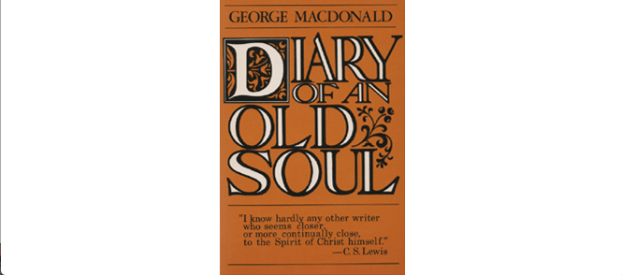
Review: The Diary of an Old Soul

Rating: ★★★★

Full Title: A Book of Strife in the Form of the Diary of an Old Soul.

Who: George MacDonald, 19th-century Scottish preacher, poet, and novelist. He had a profound influence on C. S. Lewis, Madeleine L’Engle, and many others.

Overview: MacDonald arranged this book into 366 daily readings, most of which are devotional and meditative. Each day has a seven-line stanza, many of which are addressed as prayers. (John Keble, an Anglican, had produced the much more popular “Christian Year” about 50 years earlier.)

This is probably MacDonald’s best book of poetry, though he has many. His poetry is a mix of the sentimental (very accessible) and more classical attempts (very inaccessible).

Meat: The stanzas here are simple, devotional thoughts and prayers, many of which can help to express a longing for God. Like the Epistle of James, MacDonald is always stirring his readers to be “doers, and not hearers only.” He speaks from the heart and speaks to the root of the spiritual life.

Bones: MacDonald’s poetry here is simple, and occasionally simplistic. My only other criticism is that MacDonald is so introspective. It can be rather angsty at times.

Quotes:

“When I no more can stir my soul to move,
And life is but the ashes of a fire;
When I can but remember that my heart
Once used to live and love, long and aspire,—
Oh, be thou then the first, the one thou art;
Be thou the calling, before all answering love,
And in me wake hope, fear, boundless desire.”
(January 10)

This book is free on Kindle, Project Gutenberg, and on LibriVox.

Review: Phantastes (No Spoilers)

Rating: ★★★

Who: George MacDonald, 19th-century Scottish preacher, poet, and novelist. He had a profound influence on C. S. Lewis, Madeleine L’Engle, and many others.

Overview:

Phantastes (1858) is a mixed genre foray into fantasy, written very early in MacDonald’s career. The story is framed as an episodic journey, but it incorporates many sideplots and poems, so that many chapters are only loosely strung to the narrative. This relatively difficult book has some dark themes and is written primarily for an adult audience.

The plots and subplots deal with themes of imagination, bondage and freedom, love and infatuation. Anodos falls in love with a statue, but cannot free her from her pedestal; Anodos is warned about the Ash Tree, which is precisely who he finds himself encountering; and so on.

Meat:

This book had great appeal for C. S. Lewis—before his conversion—and wrote in Surprised By Joy that it “baptized [his] imagination.” For my own part, I can say that some of the images and metaphors were profound; others, rather protracted. This is definitely one of MacDonald’s most ambitious works of fiction, and may appeal to more ambitious readers.

Bones:

When C. S. Lewis recommends a novel, one expects to see sweeping themes like those of the Space trilogy, or elegant metaphors like those of Narnia; I didn’t find either to be in large number here. The fantasy is more of art for art’s sake, or language for language’s sake; it was costly reading with no payoff.

I am a great fan of George MacDonald, but not a fan of his darker work. (I should add, Lewis has pointed me to other fantasy works that I found disappointing, like those of Charles Williams.)

Quotes:

“We receive but what we give.” (loc. 854)

“The waters lay so close to me, they seemed to enter and revive my heart. I rose to the surface, shook the water from my hair, and swam as in a rainbow, amid the coruscations of the gems below seen through the agitation caused by my motion. Then, with open eyes, I dived, and swam beneath the surface. And here was a new wonder. For the basin, thus beheld, appeared to extend on all sides like a sea, with here and there groups as of ocean rocks, hollowed by ceaseless billows into wondrous caves and grotesque pinnacles. Around the caves grew sea-weeds of all hues, and the corals glowed between; while far off, I saw the glimmer of what seemed to be creatures of human form at home in the waters. I thought I had been enchanted; and that when I rose to the surface, I should find myself miles from land, swimming alone upon a heaving sea; but when my eyes emerged from the waters, I saw above me the blue spangled vault, and the red pillars around. I dived again, and found myself once more in the heart of a great sea.” (loc. 1089)

“Hardly knowing what I did, I opened the door. Why had I not done so before? I do not know.” (loc. 2448)

This book is free on Kindle, Project Gutenberg, and on LibriVox.

proving the unseen

Review: Proving the Unseen

Rating: ★★★★

Who: George MacDonald, 19th-century Scottish preacher, poet, and novelist. He had a profound influence on C. S. Lewis, Madeleine L’Engle, and many others.

Overview: This book is a rare glimpse into the spoken sermons of George MacDonald. Proving the Unseen was arranged and edited by William J. Petersen from sermons published in Christian World Pulpit in MacDonald’s lifetime. The sermons are reasonably short and have the same subject matter found in most of MacDonald’s books: The Fatherhood of God, the resurrection of Jesus, and the obedience of faith.

Meat: This book’s strength is that it is significantly easier to read than Unspoken Sermons, which many—unlike me—find too abstract. MacDonald’s spoken ministry as found here is surprisingly straightforward, and yet, the material has the same depth and spiritual sharpness. I especially enjoyed the titular sermon, “Faith, the Proof of the Unseen,” and “Alone with God.”

Bones: The sermons here are pretty short, so you may get the sense that MacDonald could say a lot more on each topic.

Quotes: “Often the very things that lift us up nearer to God are viewed by us as misfortunes. ‘How sad,’ we say, and console one another on the means that the Father of our spirits is using to cleanse our souls and to make us the very children of his heart.” (p. 61)

Author Guide: George MacDonald

This is a guide to the works of George MacDonald, including links to available PDFs on the Internet Archive. The books in each section are in chronological order.

If you want to see all of the ways to read MacDonald’s books for free, you can click here.
If you just want an alphabetical list of PDFs, you can find that here.

Fantasy

As a predecessor and an inspiration to 20th-century giants like Tolkien and Lewis, MacDonald may be considered by some as founding the modern fantasy genre. Many of these are clearly “fairy tales” from the beginning; others, like Phantastes and Lilith, experiment with genre.

The Curdie stories, The Princess and the Goblin and The Princess and Curdie, are two of MacDonald’s most popular books.

  1. Phantastes: A Fairie Romance for Men and Women (Our Review: ★★)
    “Cross Purposes”
  2. Adela Cathcart, containing “The Light Princess”, “The Shadows”, and other short stories
  3. The Portent
  4. Dealings with the Fairies, containing “The Golden Key”, “The Light Princess”, “The Shadows”, and other short stories
  5. At the Back of the North Wind
  6. The Princess and the Goblin (Our Review: ★★★★★)
  7. The Wise Woman: A Parable (also published as “The Lost Princess: A Double Story”; or as “A Double Story”)
  8. The Gifts of the Child Christ and Other Tales (republished as Stephen Archer and Other Tales)
  9. The Day Boy and the Night Girl
  10. The Princess and Curdie, a sequel to The Princess and the Goblin (Our Review: ★★★★★)
  11. The Flight of the Shadow
  12. Lilith: A Romance

Realistic fiction

MacDonald’s realistic novels, like good autobiography, centers around the developments within individual human souls. His novels usually have romantic elements, but this often takes a back seat to spiritual development. Fiction was a theological outlet for MacDonald, so the original printings include much more reflection and sermonic language; some of this is omitted in the new abridgements.

Beginners usually start with either Robert Falconer (Musician’s Quest in Michael Phillips’ edition), or There and Back (The Baron’s Apprenticeship).

I have tried to mark novels with Scotch dialogue by an asterisk.

  1. David Elginbrod* (updated as The Tutor’s First Love)
  2. Alec Forbes of Howglen* (updated as The Maiden’s Bequest)
  3. Annals of a Quiet Neighbourhood (Our Review: ★★★★★)
  4. Guild Court: A London Story (updated as The Prodigal Apprentice)
  5. Robert Falconer (updated as The Musician’s Quest) (Our Review: ★★★★★)
  6. The Seaboard Parish, a sequel to Annals of a Quiet Neighbourhood (Our Review: ★★★★★)
  7. Ranald Bannerman’s Boyhood* (updated as The Boyhood of Ranald Bannerman)
  8. Wilfrid Cumbermede*
  9. The Vicar’s Daughter, a sequel to Annals of a Quiet Neighborhood and The Seaboard Parish
  10. Gutta Percha Willie, the Working Genius* (updated as The Genius of Willie MacMichael)
  11. Malcolm(updated under the same title)
  12. St. George and St. Michael
  13. Thomas Wingfold, Curate (updated as The Curate’s Awakening) (Our Review: ★★★★★)
  14. The Marquis of Lossie* (updated as The Marquis’ Secret), the sequel of Malcolm (Our Review: ★★★★)
  15. Paul Faber, Surgeon (updated as The Lady’s Confession), a sequel to Thomas Wingfold, Curate
  16. Sir Gibbie* (updated as The Baronet’s Song) (Our Review: ★★★★★)
  17. Mary Marston (updated as A Daughter’s Devotion and The Shopkeeper’s Daughter)
  18. Warlock o’ Glenwarlock* (updated as Castle Warlock and The Laird’s Inheritance)
  19. Weighed and Wanting (updated as The Gentlewoman’s Choice) (Our Review: ★★)
  20. Donal Grant* (updated as The Shepherd’s Castle), a sequel to Sir Gibbie
  21. What’s Mine’s Mine (updated as The Highlander’s Last Song)
  22. Home Again: A Tale (updated as The Poet’s Homecoming)
  23. The Elect Lady (updated as The Landlady’s Master)
  24. A Rough Shaking (updated as The Wanderings of Clare Skymer)
  25. There and Back (updated as The Baron’s Apprenticeship), a sequel to Paul Faber, Surgeon (Our Review: ★★★★★)
  26. Heather and Snow* (updated as The Peasant Girl’s Dream) (Our Review: ★★★)
  27. Salted with Fire* (updated as The Minister’s Restoration)
  28. Far Above Rubies

Poetry

Diary of an Old Soul is MacDonald’s most popular book of poetry today. It is more reflective and generally introspective than devotional calendars used in his day like that of Keable. His popularity as a poet probably does not equal the ambition of these volumes, but a few of his short poems have great devotional merit.

  1. Within and Without: A Dramatic Poem
  2. Poems (1857)
  3. “A Hidden Life” and Other Poems
  4. “The Disciple” and Other Poems
  5. Dramatic and Miscellaneous Poems
  6. Diary of an Old Soul (Our Review: ★★★★)
  7. The Threefold Cord: Poems by Three Friends (privately printed, with Greville Matheson and John Hill MacDonald)
  8. Poems (1887)
  9. The Poetical Works of George MacDonald (2 vol.)
  10. Scotch Songs and Ballads
  11. Rampolli: Growths from a Long-planted Root

Nonfiction

While MacDonald wrote a few books of literary studies, his five books of sermons are, in my opinion, the best thing he ever wrote. Some readers find Unspoken Sermons too philosophical to read straight through, yet it is filled with profound theological insight—most of C. S. Lewis’ George MacDonald anthology was pulled from this three-volume set. The Miracles of Our Lord is MacDonald at his most biblical, expository, and accessible, and The Hope of the Gospel is pretty similar but with a .

  1. England’s Antiphon (a history of religious poetry)
  2. The Miracles of Our Lord (sermons) (Our Review: ★★★★★)
  3. The Tragedie of Hamlet, Prince of Denmarke: A Study With the Test of the Folio of 1623
  4. Unspoken Sermons (1st series, 2nd series, 3rd series) (Our Review: ★★★★★)
  5. A Cabinet of Gems (writings of Sir Phillip Sidney, comp. George MacDonald)
  6. The Hope of the Gospel (sermons) (Our Review: ★★)
  7. A Dish of Orts (expanded from Orts)
  8. George MacDonald in the Pulpit
  9. Getting to Know Jesus (edited sermons)
  10. Proving the Unseen (edited sermons) (Our Review: ★★★★)

Compilations

  1. God’s Words to His Children (sermons & sermonic novel excerpts)
  2. Works of Fancy and Imagination (multi-volume, short stories & poetry)
  3. Cheerful Words from the Writing of George MacDonald (comp. E. E. Brown)
  4. George MacDonald: An Anthology (comp. C. S. Lewis)
  5. Beautiful Thoughts from George MacDonald (comp. Elizabeth Dougall)
  6. Knowing the Heart of God (comp. Michael Phillips)
  7. Discovering the Character of God (comp. Michael Phillips)

Review: Heather and Snow (The Peasant Girl’s Dream) (No Spoilers)

Rating: ★★★

Who: George MacDonald, 19th-century Scottish preacher, poet, and novelist. He had a profound influence on C. S. Lewis, Madeleine L’Engle, and many others.

Where: Rural 19th-century Scotland.

Overview: Heather and Snow, which Michael Phillips republished as The Peasant Girl’s Dream, is one of George MacDonald’s Scottish novels. The novel opens on Francis and Kirsty running a race on a highland hillside. Both are ambitious, even stubborn. Kirsty and her family are tenant farmers on the land of Francis’ family. But as they grow, tension comes between them. Kirsty and her feeble-minded brother Steenie grow in tenderness and maturity in the light of Christ, while Francis becomes proud. The story turns on Francis’ pride, and Kirsty’s refusal to let him waste his life.

Readers looking for a romance per se will be disappointed as the budding romance in this novel is sidelined by faith and obedience—a common pattern in MacDonald’s realistic novels.

Meat: MacDonald, in the characters of both Steenie and Francis, deals with various forms of mental illness (depression, trauma) and even retardation. As in almost all of his novels, in the end, the love of our neighbor is the only door out of the dungeon of self. MacDonald has a refreshing way of showing the impact of friendship on spiritual life.

Bones: The original edition fully justifies Michael Phillips’ mission of updating the language of MacDonald’s books; speaking as a linguist, armed with a dictionary, the Scottish dialect here is challenging. I wouldn’t recommend MacDonald’s Scottish novels in the original editions unless you just love language. You can pick up the updated edition, The Peasant Girl’s Dream, very cheaply.

Quotes: “The story of God’s universe lies in the growth of the individual soul.” (p. 21)

“She could not sit still and look on the devil’s work.” (p. 93)

“The Lord’s gowk’s better nor the warl’s prophet.” (Or, “The Lord’s fool is better than the world’s prophet.”) (p. 125)

“Let her be prepared for the best as well as for the worst!” (p. 147, loc. 2328)

“One of the hardest demands on the obedience of faith is—to do nothing; it is often so much easier to do foolishly!” (p. 148)

“It seems to me there’s no shame in being frightened, so long as you don’t serve and obey the fright, but trust in him that sees, and do what you have to do.” (updated, p. 186)

Review: Unspoken Sermons (3 vol.)

Rating: ★★★★★

Overview: This three-volume shows the breadth of MacDonald’s theological thought. MacDonald wrote these sermons in such a way that the conclusion of one introduces the next—but the topics are only vaguely connected. He focuses especially on themes like the Fatherhood of God, the meaning of suffering, and obedience to the two greatest commandments. C. S. Lewis wrote about Unspoken Sermons:

“My own debt to this book is almost as great as one man can owe to another: and nearly all serious inquirers to whom I have introduced it acknowledge that it has given them great help—sometimes indispensable help toward the very acceptance of the Christian faith.”

Incidentally, many of the thoughts in C. S. Lewis’ writings that are thought to be innovative or controversial were gleaned from these sermons. In Lewis’ anthology of MacDonald quotes, 257 of the 366 selections are from this little set of 36 sermons. (I am working on an article comparing Lewis’ most famous quotes with MacDonald’s sermon material.)

Meat: MacDonald’s strength in all his books is his stubborn insistence on God’s goodness. His spiritual writing is dense with thought, like that of Oswald Chambers. These sermons are a literary mix of highly abstract and clearly practical. There are many favorites. Lewis often hearkened to “The Hardness of the Way” in his books, such as Mere Christianity. “The Eloi” is a wonderful reflection on divine silence. “Life” is a fantastic exploration of divine suffering, and undoubtedly the most moving thing I have ever read outside the Bible. John Ruskin said that the first volume contained “the best sermons—beyond all compare—I have ever read.”

The other prominent point about MacDonald is his “theology of obedience.” MacDonald places great weight on John 7:17: “If anyone’s will is to do God’s will, he will know whether the teaching is from God or whether I am speaking on my own authority.” He says in almost every sermon that obedience is “the opener of eyes” and “the only way forward.” This theology is probably most clearly expressed in “Love Your Neighbor” and “The Hardness of the Way,” although MacDonald’s next sermon set, The Hope of the Gospel, deals with this theology of obedience almost exclusively.

Bones: The long trains of thought make it difficult to read the sermons piecemeal; you really need a large cup of tea and an hour (or two) to spare. And some of the sermons are very heady and abstract. I recommend trying “The Way” and “The Hardness of the Way” since they are foundational and straightforward.

The bone that most readers choke on, though, is MacDonald’s universalist tendencies, seen most strongly in “Consuming Fire.” Suffice it to say, MacDonald was strongly countercultural in the context of a stolid Scottish Calvinism, and found himself searching far and wide for more satisfying expression of God’s heart. But most reviewers agree that these sermons “bring everyone who reads them into the very presence of the Living God,” and MacDonald was far more concerned with heart-obedience than systematic theology.

Quotes: “Man finds it hard to get what he wants, because he does not want the best; God finds it hard to give, because He would give the best, and man will not take it.” (vol. 2, “Life”)

“The Son of God suffered unto death, not that men might not suffer, but that their suffering might be like his.” (vol. 1, “Consuming Fire”)

“Do at once what you must do one day.” (vol. 2, “The Last Farthing”)

“Had he done as the Master told him, he would soon have come to understand. Obedience is the opener of the eyes.” (vol. 2, “The Way”)

“I believe that no teacher should strive to make men think as he thinks, but to lead them to the living Truth , to the Master Himself, of whom alone they can learn anything, who will make them in themselves know what is true by the very seeing of it.” (vol. 3, “Justice”)

Related: Miracles of Our Lord, God’s Words to His Children, The Hope of the Gospel, George MacDonald in the Pulpit