Lover of Life by F. W. Boreham

Review: Lover of Life (Man Who Saved Gandhi)

Rating: ★★★★½

Author: F. W. Boreham, British pastor and author of more than 50 books. He spent most of his life pastoring in New Zealand and Australia. (See the article “Who Is F. W. Boreham?” as well as the Author Guide.)

Subject: J. J. (Joseph John) Doke was a Baptist pastor and missionary who ministered in New Zealand and South Africa. As the original title suggests, he became coincidentally entangled with Mahatma Gandhi when an uprising nearly killed him; he afterward nursed him back to health in his own home, winning his lifelong friendship and respect.

Overview:

This little book is an uplifting and quick read that will stir you concerning the pioneer mission field. This book tells the story of Doke’s mentorship of Boreham in New Zealand, a relationship that was highly formative in his early career. Doke not only had a great impact on Boreham’s notorious reading habits, but he also connected Boreham to an editor that led to the beginnings of his writing career. The publisher makes a case that this book should be placed in the hands of budding pastors as an illustration of healthy mentorship.

Doke’s life itself is also fascinating. As the old title suggests, he did save Gandhi’s life before he had reached his present level of international fame. J. J. Doke’s brother was a pioneer missionary who lost his life in the Congo, and he wanted to follow in his footsteps. He pastored in New Zealand for a time, but later returned to the African mission field. Doke eventually lost his life, like his brother, while pioneering a new station in the region of present-day Zimbabwe.

For lovers of Boreham, this book tells you almost as much about him as it does about J. J. Doke. Although Boreham often tells personal stories, this book gives a new angle to how he became who he was.

Bones:

My main beef with this book is that it went by so fast!—I wanted more detail about his life as a missionary, and unfortunately this is the only source I know on his life. I believe the book was originally published staple-bound, and easily fits in under 100 pages. The original title, The Man Who Saved Gandhi, led to me to believe it was a full biography; the newer title, Lover of Life: F. W. Boreham’s Tribute to His Mentor, is a little more fitting. It does trace Doke’s life through, but not in detail.

Related: George Augustus Selwyn: Pioneer Bishop of New Zealand is the only full biography that Boreham penned.

Doke himself wrote two adventure novels about lost races in remote Africa, The Secret City and The Queen of the Secret City. Both are extremely rare and out of print.

Read: At time of writing, a new edition of Lover of Life is available from John Broadbanks Publishing for only $4.75!

Echoes of Eternity: How Death Affected Great Men

Thoughts after the death of Nabeel Qureshi

On September 16, Nabeel Qureshi tragically passed at the age 34, and went confidently into eternity. He had been diagnosed with aggressive Stage IV stomach cancer just a few short months ago, in the middle of a busy career of academic study, preaching, writing, and evangelism.

In many ways, his death is a challenge to Western believers. Lest we miss the lesson his death would teach us, I want to look at some historical precedent for how many believers have been challenged by the immediacy of death.

I could give a long list of faithful believers who re-examined their lives after the death of someone near them. J. J. Doke went to the mission field dreaming of carrying on the impact of his older brother who had died doing mission work in the Congo. On the other side of Africa, in 1846, Ludwig Krapf buried wife and child in the remote deserts along the Eritrea-Ethiopian border, and there he famously wrote that the church ever advances over the graves of its members.

For the church of the resurrected Christ, death has always been transmuted by the deathless optimism of the one who saw the travail of his soul and was satisfied. Let’s take a look at three ways that untimely death has caused many to hear the echo of eternity.

1. Eternity calls us to consider if we living for things that will last.

Adoniram Judson is one of the most famous missionaries in Protestant history. With a small cadre of friends, he spearheaded the founding of America’s first missionary society, and, in 1812, he was on the first ship to leave America to bring the gospel to the world’s unreached people.

But few know that in college, Judson was a hardened skeptic. The atmosphere at Providence College was in the grip of Enlightenment thinking. He had one friend in particularly—he is called E— in the story—who was an outspoken, revelling, scoffing skeptic, mocking the church and all that pertains to it.

In between college terms, Judson was travelling on horseback, touring the northern states. He stopped into an inn. We have one vacancy, the innkeeper told him, but the tenant in the room next door is horribly ill—he may not pass the night. No matter, Judson told him. Death was less than nothing to him, although he would feel sympathy for the dying.

As he lay in that inn, he heard the racking coughs and groans of a dying man. The walls seemed paper thin. Whoever he was, he must be dying comfortless, with no family member to attend him. Judson lay awake thinking of the nearness of death, struggling to use his young age as a shield against the spectre of eternity. After all, what would his skeptic friends back at college think? What would his friend E think?

The rest of the story is in F. W. Boreham’s words:

“He rises at dawn; seeks the innkeeper; and inquires about his neighbor.

“‘He’s dead!’ is the blunt reply.

“‘Dead!’ replies Judson. ‘And who was he?’

“‘Oh,’ explains the innkeeper languidly, ‘he was a student from Providence College; a very fine fellow; his name was E!’”

Judson was shaken to the core. Eternity stared him in the face, and it wasn’t long before he turned to Christ. He cut short his vacation, went home, and discussed the state of his soul with his parents. He was soon a member of their church.

2. Eternity calls us to remember that there are no little people and no little places.

Although his name is no longer well known, Ion Keith-Falconer was a serious intellectual with both evangelistic and medical experience, willing to use whatever means to reach his Muslim neighbors.

Keith-Falconer seemed to have everything going for him. He was from a noble family; he was a champion athlete; he was at the top of his class at Cambridge; he was newly married; and he was ordained under the Free Church of Scotland to an important and difficult mission field.

After studying Arabic at schools in Germany and Egypt, he went to Aden—in present-day Yemen, then a British colony—to see if it would be feasible to bring his family there. After receiving a very flexible appointment as an Arabic lecturer at Cambridge, he took his wife and a young child to live in the neighborhood of Sheikh Othman.

He only preached and practiced medicine for five months before he died of a fever, now believed to be malaria. News of his death reached Scotland the night before the opening of the Free Church’s annual General Assembly, the same meeting at which Keith-Falconer had been ordained just one year before. The moderator, Dr. Somerville, spoke about his death:

“What may be the beneficent result which God may educe from this calamity, we know not. This, however, we may venture to hope for—that the death of this noble young man may prove the means of awakening attention, greater than has ever been directed, to all Arabia’s provinces, and tend to give a lasting wound to that fatal system of Islam which so long blighted the souls of millions. What Christian Scotchman, with qualities in any way resembling those of him who has passed away, will stand forth to raise the banner of the Gospel in the place of the gallant warrior who has fallen?”

The custom in that day was not to withdraw when a missionary was lost; the usual response was to send two more to take his place! After his death, his mother and widow offered a stipend that would fund two more missionaries for Arabia. In the months that followed, a total of thirteen students of Edinburgh’s New College offered themselves for foreign mission work. Eleven of those were from the 1888 graduating class, which only included forty students. Needless to say, the appeal of Keith-Falconer’s death is attributed to be an important factor.

3. Eternity calls us to remember that even short lives can have an lasting echo if they are lived for Christ.

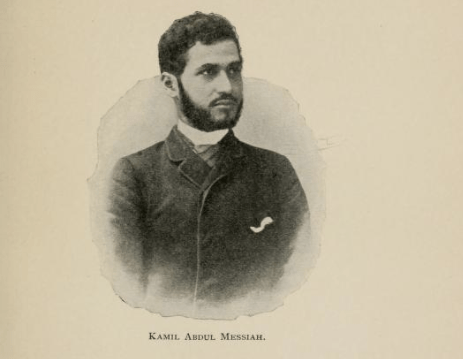
There is another story in Arabian missions of a young Lebanese preacher. Like Nabeel Qureshi, Kamil Abdulmasih ‘Itany turned to Christ out of a Muslim background, and it wasn’t long before he was doing everything he could to persuade other Muslims, Catholics, Jews, and Hindus, that Jesus was the only way.

Kamil learned the basics of the Bible from Henry H. Jessup for a few months in Beirut. Later, he joined Samuel M. Zwemer and James Cantine in the Arabian Mission of the Dutch Reformed Church. In the few years that he lived as a Christian, Kamil did preaching and Bible distribution tours in Syria, Yemen, Djibouti, and Iraq.

He showed in his letters that he knew both the Bible and the Quran well. He was persuasive and tactful in evangelism. While selling Bibles in the remote coasts of eastern Yemen, a group of men went around forbidding people to accept his books. Kamil found the troublemakers and quoted to them several scriptures in which the Quran praises both the Old and New Testaments which they were selling. He recorded the conversation in his journal, which Henry Jessup later translated:

“Then I said, ‘Does this Quran speak truth or falsehood?’

“They said, ‘Allah forbid that it should speak falsehood.’

“I said, ‘Are my words true?’

“They replied, ‘Yes; there is no doubt of it.’

‘Then,” said I, ‘Why did you forbid the boys buying the books?’

“They said, ‘We did not,’ and denied it absolutely.

“I then said, ‘You should buy the books if my words are true.’

“They said, ‘We certainly will after hearing the proofs you have given us.’”

Kamil’s life was cut short in a season of intense preaching and visiting in Basra, in present-day Iraq. His journals written in 1892 show that he had visitors of every variety, some hostile, and some very keen to find copies of the New Testament.

When he died, Zwemer found him surrounded by soldiers and religious authorities. They believed he was poisoned, but the authorities prohibited an autopsy. They protested that he was a Christian, but the authorities buried him as a Muslim. They had proof that he was a Christian, but the soldiers had seized his papers. There was no recourse.

Henry Jessup wrote that Kamil’s life was “a rebuke to our unbelief” in God’s power to change the Muslim heart. His tragic murder must have brought home to supporters of the Arabian Mission the reality of people who turn to faith in Islam’s heartland. Grace may be free, but that doesn’t mean faith doesn’t cost us.

After Kamil’s death, Zwemer eventually became the most widely known name connected with Christian missions to Muslims. He left behind a stream of literature long enough to fill a bookshelf. God only knows how the loss of this budding native preacher must have hardened Zwemer’s resolve in his early career.

Final thoughts

Death, then, doesn’t have to be a white flag; in Christian missions, it is a call for advance, not retreat. When a soldier on the front lines is lost, someone must rush forward to hold the line.

When I woke up to the news of Nabeel’s passing, I thought of how the disciples felt when Jesus ascended and left them. Leaderless, they thought—but they wouldn’t be left comfortless. There was a greater work that they would have to begin.

The task of missions is the task of the whole church. With Nabeel’s passing, we mourn the loss of a leader who had a monumental impact in his short time—but when we dry our eyes, we remember, we have a lot of work to do.


References:

F. W. Boreham, “Adoniram Judson’s Text.” A Temple of Topaz.

Henry H. Jessup, Kamil Abdulmasih: A Syrian Preacher of the Gospel.

Robert Sinker, Candle in the Dark: The Story of Ion Keith-Falconer.

Review: Missionary Tongues Revisited

Rating: ★★★★★

Who: Denzil (Denny) R. Miller, missionary to Malawi and director of the Acts in Africa Initiative. Miller saw that evangelism was alive and well in Africa, but very few African pastors were being discipled about the filling and gifts Holy Spirit, so this has been his primary ministry focus for some years. He has many books on the Holy Spirit and on Luke-Acts.

Overview: This brief book begins with Miller’s take on early Pentecostal missionaries, who thought that the gift of tongues was for the “regions beyond,” and that when they got to China, they could evangelize using the gift of tongues. Needless to say, they were mistaken; but, Miller says, the thrust of the idea was correct, and we need to return to a missional understanding of the Holy Spirit in general and of the gift of tongues in particular. He writes:

“While the early Pentecostals’ bold experiment with missionary tongues was a failure, they were, I believe, right to place speaking in tongues into missiological categories.” (Loc. 1129)

Meat: I thought that this book would deal primarily with “missionary tongues,” but, after Chapter 1, the rest of the book (six chapters) is about shifting our understanding of tongues and of the gifts of the Holy Spirit. For many Pentecostals, tongues are the “initial physical evidence of the filling of the Holy Spirit.” Miller agrees with this, but he adds the following:

  1. Tongues are confirmatory evidence of the filling of the Holy Spirit.
  2. Tongues are a missional sign that the believer is a Spirit-empowered witness.
  3. Tongues are a prophetic release for Christians desiring boldness to preach to the unreached.
  4. Tongues are an empowering element for Christians living in mission.

If we think of tongues only as a confirmatory evidence of receiving the Holy Spirit, we have missed the place of the gifts of the Holy Spirit in God’s global mission. “For Luke tongues were part and parcel of the empowering experience.” (Loc. 971)

Miller quotes Martin Kähler as stating that “mission is the mother of theology” and John V. York on “theology with feet”. He writes that our pneumatology (i.e. doctrine of the Holy Spirit) should be reformed around Scripture to include not just an individualistic edificational tongues (from 1 Cor. 12-14), but also Luke’s empowering tongues.

Interestingly, before the modern Pentecostal movement, the Cambridge Seven (including C. T. Studd) and A. B. Simpson expected a renewal of missional tongues as an accompaniment and empowerment for end-times revival.

After the early Pentecostals’ failed experiment in missional tongues, “the movements’ scholars set themselves to reexamining their stance on the nature and purpose of speaking in tongues . . . [leading to] among other things, the emergence of the ‘initial physical evidence’ construct still held by most Classical Pentecostals today.” (loc. 230)

Miller notes the significane of other forms of prophetic speech accompanying the filling of the Holy Spirit; Acts contains a pattern of speaking in tongues immediately followed by Spirit-inspired speech in the vernacular. Miller uses this as a model when praying with believers to be filled with the Holy Spirit.

Bones: Honestly I could not think of any criticisms. Miller is concise and biblical.

Quotes: “The Classical Pentecostal doctrine of ‘initial physical evidence,’ while true in itself, is an incomplete understanding of Luke’s missional presentation of tongues.” (Loc. 136)

“In Acts Luke presents Spirit baptism as a powerful missions oriented experience accompanied by Spirit-inspired prophetic speech in both unlearned and learned languages.” (Loc. 942)

This missional empowering takes place, not only when one is first baptized in the Holy Spirit signified by speaking in tongues, it occurs again and again each time the Spirit-filled believer prays in the Spirit.” (Loc. 1001)

Related: The 1:8 Promise of Jesus.

You can buy this book on Amazon for just $5.95 for a digital copy, or $10.95 for the paperback.

Nabeel Qureshi’s 19th-Century Predecessor Also Died Young

While we mourn the death of Nabeel Qureshi last week—and heaven celebrates his arrival—I have been thinking of a similar story from the vault of Christian missions in the Middle East. It is the story of a young Muslim intellectual who turned to Jesus, was taken under the wing of one of the greatest apologists of his day, toiled and travelled as a public Christian witness, and died tragically while in the height of his lifework. This is the story of Kamil Abdulmasih.

Kamil Abdulmasih (or Abdul Messiah) was a Syrian Christian in the 19th century. He had  befriended Cornelius van Dyck, the Bible translator, and Henry J. Jessup, a veteran missionary, and converted from Islam to the Messiah, reflected in his chosen change of name. As a young believer, he travelled with Samuel M. Zwemer to Aden (in present-day Yemen) and to Basra, Iraq. He was a bold but tactful witness to the Christian faith, and for several months spent much of his time witnessing to Muslims with Zwemer. Some of the last records of his life are about discussing faith with dozens of Muslims, sometimes for several hours at a stretch. You can read about them in a short book published by Henry H. Jessup about Kamil’s life.

After a short illness, he died on June 24, 1892, under mysterious circumstances. Before any of his close friends knew that he had died, Muslim funeral rites were being performed over his body, which was guarded by soldiers. Although Basra has some of the hottest summers on the planet, it seems obvious that the officials who surrounded him immediately after his death must have also played some part in expediting it.

The sudden death of this gifted and young disciple was one of those bitter trials which can only be relieved by reference to the unerring wisdom of God, who doeth all things well.

It is the opinion of’ those associated with him that he was poisoned, but the hostility of the government, the fact that he was buried in the Moslem cemetery, and that no postmortem would have been allowed make it impossible to obtain positive proof.

The sad facts are as follows:

On Friday, June 24, 1892, Kamil died. Early in the morning Mr. Zwemer was called to conduct the funeral of the carpenter on board a foreign steamer. Owing to the extreme heat he did not call on Kamil before going home to breakfast. Mr. Cantine called on Kamil in the morning and found him suffering with symptoms of bowel disorder, violent vomiting and purging. Dr. Riggs, who was himself sick, sent him medicine by a servant. The heat was intense, and many of the people were prostrated with fevers. Kamil lived near the harbor, and the missionaries nearly two miles distant in the native quarter. At five o’clock p. m. Mr. Zwemer went to call on him and help him. Yakoob Yohanna, a Christian native, met him half way and told him of Kamil’s death. He hastened to the house, and found it occupied by Turkish soldiers, mullahs, and people who had seized his papers, sealed up his room, and were busy with Moslem prayers over his body. They protested that he was a Moslem. Mr. Zwemer insisted that he was a Christian, and begged and entreated that he should be buried with Christian burial.  The evidence of his Christian faith was among the papers they had seized. But it was vain to resist this very exceptional display of armed force.

Mr. Zwemer left the body and went to the Turkish waly, and to appeal to the British consul. Meantime Mr. Cantine arrived, and Mr. Zwemer had to hasten away on receipt of a note stating that Dr. Riggs was very ill, and with high temperature.

At 10.30 p.m. Mr. Cantine came with the news that the Moslems, in spite of his protest, had performed their funeral rites and buried Kamil. But the seal of the British consul was added to that of the Turks on the room containing his property. The next day the whole town was talking over the event. Many of the Moslems told the missionaries that they knew Kamil to be a Christian and a man of pure and upright life, that he was converted from Islam, and a preacher of Christianity.

The exact spot where the Moslems buried him could never be found. The consulate did not succeed in securing his little property, but his books and papers were afterwards sold at auction, excepting the few claimed by the missionaries as their personal property.

The evidence of foul play in his death is regarded as very strong:

I. He was a young man of strong physique and had not been long unwell.

II. Had he died from ordinary disease none but his companions would have known it, and the missionaries would have been told of it before any one else.

III. It is regarded as impossible that the Turks and mullahs could have prepared his body for burial, sealed all his property, and had the military police agree to oppose any help or interference on the part of the missionaries, in so short a time as that which intervened between his death and their arrival. The washing and enshrouding of the body according to Moslem custom is a long and elaborate ceremony, and the sheikhs and mullahs must repeat the Kelimat ash-Shehada, or word of witness, ‘There is no deity but Allah, and Mohammed is his apostle,’ at every ablution, and three times after the washing, when three pots of camphor and water are poured over the body.

The following are two of the prayers recited by Moslems at a funeral:

God is Great.
Holiness to thee, oh God,
And to thee be praise.
Great is thy Name.
Great is thy greatness.
Great is thy praise.
There is no deity but thee.’

O God, forgive our living and our dead, and those of us who are present and those who are absent, and our children and our full-grown persons, our men and our women. O God, those whom thou dost keep alive amongst us keep alive in Islam, and those whom thou causest to die let them die in the faith.

Those who place the corpse in the grave repeat the following sentence:

We commit thee to earth in the name of God and in the religion of the prophet.

IV. Government officials were on hand to take possession of all his effects and seal up his room before his Christian brethren could arrive.

There is every indication that poison had been given him by some unknown persons, either in coffee, the usual eastern way of giving it, or as medicine.

V. The burial took place in the evening and the place of interment was concealed.

VI. According to the Moslem law, a male apostate (murtadd) is liable to be put to death, if he continue obstinate in his error. If a boy under age apostatize, he is not to be put to death, but to be imprisoned until he come to full age, when, if he continue in the state of unbelief, he must be put to death.” According to Dr. Hughes, quoting from the book “Sahih ul Bukhari”  “Ikrimah relates that some apostates were brought to the Khalifa Ali and he burnt them alive; but Ibn Abbas heard of it and said that the Khalifa had not acted rightly, for the prophets had said, “Punish not with God’s punishment (i. e., fire), but whosoever changes his religion, kill him with the sword.”

VII. Kamil’s own father once wrote him virtually threatening to kill him as an apostate.

In these days the sword is not generally used to dispose of apostates from the faith. Strychnine or corrosive sublimate are more convenient, and less apt to awaken public notice, especially where an autopsy would not be allowed.

It may be that Kamil’s father used the language simply for intimidation, for I can hardly believe him to be so utterly devoid of natural affection;  but religious fanaticism, whether originating in Arabia or in Rome, seems to override all laws of human affection or tenderness.

The Lord himself, the chief Shepherd, knows whether his loving child Kamil is worthy of a martyr’s crown. We know that he was faithful unto death. He fought the good fight, he kept the faith, he finished his course. His life has proved that the purest and most unsullied flowers of grace in character may grow even in the atmosphere of unchristian social life. It mattered not to him who buried him or where he was buried. He was safe beyond the reach of persecution and harm.

I have rarely met a more pure and thoroughly sincere character, sine cera.  From the beginning of our acquaintance in “our flowery bright Beirut,” to his last days on the banks of the Tigris, he was a model of a humble, cheerful, courteous, Christian gentleman.

Kamil’s history is a rebuke to our unbelief in God’s willingness and power to lead Mohammedans into a hearty acceptance of Christ and his atoning sacrifice.

We are apt to be discouraged by the closely riveted and intense intellectual aversion of these millions of Moslems to the doctrines of the Trinity and of the divinity of Jesus Christ. But Kamil’s intellectual difficulties about the Trinity vanished when he felt the need of a divine Saviour. He seemed taught by the Spirit of God from the first. He exclaimed frequently at the wonderful scheme of redemption through the atoning work of Christ.

El fida, el fida,” “redemption” he once said to me, “redemption, how wonderful! I now see how God can be just and justify the sinner. We have nothing of this in Islam. We talk of God’s mercy, but we can not see how his justice is to be satisfied.” What the Mohammedan needs above all things is a sense of sin, of personal sin, and of his need of a Saviour. (Henry H. Jessup, The Setting of the Crescent the Rising of the Sun: or, Kamil Abdul Messiah, pp. 137-144. Philadelphia: Westminster Press,1898.) 

Kamil’s story is being put back into print by Pioneer Library. Click here to see the new edition.

Review: When Heaven Seems Silent

Rating: ★★½

Who: Mark and Tammy Endres are Charismatic ministers connected with Randy Clark’s Global Awakening network, now over a ministry called Hand of Jesus. They both also have experience in special education and other fields.

Overview: Mark and Tammy have been in Charismatic teaching and ministry for many years, and have seen many people healed in various ways. But this comes with an ounce of disappointment for them, because Mark was born without a hand on his left arm. As you read their story, it becomes clear that multiple people have given them prophetic words about his arm being healed, without them prompting or asking for prayer on the topic. When Heaven Seems Silent is their journey in handling the discrepancy between these prophetic words and their reality.

Meat: When Heaven Seems Silent has some important Scriptural truths on what it means to avoid bitterness when God does not solve a problem for you, or does not bring healing when you ask for it. Chapters like “Trusting God’s Intentions” defend a high view of God and his justice on this earth. For the Endreses, there may be a variety of reasons that God doesn’t perform a miracle, but more important in the end is that God is our Father, and we are his beloved children.

Bones: This book comes from what I call the “Power” camp—the descendants of the Word of Faith movement, who generally believe that miracles are central to church life and devotional life. I can imagine that when you walk into certain churches with a limp, people want to pray for your limp immediately. But for most mainstream churches, limps are simply part of existence—not something that needs to be reconciled to your worldview.

The problematic question raised by this book is, “What are God’s promises, and how does God give them to us?” If I receive a prophetic word, a word of knowledge, or a dream, does that carry the same rank as God’s promises given to me in the Bible? If someone gives me a prophetic word, should I arrange my life around it? We “do not despise prophecies,” but they are not part of the bedrock of faith either.

An aside: There are also some teachings from “inner healing,” which include a series of buzz words like: “soul ties,” “generational sin,” and “inner vows.” These ideas, in my view, have only been harmful to the church and dredged up past guilt in exactly the way that a minister shouldn’t. Counseling can help Christians to see how their past problems affect them now, but I don’t particularly believe that we need to “renounce” our parents’ mistakes or past actions in order to receive either “inner” healing or physical healing. We cast down imaginations that exalt themselves against Christ by meditating on and obeying God’s Word, not by renouncing ties or vows in our primeval past.

Quotes: “Beneath the pain of delayed answers is the promise of God, which does not diminish through our suffering.” (p. 110)

“Not every promise is unconditional. Some promises must be carried tenaciously if we are to see their fulfillment.” (p. 68)

The book addresses how grief and disappointment can make it difficult to draw near to God. “Pulling away from God only increases our pain and deepens our disappointment.” (p. 36) “All of us face a crossroads when confronted with pain. We often respond one of two ways: we shut down, or we open up.” (p. 96)

“Miracles and the fulfillment of promises in and of themselves do not settle our faith issues. Our assurance must come from who Jesus is, and who we are in him.” (p. 56)

“For five years or so my prayer life was basically three words: ‘I love You.’ I don’t understand you, but I love you. Over and over I gave him my love in the darkest place of my life.” (Bob Sorge, qtd. on p. 67)

“My soul refuses to live in the badlands of abandoned promises. I am resolved to do whatever I must to keep his promise close to my heart.” (p. 69)

Related: The Fire of Delayed Answers (Bob Sorge).

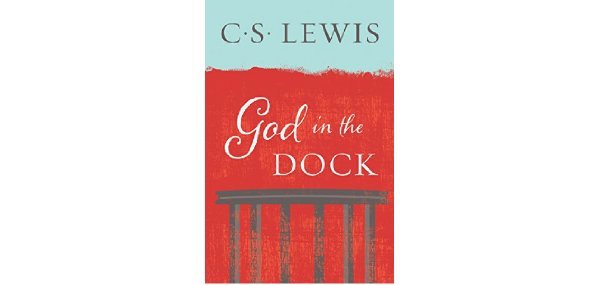
Review: God in the Dock

Rating: ★★★★

Who: C. S. Lewis, British scholar and lay theologian.

Overview: God in the Dock: Essays in Theology and Ethics (1970) is a smorgasbord of Lewis’ short articles, mostly on theological topics. Many of them are responses to theological or literary controversies of the day, but they are written with the same cleverness and care for detail that he put into his other writings.

Meat: The strength of this book is that we can hear Lewis at length on topics that he loved, but were unworthy of a full book. Topics scattered throughout his writings come into full focus here. The essay, for example, on “Reading Old Books” is still particularly relevant and quoted often as an antidote to the worship of the “Idol of the Age.”

My favorite parts of the book, though, were Lewis’ thoughts on mythology scattered throughout. In short, Lewis believed that in Jesus’ resurrection was, in a sense, “myth became fact.” He mentions this in Perelandra, but he expounds it much more clearly in God in the Dock, especially in “The Grand Miracle” and “Myth Became Fact.” These two essays are the kernel of the book and are central to understanding to Lewis’ theology as a whole.

Bones: Some of the essays—a long-winded argument against ‘naturalism’ for example—may be opaque to modern readers. As the book goes on, some of the essays on ethical and critical topics, are for the most part yawn-inducing. (Some of the topics also have little or nothing to do with religion, by the way.) As a whole, it is definitely a book worth having, but I wouldn’t worry about reading it cover to cover.

An abridged collection, The Grand Miracle: And Other Selected Essays might be a quicker, more palatable alternative for less patient readers (and it looks like it has a closer focus on the Christian topics too).

Quotes: “It is a good rule, after reading a new book, never to allow yourself another a new one till you have read an old one in between. If that is too much for you, you should at least read one old one to every three new ones.” (“On Reading Old Books”)

“The Christian story is precisely the story of one grand miracle, the Christian assertion being that what is beyond all space and time, what is uncreated, eternal, came into nature, into human nature, descended into His own universe, and rose again, bringing nature up with Him. It is precisely one great miracle. If you take that away there is nothing specifically Christian left.” (“The Grand Miracle,” p. 80)

Related: Several similar (though shorter) compilations of Lewis’ articles have sprung up. Confusingly, there is a compilation called God in the Dock that is shorter than this full book; The Grand Miracle is also a kind of “best of” taken completely from God in the Dock. Lewis’ other books of essays and speeches, such as The Weight of Glory and The World’s Last Night, are unrelated to this one and do not overlap.

This book is available in print, digital, and audio formats.

Review: Olney Hymns

Rating: ★★★★★

Who: John Newton was the Anglican minister at Olney after being cast away as a mutineer on the African coast and sold to black slave-traders. He later became one of the champions of the abolition of the British slave trade.

William Cowper became famous in his own right through his long poem The Task. Although Newton wrote “Amazing Grace,” the most famous hymn ever written, Cowper wrote many of the more famous ones. Several of these are still regularly sung today, whether in older or modern forms.

When: Olney Hymns was published in 1779 in the context of an (local) revival of religious fervor and commitment in England. This revival, with the abolitionist Clapham Sect at its center, led to many of the most well known Christian efforts against the British slave trade.

Overview: Olney Hymns is one of the most famous hymnbooks ever created, and is connected to an evangelical revival that was occurring with John Newton, William Wilberforce, and William Cowper in the middle of it. Most famously, it is the hymnbook that introduced “Amazing Grace” (and several other classics) to the world.

(An aside: Hymnbooks were used differently back then; the tunes were memorized, and any hymn could be sung to any melody with the same number of notes. So the original tune used for “Amazing Grace,” for instance, is not the one we sing now. If you want to prove this, try singing the first hymn in the book to the same tune as “Amazing Grace.”)

Meat: I have read several classic hymnbooks in recent years, but this is easily the best. The poetry is simple and exemplary, and for the most part, it makes great devotional reading.

Many hymns that we still sing in one version or another are traced back to this classic book. I had been singing “There is a fountain filled with blood” for years before I knew it was written by one of my favorite poets, William Cowper.

Bones: Interwoven with what we consider classic hymnody are expressions of self-loathing and near despair. Newton and Cowper were prone to “worm theology” and sometimes make very little of themselves. (“Save a wretch like me.”) This is concomitant with their Calvinism and was part of the worship of several centuries of Calvinists; today, though, we find this self-deprecation to be self-focused and destructive to the atmosphere of worship.

I should add, the original index, with a title, and the first line, and a paired Scripture, is pretty confusing to modern readers. (This requires three indexes!) And different editions number the poems differently to boot.

Best Poems: 

Walking with God (“Oh! for a closer walk with God,” Gen. 5:24)

Joy and Peace in Believing (“Sometimes a light surprises”)

Light Shining out of Darkness (“God moves in a mysterious way.”)

Praise for the Fountain Opened (“There is a fountain fill’d with blood,” Zech. 13:1)

Old Testament Gospel (“Israel, in ancient days,” Heb. 4:2)

Faith’s Review and Expectation (“Amazing Grace! How sweet the sound,” 1 Chron. 17:16-17)

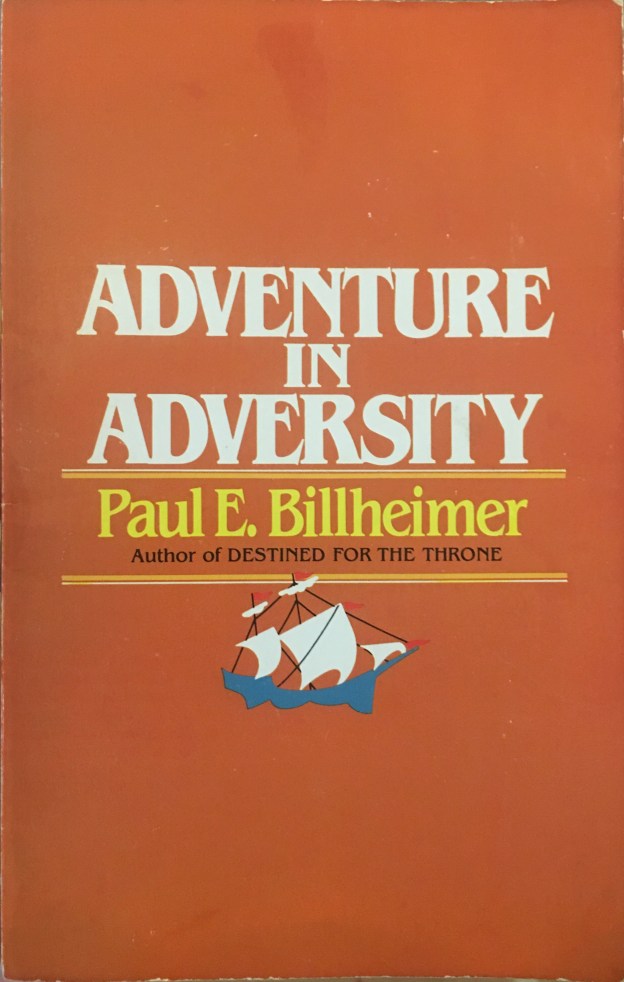
Review: Adventure in Adversity

Rating: ★★★★

Who: Paul E. Billheimer (1897-1984) was an American Charismatic minister who worked in media ministry during the last decades of his life. The thesis of most of his books is that the Bride of Christ is in on-the-job training for her eternal destiny through prayer and overcoming. His books are easy to read with short sections, lots of Scripture quotation, and simple, modern language.

Overview: This book is a brief devotional study on the Book of Job. The author teaches that Job was “perfect,” but only “relatively perfect,” at the beginning of the narrative. He shows how God taught Job brokenness and self-disillusionment in four areas of his life: family life, materialism, physical afflictions, and defective theology.

Some of Billheimer’s books are geared mainly towards bringing balance into the Word of Faith crowd—he worked with TBN in his later years—and you will notice a special focus on healing. Billheimer points out, however, that holiness trumps healing every time. How importance is character to God? “God is willing to be misunderstood in the universe he has made, in order to achieve his purpose of character development.” (p. 18) Delays and afflictions can work holiness in us, and even healing is meant to promote holiness in believers.

Meat: I am usually disappointed by reading someone else’s comments on Job—not so with Billheimer. He has some pretty good insights into what it means to be “relatively perfect.” Even though Job had no “blatant sin,” suffering refined him of attitudes that were not becoming in a saint.

The author’s theology is basically Wesleyan: “God does nothing except by prayer.” Billheimer’s books will resonate with those who prefer relational theology over systematic theology. Although he writes that God refines his people through suffering, he balances this by talking about God’s suffering, and emphasizing God’s compassion in his cosmic purposes.

Bones: Although Billheimer is bringing balance to the “name it, claim it” crowd, some of his statements make it sound like, if you just had enough faith, or were holy enough, then you would never experience sickness or affliction. Taken as a whole, though, I think this book is rather meant to oppose such attitudes of judgmentalism in the Church.

Quotes: “God’s purpose in permitting adversity is growth in holiness, in agape love, and that is obtained by progressive overcoming of the effects of the fall.” (p. 11)

“Tribulation’s imprint is on all great saints. It has been said that crowns are cast in crucibles … Blood marks the steps that lead to the heights.” (p. 30)

“None of us has reached the point where we are truly broken so long as we sit in judgment upon any act of God.” (p. 50)

Related: Don’t Waste Your Sorrows, The Mystery of God’s Providence, Destined for the Throne

Herbert Lockyer

Who Is Herbert Lockyer?

Dr. Herbert Lockyer (1886-1984) is one of the most quoted Bible expositors of the 20th century. His 21-volume All series takes a comprehensive look at thousands of biblical topics, with full volumes on such unexpected topics as All the Kings and Queens of the Bible and All the Trades and Occupations of the Bible. The series is a landmark in Bible study; volumes such as All the Miracles, All the Promises, and All the Messianic Prophecies have a wealth of devotional content to explore, in addition to their informative value.

But no one has written a biography of Herbert Lockyer. In fact, one can hardly find a scrap of anecdote about his life story. His Wikipedia page, which I created, is the result of hours of Internet searches—and all the information there comes from two publishers’ websites, one of which no longer exists. But I’ve learned some more about Lockyer since, and here’s what I can piece together:

Herbert Lockyer began as an orator. He studied “voice culture” and eventually published two books on the topic. (1) He even wanted to pursue a career as an actor—but the Lord redirected his steps, and he chose to be a pastor. After training at Glasgow Bible Institute, he held several pastorates in both England and Scotland, ministering for twenty-five years. (2)

He was influential in the Keswick Higher Life movement. Whitaker House’s author page (2) says that Dr. Lockyer gained influence in the movement while pastoring in Bradford, England. His sermons published in the 1930s are still inspiring, biblical, and concise. Evidently, he was ministering intermittently on both sides of the Atlantic, until he was called to minister in the United States.

A turning point came to his ministry in 1936. As a leader at Keswick, he must have received some invitations to minister in the United States, because in 1935 he began publishing sermons in Chicago. Dr. Lockyer was invited to speak at Moody Bible Institute’s 50th anniversary in 1936. From that time, other major evangelical publishers picked him up; within that year alone he published five books of sermons with Eerdman’s, and at least a dozen pamphlets with Zondervan and Moody. Within a couple of years, he was publishing even more compilations of sermons. These sermons—most of them were topical—formed the groundwork for his most influential ministry: his comprehensive topical Bible studies, better known as the All series.

From 1936, Dr. Lockyer mostly ministered and published in the United States, where he became even more well known than he had been in England. Around 1955, he returned to England. He published many books during the 1950s, but as his speaking ministry waned, his writing ministry eventually gave him an even wider influence. The gifted orator had turned writer.

In his later years, his ministry focused almost exclusively on writing. As his gift and influence as a writer became evident, he focused more and more on his writing projects. After crossing the Atlantic yet again to live in Colorado Springs, Dr. Lockyer spent years painstakingly studying the Scriptures, so that others could benefit from his comprehensive topical studies. These studies resulted in the All series, published between 1958 and 1976. His son, also a minister, acted as his editor during that time. As his corpus grew, many of these later books expanded on his earlier works and gave his writing more polish. All about God in Christ, for example, takes most of its material from his 1942 book of sermons, The Christ of Christmas, but the content is edited and expanded considerably, and it is a little easier to read. (3)

Dr. Lockyer may be one of the most prolific writers of the 20th century. He had an unbelievably long ministry and writing career—he passed away in 1984, just a couple years shy of becoming a centenarian. Even while writing this article, I have found a full-length book of his that I had never heard of. It is difficult to ascertain how much original work he actually published, since so many works were re-titled, and others are impossible to find. His solo-authored volumes, on both sides of the Atlantic, number around 85 volumes. (This does not include books that changed titles or short works such as pamphlets.)

Billy Graham wrote, “Dr. Lockyer was unquestionably one of the spiritual giants of our century, and his prolific writings will continue to make an impact on countless Christians for generations to come if our Lord tarries.”


(1) Voice Culture for Speakers and Students (Parry Jackman, 1955), and The Art of Praying and Speaking in Public: Practical Hints for Christians Who Desire to Witness (Parry Jackman, 1955).

(2) https://www.whitakerhouse.com/DeskTop.aspx?page=AuthorInfo&author=399. Accessed August 12, 2017.

(3)  Some of Dr. Lockyer’s works were also published under new titles to fit with the All series. All the Teachings of Jesus was first titled Everything Jesus Taught and What Jesus Taught About —All the 3s in the Bible is a repackaging of the three-volume Triple Truths of Scripture. This, in turn, drew from earlier material, all the way back to his 1936 sermons, The Three Crosses on Calvary’s Hill, Triads in Scripture, and The Trinity in the Scriptures. In this way, one can see how the All series was compiled laboriously over the course of many years. It is the capstone of four decades of study and ministry.

Review: All Things Considered

Rating: ★★★★

Author: G. K. Chesterton was a devoutly Catholic journalist, poet and novelist of the early 20th century. His most apt nickname is “The Prince of Paradox.”

Overview: All Things Considered is a series of brief newspaper articles treating various topics of the day—and Chesterton is capable of treating the most serious topics with levity. We can’t read Leonard Ravenhill all the time; for this reason, God gave us G. K. Chesterton.

Meat: Good writers can point us to biblical truth; great writers, like Chesterton, can arrive at truth starting from any heading. “On Running after One’s Hat” is still one of his most famous articles. “The Modern Martyr” and “The Error of Impartiality” contain exactly the kinds of brilliant insights a reader comes to expect from Chesterton.

“Fairy Tales” (quoted below) is a fascinating explanation of the truth of children’s tales: we are hemmed in by conditions or laws, and there is no escaping the truth that our choices have consequences. In this sense, Chesterton says, fairy tales carry moral truth, or a truth about morality. (The same theme is explored in “The Ethics of Elfland,” a famous chapter in Orthodoxy, published in the same year.)

Bones: Some of the political debates here—doubtless scathing in their day—are lost on today’s reader, especially those who aren’t English. Other topics are downright trivial; but then, that is probably what makes reading them so fun.

Quotes: “One of the great disadvantages of hurry is that it takes such a long time.”

“An adventure is only an inconvenience rightly considered. An inconvenience is only an adventure wrongly considered.” (“On Running after One’s Hat”)

“But the whole modern world, or at any rate the whole modern Press, has a perpetual and consuming terror of plain morals. … Our modern Press would rather appeal to physical arrogance, or to anything, rather than appeal to right and wrong.” Chesterton continues to say that if someone murders their grandmother, the press will call it “vulgar, disgusting . . . will accuse it of a lack of manners . . . Another school will say that it is an uneconomic waste of a good grandmother.  . . . The only real point that is worth mentioning is that the action is wicked.” (“The Boy”)

“If you really read the fairy-tales, you will observe that one idea runs from one end of them to the other–the idea that peace and happiness can only exist on some condition. This idea, which is the core of ethics, is the core of the nursery-tales. The whole happiness of fairyland hangs upon a thread, upon one thread. Cinderella may have a dress woven on supernatural looms and blazing with unearthly brilliance; but she must be back when the clock strikes twelve. . . . A promise is broken to a cat, and the whole world goes wrong. A promise is broken to a yellow dwarf, and the whole world goes wrong. . . .  A girl is given a box on condition she does not open it; she opens it, and all the evils of this world rush out at her. A man and woman are put in a garden on condition that they do not eat one fruit: they eat it, and lose their joy in all the fruits of the earth.” (“Fairy Tales”)

“Only the weak exhibit strength without an aim.”

You can read this book for free over at AmazonOnline-Literature, Internet Archive, or Project Gutenberg—better yet, listen to it for free at LibriVox.