Review: Phantastes (No Spoilers)

Rating: ★★★

Who: George MacDonald, 19th-century Scottish preacher, poet, and novelist. He had a profound influence on C. S. Lewis, Madeleine L’Engle, and many others.

Overview:

Phantastes (1858) is a mixed genre foray into fantasy, written very early in MacDonald’s career. The story is framed as an episodic journey, but it incorporates many sideplots and poems, so that many chapters are only loosely strung to the narrative. This relatively difficult book has some dark themes and is written primarily for an adult audience.

The plots and subplots deal with themes of imagination, bondage and freedom, love and infatuation. Anodos falls in love with a statue, but cannot free her from her pedestal; Anodos is warned about the Ash Tree, which is precisely who he finds himself encountering; and so on.

Meat:

This book had great appeal for C. S. Lewis—before his conversion—and wrote in Surprised By Joy that it “baptized [his] imagination.” For my own part, I can say that some of the images and metaphors were profound; others, rather protracted. This is definitely one of MacDonald’s most ambitious works of fiction, and may appeal to more ambitious readers.

Bones:

When C. S. Lewis recommends a novel, one expects to see sweeping themes like those of the Space trilogy, or elegant metaphors like those of Narnia; I didn’t find either to be in large number here. The fantasy is more of art for art’s sake, or language for language’s sake; it was costly reading with no payoff.

I am a great fan of George MacDonald, but not a fan of his darker work. (I should add, Lewis has pointed me to other fantasy works that I found disappointing, like those of Charles Williams.)

Quotes:

“We receive but what we give.” (loc. 854)

“The waters lay so close to me, they seemed to enter and revive my heart. I rose to the surface, shook the water from my hair, and swam as in a rainbow, amid the coruscations of the gems below seen through the agitation caused by my motion. Then, with open eyes, I dived, and swam beneath the surface. And here was a new wonder. For the basin, thus beheld, appeared to extend on all sides like a sea, with here and there groups as of ocean rocks, hollowed by ceaseless billows into wondrous caves and grotesque pinnacles. Around the caves grew sea-weeds of all hues, and the corals glowed between; while far off, I saw the glimmer of what seemed to be creatures of human form at home in the waters. I thought I had been enchanted; and that when I rose to the surface, I should find myself miles from land, swimming alone upon a heaving sea; but when my eyes emerged from the waters, I saw above me the blue spangled vault, and the red pillars around. I dived again, and found myself once more in the heart of a great sea.” (loc. 1089)

“Hardly knowing what I did, I opened the door. Why had I not done so before? I do not know.” (loc. 2448)

This book is free on Kindle, Project Gutenberg, and on LibriVox.

Chrysostom and the Goal of Missions

In early modern missions, Carey and many of his contemporaries seemed to think that they were ushering in the Millennial kingdom in some sense. It’s interested that their optimism may have been partially misfounded, or misdirected; we are not commanded to Christianize all nations, but simply to preach, as the following from Chrysostom shows:

For the signs too are now complete, which announce that day. For “this Gospel of the Kingdoms,” saith He, “shall be preached in all the world for a witness unto all nations; and then shall the end come.” Attend with care to what is said. He said not, “when it hath been believed by all men,” but “when it hath been preached to all.” For this cause he also said, “for a witness to the nations,” to show, that He doth not wait for all men to believe, and then for Him to come. Since the phrase, “for a witness,” hath this meaning, “for accusation,” “for reproof,” “for condemnation of them that have not believed.”

So the goal of missions is not a Millennial kingdom; the goal of missions is that all may hear. May the offer of Christ’s grace go forth.

(Source: John Chrysostom, Homily X on Matthew. Phillip Schaff’s Nicene and Post Nicene Church Fathers.)

Texts That Made History

The Texts That Made History series is a series of biographical sermons by F. W. Boreham. Each sermon deals with the impact of a single Scripture text in the life of a famous person. We are not surprised to see the impact of the Bible in the lives of reformers, preachers, and pioneer missionaries. However, Boreham broadens his vision to take on explorers, authors, statesmen, and even a few fictional characters.

In the introduction to the fifth volume, the author explains that several years ago he was musing on what to announce for his next teaching series. He had been studying the impact of a single Scripture on the life of Martin Luther—guiding towards the Protestant Reformation—and wondered if he should teach on the Bible’s impact in biographies. Then Boreham tells us he “astonished himself” by announcing that he was commencing a series entitled The Texts That Made History:

At the close of the service, one of my most trusted officers came to me in great delight. ‘That’s a noble idea,’ he explained enthusiastically; ‘it will be the best series that you ever preached!’

It has certainly been the longest, and the most evangelistic, and the most effective. And it has been the series in which I myself have found the most delight.

Boreham wrote over 1500 biographical articles over the course of his life, making him for many decades the most prolific author in Australian history. He read one book every week over the course of most of his long life. It is no wonder, then, that he is well qualified to handle his theme.

Four out of the five books in this series are already available as ebooks, and we hope to put all four of them back into print in the coming months.

Texts That Made History

  1. A Bunch of Everlastings
  2. A Handful of Stars
  3. A Casket of Cameos
  4. A Faggot of Torches (unavailable)
  5. A Temple of Topaz

Leviticus: Be Holy For God Is Holy

LEVITICUS
is a book about
HOLINESS
in which God provides
ATONEMENT.

The Book of Leviticus: God’s Holiness

Leviticus is named for its relation to the Levites, and most of its commands pertain to the priesthood, especially commands about atonement for sin, which is the subject of about half the book.
In Exodus, one of the most important phrases in the Old Testament is introduced: “I am the Lord.” In Leviticus, God says his nature is essentially holy (20:7-8, 21:8, etc.). In the ESV, the word “holy” is used 91 times in Book of Leviticus.
He is also the Lord who sanctifies or makes us holy (20:8; 21:8, 23; 22:9, 16; see also Ex. 31:13; Ezek. 20:12, 37:28, etc.). This is a key concept in Leviticus, repeated five times: “Be holy, for I am holy” (11:44-45, etc.). God’s holiness informs us about what it means for us to be holy, and God’s holiness is the reason that he provides atonement for us. This is the attribute of God most clearly on display in Leviticus, and nearly every passage in Leviticus can be seen through this lens.

Plain Teaching on Sin (ch. 1-7)

These commandments about sacrifice are filled with specific truth about sin and guilt. There is no need to seek any allegorical meaning in them, when they teach plain truths about sin and sacrifice:
1) We learn the difference between sins and trespasses (Ps. 19:12-13). There are sins that are obvious to us, but there are also sins that we commit unknowingly (4:2). 1 John 1:9 says that if we confess our (known) sin, he will cleanse us from all unrighteousness (which would include unknown sin).
2) We learn the difference between personal sin, public sin, and priestly sin (4:13, 22, 27). If I cheat my neighbor, that is my own sin. But Nehemiah acknowledged, for example, that the people had sinned corporately, and corporate repentance was required.
The sin of priests and leaders is also treated differently. Ministers and teachers of the Gospel carry more responsibility because of their consecration, and this even affects the way their families are treated.
3) We learn from Aaron’s four sons that there are sins of commission and omission. Just as Nadab and Abihu sinned by offering fire “which the Lord had not commanded” (10:1), Eleazar and Ithamar sinned by neglecting to eat the sacrifice as commanded priesthood(10:18).

Plain Teaching on Priesthood and Sacrifice (ch. 8-10, ch. 21-22)

The tabernacle is established in the Book of the Exodus, and the  is established in this book. In Leviticus, we have plain teaching about the meaning of sacrifice—not only that God requires our best, or that he requires blood, but beyond that, we learn:
1) Sacrifice required confession (4:15, 5:5, 16:21). The purpose of placing hands on the animal was to confess guilt in its presence. Likewise, the sacrifice of Christ has no effect if we do not admit our guiltiness.
2) Sacrifice required consecration (ch. 8-10). Not everyone can make a sacrifice, but only a priest can make atonement under the Old Covenant (4:35, 5:16, etc.). But now the Lord requires consecration from all his children, and we are all priests in the new order (Heb. 7:11, 1 Pet. 2:5).
3) Sacrifice required cleanness. It is not undertaken flippantly (10:1), or in any place, or at any time (16:2). But under the New Covenant we learn that God seeks those who worship him “in spirit and in truth” (John 4:24). It is not just clean hands but “a pure heart” that the Lord desires (Ps. 24:4).

Holiness and Cleanliness (ch. 11-15)

All the rituals involving food, skin diseases, etc. may be seen as involving cleanliness, and may or may not involve the guilt of sin. The commandments about food (ch. 11) are practical and interesting. (Winkie Pratney says, if you break these commands, you won’t necessarily go to Hell, but you will feel like Hell.)
Before the New Covenant was established, the Lord frequently required healed lepers to abide by Leviticus 14 in presenting themselves to the priests.
Leviticus 13 and 14 are dedicated to the separation of those with contagious skin disorders from the crowd of the camp.
The idea that these diseases were transferred through physical contact, and not by some other mystical means, has suffered a lack of acceptance, even recently, even in the educated West. At the height of his career, Joseph Lister was criticized and laughed at in his early career for his ideas about cleanliness and antiseptics in hospitals; in his old age, Queen Victoria made him a baron and a royal counselor; now, he is known as the “Father of Modern Surgery.”

Day of Atonement (ch. 16)

The Day of Atonement, or Yom Kippur, is at the center of the Book of Leviticus, and it is central to the whole practice of making atonement. This is neither the same as the daily sacrifices, nor is it “business as usual.” We see this in 1) the rarity of the occasion, which was annual (v. 2, 29); 2) the entry of the Holy of Holies, which was not allowed at other times (v. 2); 3) the special release of the scapegoat, which is mentioned nowhere else in the Bible.
The meaning of the scapegoat is up for debate, but the custom is clear enough: In addition to the commands laid out in this passage—namely, confession over this goat—the high priest tied a scarlet thread to the goat, representing guilt, before sending him away. In later years, rather than merely releasing it, the man charged with the duty would push the goat off of a precipice, and wave a signal to people stationed nearby that the atonement ritual was complete. Regardless, it represents a distancing from sin (Ps. 103:12), God not counting our sins against us (Ps. 32:1-2, Rom. 4:7-8).

General Commands (ch. 17-20)

It is no coincidence that sex is mentioned so prominently (ch. 18) in a book about holiness and atonement; sexual immorality is the quickest path to deceive yourself and destroy your family, and must be taken seriously (Heb 13:4).
This section contains what Jesus called the second most important commandment: “Love your neighbor as yourself” (19:18). Thomas Fuller, a Puritan author, had a fascinating insight on this verse in connection with the Sermon on the Mount: “Many things pass to be in Scripture, when no such matter is to be found therein. ‘Ye have heard it said, “Thou shalt love thy neighbor, and hate thine enemy.”’ (Mt. 5:43) But where is it said, ‘Thou shalt hate thine enemy’? Surely nowhere in God’s Word.”[1]

Feasts, Sabbaths and the Year of Jubilee (ch. 23-25, 27)

Note especially how the Feasts of Passover and Booths have been fulfilled in Christ’s death, and Pentecost, respectively (Mt. 26:2, 1 Cor. 5:7, etc.). (It’s important to know that Pentecost is simply the Greek name for the Feast of Booths.)
The Year of Jubilee (ch. 25) ensures justice and provide balances to the economic system; most interestingly, debt is freely forgiven, while in our modern system it simply accumulates unchecked.

Covenant and Consequences (ch. 26)

In Leviticus 26, God outlines consequences if Israel should fail to keep her side of the Covenant. This chapter shows that for believers, God will progressively try any means to get their attention, so that they will return to him (v. 3, 14, 18, 21, 23, 27; see also Deut. 28). But God promises in spite of this that he will bless and help them “if they confess their iniquity” (v. 40), and he could never forget or break his end of the covenant (v. 43-44).
This important section of the Pentateuch is what is referenced by Jeremiah and Daniel when they say that the punishments of the covenant have fallen on Israel (Dan. 9:10-14, Lam. 2:17). The complaints of other prophets of the exile period also prove that this Scripture was being fulfilled in their day (Hag. 2:16-17).

Study Recommendations

Written in Blood by Robert E. Coleman is a readable, well-studied devotional on the meaning of Jesus’ blood.
Andrew Murray published two books of sermons on Jesus’ blood: The Power of the Blood of Jesus and The Blood of the Cross.


[1] Concerning Christ’s Temptations.

proving the unseen

Review: Proving the Unseen

Rating: ★★★★

Who: George MacDonald, 19th-century Scottish preacher, poet, and novelist. He had a profound influence on C. S. Lewis, Madeleine L’Engle, and many others.

Overview: This book is a rare glimpse into the spoken sermons of George MacDonald. Proving the Unseen was arranged and edited by William J. Petersen from sermons published in Christian World Pulpit in MacDonald’s lifetime. The sermons are reasonably short and have the same subject matter found in most of MacDonald’s books: The Fatherhood of God, the resurrection of Jesus, and the obedience of faith.

Meat: This book’s strength is that it is significantly easier to read than Unspoken Sermons, which many—unlike me—find too abstract. MacDonald’s spoken ministry as found here is surprisingly straightforward, and yet, the material has the same depth and spiritual sharpness. I especially enjoyed the titular sermon, “Faith, the Proof of the Unseen,” and “Alone with God.”

Bones: The sermons here are pretty short, so you may get the sense that MacDonald could say a lot more on each topic.

Quotes: “Often the very things that lift us up nearer to God are viewed by us as misfortunes. ‘How sad,’ we say, and console one another on the means that the Father of our spirits is using to cleanse our souls and to make us the very children of his heart.” (p. 61)

Author Guide: F. W. Boreham

This is a guide to where to find the many books of F. W. Boreham, prolific English writer who ministered for three decades down under, in New Zealand, Tasmania, and Australia. His writing can be broken up into the following four eras: The Early Days, Finding His Voice, The Texts That Made History, Writing Ministry, and After Retirement.

Of his 49 books, only 15 of them have clearly outlined themes. For that reason, I’ve attempted to give brief summaries here, with a little info about where to find hard copies.

1. The Early Days

When F. B. Meyer wrote a foreword for “Won to Glory,” Boreham started to win the attention of publishers. In this period, The Whisper of God most closely resembles Boreham’s classic style; George Augustus Selwyn is also notable for being the only full-length biography written by Boreham, despite his lifelong preoccupation with the genre.

Won to Glory
A sermon on Boreham’s testimony in relation to Genesis 25. Extremely rare.

Loose Leaves (Our Review: ★★★)
A travelogue of a trip around the world. Boreham mostly comments on historical incidents, scenery, and tourist anecdotes. Mildly interesting, but it has almost no spiritual content.
Reprinted by John Broadbanks Publishing, $10.00

From England to Mosgiel
Boreham’s second travelogue.
Reprinted by John Broadbanks Publishing, $9.00.

The Whisper of God (Our Review: ★★★★)
His first full book of sermons. The titular sermon is excellent, and was a foreshadowing of the style Boreham would take up in future works. This book carries the flavor of the pulpit with it; it has a very different tone and style than Boreham’s other books, and for that reason it is worth reading.
Reprinted by Pioneer Library, $11.99.

George Augustus Selwyn (Our Review: ★★★★★)
Biography of the first Anglican bishop of New Zealand. This biography, in the fast-paced style of the popular writing of the day, is an inspiring story of preparation, calling, and discipleship. Selwyn had a great chance to pioneer in not only New Zealand, but all of Melanesia as well, due to a clerical mistake that made him bishop of the South Seas. Although there are many biographies of Selwyn, Boreham’s is a classic and a downright fun read.
Reprinted by GraveRobber Publishing, $5.99.

2. Finding His Voice

At this time, Boreham began in earnest to publish the style of essays that would mark his career. These earlier books are a little bit more of a ramble; he may take a while to get to his point, and he is usually not expositing Scripture. He takes anything as his text, from luggage to linoleum. But he is working out his voice, and in the process, he is becoming a master of illustration.

The Luggage of Life
Reprinted by Pioneer Library, $12.99.

Mountains in the Mist (Our Review: ★★★★★)
Reprinted by Pioneer Library, $12.99.

The Golden Milestone (Our Review: ★★★★★)
Reprint coming, March 1, 2018.

Mushrooms on the Moor
Reprinted by Pioneer Library, $12.99.

Faces in the Fire (Our Review: ★★★)
Reprinted by Pioneer Library, $12.99.

The Other Side of the Hill
Reprinted by Pioneer Library, $14.99.

The Silver Shadow
Reprinted by Pioneer Library, $14.99.

The Uttermost Star (Our Review: ★★★★★)
Reprinted by Pioneer Library, $14.99.

3. The Texts That Made History

Boreham began a sermon series on “Texts That Made History,” apparently on a whim. But it turned out to be, as he wrote, “his most popular and most evangelistic sermon series.” Boreham was always a student of biography, but this period was characterized by intense biographical research.

A Bunch of Everlastings (Our Review: ★★★★★)
The first of the Texts That Made History.
Reprinted by Pioneer Library, $14.99.
Listen along on LibriVox.

A Reel of Rainbow
Reprinted by Pioneer Library, $9.99 until June 30.

The Home of the Echoes
Reprint coming soon, 2018.

A Handful of Stars
The second of the Texts That Made History.
Reprint coming soon.
Listen along on LibriVox.

Shadows on the Wall
Reprint coming soon, 2018.

Rubble and Roseleaves
Includes “The Fish-Pens.”
Reprint coming soon, 2018.

A Casket of Cameos (Our Review: ★★★★★)
The third of the Texts That Made History.
Reprint coming, December 1, 2017.

Wisps of Wildfire (Our Review: ★★★★)
Reprinted by Pioneer Library, $14.99.

The Crystal Pointers
Reprint planned.

A Faggot of Torches
The fourth of the Texts That Made History. This is the only volume of Texts that is out of print because of its copyright status.

A Tuft of Comet’s Hair
Reprint planned.

The Nest of Spears
Reprint planned.

A Temple of Topaz (Our Review: ★★★★★)
The fifth and final of the Texts That Made History. Masterfully researched, engagingly written.
Reprinted by Pioneer Library, $14.99.

4. Writing Ministry

Boreham’s writing at this point in his life has became very refined. In our opinion, this is when he produced several of his best books.

The Fiery Crags
Reprint planned.

The Three Half Moons (Our Review: ★★★★★)
Includes “On Sowing Hopeseed.”
Reprinted by Pioneer Library, $9.99.

The Blue Flame (Our Review: ★★★★★)
One of Boreham’s longest and best books of essays.
Reprinted by Pioneer Library, $14.99.

When the Swans Fly High
Reprint planned.

A Witch’s Brewing
Reprint planned. Rare.

The Drums of Dawn (Our Review: ★★★★★)
Reprinted by Pioneer Library, available only on Lulu.com, $12.45.

The Ivory Spires
Reprint planned.

The Heavenly Octave
Essays on the Beatitudes. No reprint available.

Ships of Pearl
Reprinted by Pioneer Library, available to Kickstarter backers only.

The Passing of John Broadbanks (Our Review: ★★★★★)
“With the passing of John Broadbanks, I myself must pass.” Thus Boreham introduces the book he intended to be his last. Most of the essays are themed on “the road” in some way.
Reprint planned.

5. After Retirement

After “notionally retiring” in 1936, Boreham actually published fifteen more books—but there is a big difference in these later volumes. Aside from I Forgot to Say, the books that follow are compilations of shorter articles that were not yet published in book form, books compiled on themes that he loved,

I Forgot to Say
The first of fifteen books published after Boreham’s notional retirement. Includes “Wet Paint.”

My Pilgrimage
Boreham’s autobiography.
No reprint available.

The Prodigal
Exposition of the Parable of the Prodigal Son, one of Boreham’s favorite themes.
No reprint available.

Boulevards of Paradise
Short articles. Very rare.
No reprint available.

A Late Lark Singing
Short articles.
No reprint available.

Cliffs of Opal
No reprint available.

Lover of Life (Man Who Saved Gandhi) (Our Review: ★★★★★)
A short biography of Rev. J. J. Doke. (First printed as The Man Who Saved Gandhi.) Doke was a great encouragement to Boreham in his early pastorate, and eventually gave his life as a pioneer missionary.
John Broadbanks Publishing, $7.00.

Arrows of Desire (Our Review: ★★★★★)
Short articles.
No reprint available.

My Christmas Book (Our Review: ★★★★★)
Twelve short Christmas devotions. About half of these are taken from previous books, under different titles. But they are attractively edited to make a perfect Christmas devotional, wisely themed not only around the holiday, but around “the Word became flesh”—the mystery of God incarnate in Christ.
Reprinted by John Broadbanks Publishing, $7.00. (Hardbacks run around $15.)

Dreams at Sunset
Short articles. Includes “The Ideal Congregation.”
No reprint available. Hardbacks run $15.

In Pastures Green
An exposition of Psalm 23. We are grateful to John Broadbanks Publishing for cheaply reprinting this short and valuable work.
Reprinted by John Broadbanks Publishing, $10.00.

The Gospel of Robinson Crusoe
Essays from the classic adventure novel, Robinson Crusoe.
Reprinted as a 2-in-1 by John Broadbanks Publishing, $8.00.

The Gospel of Uncle Tom’s Cabin
Essays from the classic anti-slavery story, Uncle Tom’s Cabin by Harriet Beecher Stowe.
Reprinted as a 2-in-1 by John Broadbanks Publishing, $8.00.

The Tide Comes In
A very rare book of short articles, some only one or two pages. Includes the essay “God.”

The Last Milestone
Short articles, published posthumously with a lovely biographical introduction.

6. Post-humous (not including compilations)

Slices of Infinity
Previously unpublished articles.
Published by John Broadbanks Publishing, $8.00.

Nuggets of Romance
Previously unpublished articles. Mostly biographical articles about literary figures, some overlap with Texts That Made History. Very few of the essays are devotional in any traditional sense, but the book will prove very enjoyable to lovers of Boreham’s biographical style.
Published by John Broadbanks Publishing, $8.00.


Many thanks to Michael Dalton, Geoff Pound and Jeff Cranston for their work in making F. W. Boreham’s creative classics available to a new generation of believers.

Haggai: Work Is for Fellowship

HAGGAI
is a book about
WORK
in which God
DWELLS.

The Messenger and His Audience

Haggai is unique in that his audience is primarily just two people: Zerubbabel, the governor, and Joshua, the high priest. Both of them participate in this revival in a personal way (1:12, 14), receive personal words from God, and special promises. (See Ezra 5:1-2, Hag. 2:21-23, Zech. 3:1-10, 4:9-10, etc.) The only verse specifically directed at the public is 1:13: “I am with you, says the Lord.”
Haggai’s message is intimately related to the Books of Zechariah and Ezra. (See Ezra 5:1.) Zechariah and Haggai’s prophecies dovetail in confirmation of each other, and the people prosper through their prophesying (Ezra 6:14).

Haggai’s Message: Realignment of Priorities

Haggai’s primary spiritual message was one of priorities, and its primary application was that is it is time to work. Five times God commands them to “consider” (1:4, 1:7, 2:15, 2:18). It is easier to live selfishly; righteousness requires that we turn off autopilot mode and examine our priorities.
When we experience spiritual revival, it leads to a realignment of priorities. The first way this seems to happen is in the area of work. Haggai’s hearers were invited to invest time. Building the Lord’s temple would require some sacrifice of the time that they spent on their own affairs.
The second result of revival is in our finances. Haggai’s hearers were challenged to contribute materially (1:8, 2:8). Our time and money go towards what we value. Whenever there is repentance, spiritual renewal translates into an active response in these two ways.

Why Build?

“‘Go up to the mountains and bring wood and build the temple, that I may take pleasure in it and be glorified,’ says the Lord.” (1:8) God commands the Israelites to build “that I may take pleasure in it and be glorified.” This twofold purpose reminds us of the Westminster Catechism: “The chief end of man is to glorify God and enjoy him forever.” We build because God says “I am with you” (1:13, 2:5).
When God ordered the building of the Tabernacle, the reason was “so that I may dwell among you.” But now God says he is already among them, and they needed to acknowledge and prepare for his presence.
When God asks us to commit to the work of ministry, it is never to receive justification or atone for guilt; it is always for his pleasure and because he is worthy of glory. Work is for fellowship.

The House of the Lord

The temple is not “a house for the Lord” but “the house of the Lord.” It is a holy place belonging to him that he might reveal himself to his people; it is not a place for a tribal god to live. They did not rebuild the temple so that God could dwell among them; they rebuilt the temple because God was dwelling among them. “Work . . . for I am with you” (2:4).
In the New Covenant, God’s preeminent dwelling place is his people. A church building is never called the house of God in the New Testament. As Solomon said, “Behold, heaven and the heaven of heavens cannot contain you!” (1 Kings 8:27, NKJV) But it is also written: “You [plural] are God’s temple” (1 Cor. 3:16). Building God’s house for us means prioritizing our time and money for spiritual ministry. (See also: Christ’s Body Is the Temple.)

Special Promises

“The heaven over you is stayed from dew, and the earth is stayed from her fruit” (1:10, KJV). God hearkens back to his covenant promises in Deuteronomy 7:13 and Leviticus 26:4. Abundant crops are specifically promised for Israel if they obey the covenant; drought and lack are promised if they disobey.
The promise is not universal, and it is not the same as karma—it is a specific way that God proves himself to his covenant nation (Lev. 26:9). In Haggai, God is trying every economic expedient to get the attention of believers, because they should know better. However, he promises specifically that this will turn around from the date of the foundation of the temple (2:18-19, Lev. 26:40-42).
In the Old and New Testaments, God never commits himself to a law of always returning good for righteousness and evil for wickedness. In his great wisdom and faithfulness, he can allow suffering on the righteous (e.g. Job), or mercy for the wicked (e.g. Saul). He sends his sun and rain on the righteous and the wicked, because he is perfect (Matt. 5:45); and the wind and storms come to both, whether our foundation is built on the sand or the rock (Matt. 7:24-27).

The Latter Glory

Haggai says the latter glory will exceed the former glory (2:9). This is immediately about the temple but also relates to the Messianic kingdom to come. The “shaking of all nations” and the “desire of all nations” relate to the future period when Israel becomes the center of the Messiah’s earthly kingdom. (The “desire of nations” is often thought to mean Jesus, but from the context, it seems to refer to the wealth that will be brought to Jerusalem, as in Zechariah 14:14.)
Victory over the Gentiles is also one of the promises of this time period. (See 2:20-23)

Shares themes with: Ezra, Nehemiah, Zechariah.

Author Guide: Andrew Murray

Andrew Murray has been one of my favorite authors since I became a Christian. I consider him the quintessential devotional author: Short books, short chapters, fluid writing, and always spiritual.

Some sources claim quite vaguely that Andrew Murray wrote 240 books; that is an exaggeration. His 1920 biography points out that he published 240 books and tracts, but many of these were published in both English and Dutch. It was not easy to put this together, but it looks like he published about 42 unique books in his lifetime, and the manuscripts and booklets he left at the time of his death were arranged into three more books, meaning Andrew Murray’s legacy is 45 single-author books. Amazingly, all 45 of these books have been in print recently.

His Pocket Companion series of twelve booklets was also important to the people to whom he ministered directly, and those are listed separately. Though they are short, some publishers have arranged them today into books numbering over 100 pages each, so that the number of his books could be counted at 57 if we included these, more if we included other posthumous arrangements.

In reality, it is impossible to know for sure how many published works he had. During his lifetime he published many dozens of books, booklets and tracts in two languages, on three continents.

In addition to his bilingualism, modern publishers have changed titles—apparently The School of Obedience doesn’t entice the megachurch crowd. I have included here in brackets books that were taken from his older works and edited or retitled. All the numbered books, however, are unique material that was put together by him before he died.

His style is simple and always devotional. When asked about his style, he joked that he thought in Dutch, and wrote in English, and that accounts for his lack of literary flare. His messages almost always involve surrender and dependence on the Holy Spirit.

*** Those marked with three asterisks are the most highly recommended.

Books by Andrew Murray (alphabetical)

  1. Abide in Christ: Thoughts on the Blessed Life of Fellowship with the Son of God
  2. Absolute Surrender and Other Addresses
  3. Aids to Devotion: Thoughts on the Holy Spirit in the Epistle of Ephesians
    [Andrew Murray’s Yearbook = compilation]
  4. An Apostle’s Inner Life (posthumously arranged)
  5. Back to Pentecost: The Fulfillment of the Promise of the Father (Acts 1:4) (posthumous)
  6. Be Perfect: A Message from the Father in Heaven to His Children on Earth
    [The Believer’s Call to Commitment = Aids to Devotion]
    [The Believer’s Daily Renewal = The Inner Chamber and the Inner Life]
    [The Believer’s Full Blessing of Pentecost = Full Blessing of Pentecost]
    [The Believer’s New Covenant = The Two Covenants and the Second Blessing?]
    [The Believer’s New Life = The New Life]
    [The Believer’s Prayer Life = The Prayer Life]
    [The Believer’s Prophet, Priest and King = The Prophet-Priest]
    [The Believer’s School of Prayer = With Christ in the School of Prayer]
    [The Believer’s Secret of Holiness = Holy in Christ]
    [The Believer’s Secret of a Perfect Heart = Be Perfect?]
    [The Believer’s Secret of Living Like Christ = Like Christ]
    [The Believer’s Secret of the Master’s Indwelling = The Master’s Indwelling]
    [The Believer’s Secret of Waiting on God = Waiting on God]
    [Believing Prayer = The Secret of Believing Prayer, edited]
    [The Blessings of Obedience = The School of Obedience]
    [The Blood of Christ = ?]
  7. The Blood of the Cross (sequel to The Power of the Blood of Jesus, sometimes published together)***
    [Called by Christ = ?]
  8. The Children for Christ
    [Confession and Forgiveness = Have Mercy upon Me]
    [Confession: The Road to Forgiveness = Have Mercy upon Me]
    [Consecrated to God = ?, edited]
  9. The Christian Life (preached Sept. 1895, Toronto)***
    [Convention Addresses Delivered at Bridge of Allan, 1895 is a multi-author compilation including a few of Murray’s sermons, which were also published elsewhere]
    [Covenants and Blessings = The Two Covenants and the Second Blessing]
    [Daily Experience with God = The Inner Chamber and the Inner Life, edited]
    [The Deeper Christian Life = The Christian Life]***
  10. Divine Healing: A Series of Addresses
  11. Eagle Wings
    [An Exciting New Life = The New Life?]
    [Experiencing a Deeper Christian Life = The Deeper Christian Life]
    [Experiencing the Holy Spirit = The Full Blessing of Pentecost]
    [Every Day with God = ?]
  12. Faith in the Power of God
    [Faith: Why Do You Not Believe? = Why Do You Not Believe?]
    [The Fruit of the Vine = The True Vine, British title]
  13. The Full Blessing of Pentecost: The One Thing Needful
    [Full Life in Christ = ?]
    [The Fullness of the Spirit = The Full Blessing of Pentecost, edited]
    [God’s Best Secrets = ?]
    [God’s Plans for You = How to Work for God? Working for God?]
    [God’s Power for Today = Andrew Murray’s Yearbook]
    [God’s Will: Our Dwelling Place = Thy Will Be Done]
    [Growing in Christ = ?]
  14. Have Mercy upon Me: The Prayer of the Penitent in the Fifty-First Psalm Explained and Applied
    [Healing Secrets = Divine Healing?]
  15. The Holiest of All: An Exposition of the Epistle to the Hebrews
  16. Holy in Christ: Thoughts on the Calling of God’s Children to Be Holy as He Is Holy
    [How to Be Perfect = Be Perfect]
    [How to Bring Your Children to Christ = The Children for Christ]
    [How to Raise Your Children for Christ = The Children for Christ]
    [How to Strengthen Your Faith = Why Do You Not Believe, edited]
  17. Humility: The Beauty of Holiness***
    [The Indwelling Spirit = The Spirit of Christ]
  18. The Inner Chamber and the Inner Life
    [The Inner Life = The Inner Chamber and the Inner Life]
    [In Search of God’s Perfection = Be Perfect?]
    [In Search of Spiritual Excellence = The Full Blessing of Pentecost]
    [Jesus Christ, Prophet/Priest = The Prophet-Priest]
    [Jesus Heals the Sick = Divine Healing]
  19. Jesus Himself: Two Addresses
    [The Joy of Being Forgiven = Have Mercy upon Me]
  20. The Key to the Missionary Problem: Thoughts Suggested by the Report of the Ecumenical Missionary Conference, Held in New York, April 1900
    [The Kingdom of God Is Within You = Within]
    [Let Us Draw Nigh: Meditations on Hebrews 10:19-25 is an excerpt from The Holiest of All]
    [A Life of Power = Power for Your Life]
    [A Life of Obedience = The School of Obedience]
  21. Like Christ: Thoughts on the Blessed Life of Conformity to the Son of God (sequel to Abide in Christ)
    [Living the New Life = The New Life]
    [Living to Please God: Light for Your Pathway to Spiritual Maturity = ?]
  22. Living Words: Addresses Delivered at the Rothesay Convention (unavailable)
  23. The Lord’s Table: A Help to the Right Observance of the Holy Supper
    [Love and Light = ?]
  24. The Master’s Indwelling (preached Aug. 1895, Northfield)
  25. The Ministry of Intercession: A Plea for More Prayer***
    [The Ministry of Intercessory Prayer The Ministry of Intercession + Pray without Ceasing]
  26. Money: Thoughts for God’s Stewards
    [The Mystery of the True Vine = The True Vine, South African title]
  27. The New Life: Words of God for Young Disciples of Christ
    [Not My Will = Thy Will Be Done, edited]
    [Out of His Fulness: Addresses Delivered in America = The Master’s Indwelling + The Christian Life]
    [The Path to Holiness = Holy in Christ, edited]
    [Power for Your Life = The Secret of Power from on High?]
    [Power in Prayer = compilation]
  28. The Power of the Blood of Jesus
    [The Power of the Blood of Christ =The Power of the Blood of Jesus]
  29. The Power of the Spirit: With Additional Extracts from the Writings of William Law
    [Prayer and the Coming Revival = The Ministry of Intercession]
    [Prayer Guide]
  30. The Prayer Life: The Inner Chamber and the Deepest Secret of Pentecost
    [The Promise of the Spirit = ?]
  31. The Prophet-Priest: Four Addresses Delivered at Mildmay Conference, 1895
    [Raising Your Child to Love God = The Children for Christ]
    [Reaching Your World for Christ = The State of the Church]
    [Revival = The Ministry of Intercession, edited]
  32. The School of Obedience (Addresses at the Students’ Convention at Stellenbosch, South Africa, July 28-31, 1898)
    [The School of Prayer = With Christ in the School of Prayer]
  33. The Secret of Believing Prayer [= two booklets compiled posthumously]
    [The Secret of God’s Love = The True Vine]
    [The Secret of God’s Presence = Be Perfect]
    [The Secret of Holiness = Holy in Christ?]
    [The Secret of Obedience = The School of Obedience?]
    [The Secret of Spiritual Strength = ?]
    [Secrets of Authority = six titles compiled]
    [Shepherd’s Song = publication error; this is actually F. B. Meyer’s Shepherd Psalm]
  34. The Spirit of Christ: Thoughts on the Indwelling of the Holy Spirit in the Believer and the Church
    [The Spirit of the Cross]
    [Spiritual Help for Daily Living = ?]
  35. The Spiritual Life: A Series of Lectures Delivered before the Students of the Moody Bible Institute
    [Standing in the Gap = The Ministry of Intercession?]
  36. The State of the Church: A Plea for More Prayer
    [Teach Me to Pray = With Christ in the School of Prayer, edited]
  37. Thy Will Be Done: The Blessedness of a Life in the Will of God
  38. The True Vine: Meditations for a Month on John 15:1-5***
  39. The Two Covenants and the Second Blessing
  40. Waiting on God
    [Walking with God = Waiting on God + Working for God + Be Perfect]
  41. Why Do You Not Believe?
    [Wings Like Eagles = Eagle Wings]
  42. With Christ
  43. Within, or, The Kingdom of God Is Within You
    [With Christ in the School of Obedience = The School of Obedience]
  44. With Christ in the School of Prayer: Thoughts on Our Training for the Ministry of Intercession***
    [With Wings as Eagles = Eagle Wings]
    [Working and Waiting = Working for God + Waiting on God]
  45. Working for God (sequel to Waiting on God)


Pocket Companion Series

Murray ministered in a large rural area, and saw the immediate usefulness of advances in paperback publishing. After his retirement, this gave him a strong impetus to continue publishing daily devotional material for the rural districts, in which some people could only visit a worship service once every few weeks. The twelve booklets listed here are 30-day devotionals for his parishioners, and they comprise a substantial body of work in themselves.

  1. The Secret of the Abiding Presence 
  2. The Secret of Adoration
  3. The Secret of Brotherly Love
  4. The Secret of Christ Our Life
  5. The Secret of the Cross
  6. The Secret of the Faith Life
  7. The Secret of Fellowship
  8. The Secret to Inspiration
  9. The Secret of Intercession
  10. The Secret of Power from On High
  11. The Secret of the Throne of Grace
  12. The Secret of United Prayer

Tracts & Pamphlets (50 pages or less)

Most of these are presumed to be excerpts from other books; a few of them, like The Kingdom of God in South Africa, have perhaps never been republished.

  1. Be Ye Holy For I Am Holy
    [Boldness in Prayer is probably an excerpt from With Christ in the School of Prayer]
    [Carnal and Spiritual (1 Cor. 3:1-4) is probably an excerpt from The Spiritual Life]
  2. The Cleansed Heart
    [The Cross of Christ is an excerpt from The Blood of the Cross)
  3. The Dearth of Conversions
  4. Exhortations for the Morning Watch
  5. Faith in the Power of God
  6. Faith That Stands in the Power of God
  7. Foreign Missions and the Week of Prayer, Jan. 5-12, 1900
  8. Have Faith in God
  9. Helps to Intercession
    [Impossible with Man, Possible with God is probably an excerpt from Absolute Surrender]
  10. In Defense of the Boers
  11. In My Name
  12. In Time of Trouble
  13. Introduction to Made Exceeding Glad: A Memoir of William James Neethling, by Mrs. Neethling
  14. The Kingdom of God in South Africa: A Survey of Missions to the Heathen South of the Zambesi
  15. A Lecture on the Modern Theology
    [Lord, Teach Us to Pray is an excerpt from With Christ in the School of Prayer]
  16. Love Delights to Give
  17. Love Made Perfect
  18. Meditations on Psalm 51
  19. The Morning Watch
  20. The Mother’s Great Enemy
  21. Out of the Grave a New Life (Address on Luke 23:39-43)
    [Pray Without Ceasing = Helps to Intercession]
    [The Power of United Prayer is an excerpt from With Christ in the School of Prayer]
  22. The Self Life
  23. Suggestive Thoughts
  24. The Supreme Need: In Response to a Call to the Church, in Mrs. Head’s Booklet, “The Forgotten Friend”
  25. Sweeter Than Honey
    [Thoughts for God’s Stewards is probably an abridgement of Money]
  26. Three Things a Christian Needs to Know
  27. Thy Sun Shall Nevermore Set
    [Two Addresses to Mothers = excerpts from Convention Addresses and Have Faith in God]
  28. We Can Love All the Day (Gal. 5:22)
  29. We See Jesus Crowned
  30. What Full Surrender Means
  31. The Will of God
    [Ye Are the Branches (John 15:5) is probably an excerpt from Absolute Surrender]


Edited Works

  1. Dying to Self: A Golden Dialogue by William Law, with Notes by Andrew Murray
  2. Wholly for God: The True Christian Life: A Series of Extracts from the Writings of William Law


Biographies of Andrew Murray

The Life of Andrew Murray by J. du Plessis. 1920. 618 pages.

Andrew Murray: Apostle of Abiding Love by Leona Choy. 1978. 274 pages.

Andrew Murray by William Lindner, Jr. 2011. 144 pages.

Andrew Murray: Christ’s Anointed Minister to South Africa. 2016. 336 pages.


Note: It is impossible to know if some Dutch titles, like Wat Zal Toch Dit Kindeke Wezen? and Wast Op in de Genade, have been published in English or not, since the titles were often changed substantially during translation.

Review: The Cobra’s Den

Who: Jacob Chamberlain was the first Westerner to live in Madanapalle, India, in the state of Tamil Nadu. He translated the Bible and study helps into Telugu; preached in the vernacular language; treated thousands of medical ailments; and was a great force for bringing support to the overseas missions of the Reformed Church in America. His ministry in India stretched over thirty-seven years.

Overview: The Cobra’s Den is a compilation of writings about various aspects of missionary life. It is a fast read with short chapters and mostly simple language. Most of the chapters, like “Those Torn-Up Gospels,” pertain directly to pioneer missions among the unreached. Others, like “How I Keep My Study Cool,” deal more with the eccentricities of Chamberlain’s life in India. The overall thrust of the book shows that India was in a time a great religious transformation, in which the old Hinduism, with its superstitions and pilgrimages, was largely being cast off.

Meat: Chamberlain, along with his many native teachers and preachers, preached the Gospel of Jesus Christ in over a thousand villages in southern India, mostly in Tamil Nadu. He faced many dangers from men and beasts, and also persisted in literary work for decades. His stories are exemplary and encouraging.

This book has plenty of interesting insights about missionary life, pioneer preaching, and a lot to say about missionary finances from the perspective of someone living in an undeveloped economy.

Bones: Chamberlain can be somewhat sensational in his depictions. (The title itself, of course, is meant to draw attention!)  The financial appeals are a little strange to read, since they are directed at a 19th-century audience. Nonetheless, his life of pioneer work was nothing to sneeze at.

Quotes:

“At two o’clock we were to go to the weekly bazaar to preach to the people who came together from fifty villages to buy and sell. Before that hour, however, I was on my bed with a severe pull of my arch enemy, the jungle fever, and could not rise. My assistants went without me. About sunset they returned, finding me on my cot, with the fever still burning, and said, “O sir, we have had such an interesting time. We had a succession of large and interested audiences, and at the close two men came up and asked earnestly, ‘Are you the Doctor Padre’s people? And Is he here? He promised to come and see us, but has never come. We want him to come, for we are all of us ready to give up our idols and join his religion.” (“The Surgeon’s Knife Dethrones a Hindu Idol.”)

Related: The author of The Cobra’s Den also wrote In the Tiger Jungle, a similar book of missionary stories.

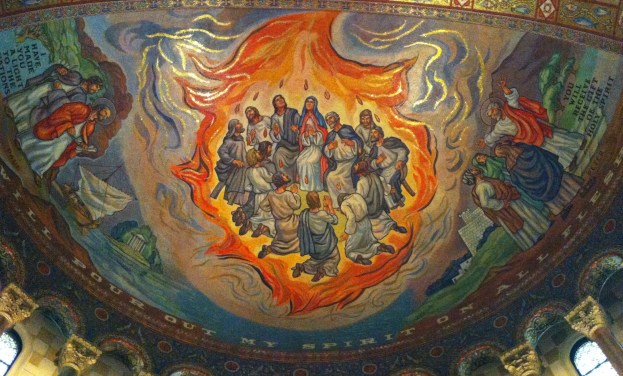
Pentecost_mosaic cred Pete Unseth

Christ’s Body Is the Temple

There is only one verse in the New Testament that teaches specifically that a believer’s physical body is a temple:

Or do you not know that your body is a temple of the Holy Spirit within you, whom you have from God? (1 Cor. 6:19)

But it seems like believers today have removed this verse totally from its immediate context, its greater context, and from the many similar verses that clarify the full meaning of this truth. Let’s take a look.

A Variety of Passages

Now, there are at least seven passages in the New Testament that compare believers themselves to a temple or building, but we commonly only hear that our bodies are temples. In fact Paul is emphasizing different things in different passages, but we’ll note some patterns that bring them together.

You are God’s field, God’s building. (1 Cor. 3:9)

Do you not know that you are God’s temple and that God’s Spirit dwells in you? If anyone destroys God’s temple, God will destroy him. For God’s temple is holy, and you are that temple. (1 Cor. 3:16-17)

 What agreement has the temple of God with idols? For we are the temple of the living God; as God said,
“I will make my dwelling among them ...” (2 Cor. 6:16, q. Ezek. 37:27)

You are no longer strangers and aliens, but you are … members of the household of God … Christ Jesus himself being the cornerstone, in whom the whole structure … grows into a holy temple in the Lord … (Eph. 2:19-21)

The main thing you should notice is that Paul is talking about the entire, invisible Church as God’s temple in the New Covenant—not the individual believer, or the physical church—and that none of these verses are talking directly about physical health.

Health Is Never Mentioned—Sexual Purity Is

In none of these verses does Paul mention working out. 1 Corinthians 6:19, so often trotted out in that sense, is actually about avoiding sexual immorality by keeping away from sexual immorality and prostitutes, which are still so common in many of the world’s cities.

Prostitutes were kept in pagan shrines, and money from sex funded the work of these temples. Shrine prostitutes are mentioned many times in the Old Testament. So it makes sense for Paul to say to them, you shouldn’t be going to the shrine of a pagan god for sex, when you yourself are the shrine of the one, true living God.

Indirectly, you can of course say that a miniature “temple” demands respect and care. I’m not saying that health isn’t important, or that Christ’s workers shouldn’t live long, healthy lives. That may be true and implied, but it’s simply not directly what this verse is saying. If anything, rather than teaching on working out, we should teach from this verse against pornography and its vital role in maintaining the wicked global sex trade. Any believer that supports this sins against much more than his own body.

I Am Not God’s Temple—We Are

The subject is plural in every case except for 1 Corinthians 6:19. So Paul teaches that we are God’s dwelling place much more often than he teaches that our individual bodies are. (The singular/plural distinction was clear in the early modern English of the King James: “Ye/you/your” was plural, while “thou/thee/thine” was singular.)

Paul used the singular just once, to emphasize the sense of personal responsibility, and the personal defilement that comes from misusing your body sexually. But in most of the New Testament he teaches not that God dwells in me, but that God dwells in us.

When Paul compares the body to a temple, he is taking a cue from Jesus, who compared his body to a temple. Now, in the same passage where he says that “your body is a temple,” he uses the word “body” to mean Christ’s body:

Do you not know that your bodies are members of Christ? Shall I then take the members of Christ and make them members of a prostitute? Never! (1 Cor. 6:15)

So each of us is only one part of the picture. Even the most commonly quoted verses on Christ’s indwelling, like Colossians 1:27, where he says that “Christ in you” is “the hope of glory,” are plural, and being addressed to a group. “The Holy Spirit dwells in us” (2 Tim. 1:14). “He put his Spirit in the midst of them” (Isa. 63:11).

We Are Not a Religious Building—We Are a Sanctuary

The word used for temple in these verses is slightly more specific than ‘temple’; it is the sanctuary of the temple. Richard Trench points out that the distinction is well maintained in New Testament Greek. Whenever Jesus is teaching “in the temple,” we are to understand that he is in the courts of the temple; whenever Zechariah goes into the temple and has a vision, we can understand that he was in the sanctuary, the Holy Place.

Every verse that compares believers to a temple uses the word for sanctuary. The implication is not that it is a grand, important building, consecrated to a religious purpose, but that it is a sacred place, consecrated to God, whatever else it may be.

The teaching that says that our physical well-being honors the indwelling Christ, may be true in some sense. But is this to say that people with lifelong illnesses are dishonoring Christ? That is not what the Bible teaches, and we dishonor the sick when we try to create a karmic link between health and spirituality. There is no mystic link between physical fitness and spiritual fitness.

A Church Is Not God’s House—The Church Is

Another misunderstanding about God’s dwelling is the still-frequent usage of the phrase “house of God” for a church building. This phrase, when used in this way, is essentially a vestige of Judaism, or a holdover from heathenism. It is not the language of the New Testament. Paul and Peter both teach that the church itself—that is, believers—are the house, or family, of God.

If I delay, you may know how one ought to behave in [or among] the household of God, which is the church of the living God … (1 Tim. 3:15)

Some versions say “house of God” in 1 Timothy 3:15, but only a medieval interpretation of the Bible would say that Paul was referring to a physical church.

We are his house. (Heb. 3:6)

You yourselves like living stones are being built up as a spiritual house … (1 Pet. 2:5)

The word for house also means household. In the time when Paul wrote this, when most churches were still meeting in houses under threat of persecution, Paul could not have conceivably taught that a church building is God’s dwelling place. He taught something much more shocking—he taught that we are.

Conclusion

When Jesus said that the Comforter was with the disciples, but would be in them, he was teaching the fulfillment of multiple prophecies given over hundreds of years. He was teaching that Moses’ wish, that all God’s people could prophesy, was one step closer to fulfillment. He was teaching the end of the Old Covenant—in which God dwelled in limited believers and limited places—and the beginning of a new economy of grace, in which God would pour out his Spirit on all flesh.

That pouring out began on the Day of Pentecost, a Jewish celebration centered around the assembly of men at the temple. But now this outpouring has broken the bounds of upbringing, ethnicity, gender, age, and nation. It is not limited to any physical church or temple, but has entered the hearts of a manifold spiritual assembly, “the assembly of the firstborn who are enrolled in heaven” (Heb. 12:23). This assembly now gathers to no physical meeting place, but under the spiritual banner of the slain Lamb.

Each person who is part of this assembly is like a single stone of a sacred building, or a single cell of Christ’s body, which he said was the temple. Each cell contains the DNA blueprint that represents the whole, which is why we can point a finger at a fellow believer and say, “You yourself are God’s dwelling place.” But it would be far better to imagine every believer from Pentecost onwards, from every tribe, tongue, and nation, and say together, “We are God’s dwelling place.”

Your body may be a temple. But Christ’s body is the temple.

Mosaic credit: Pete Unseth