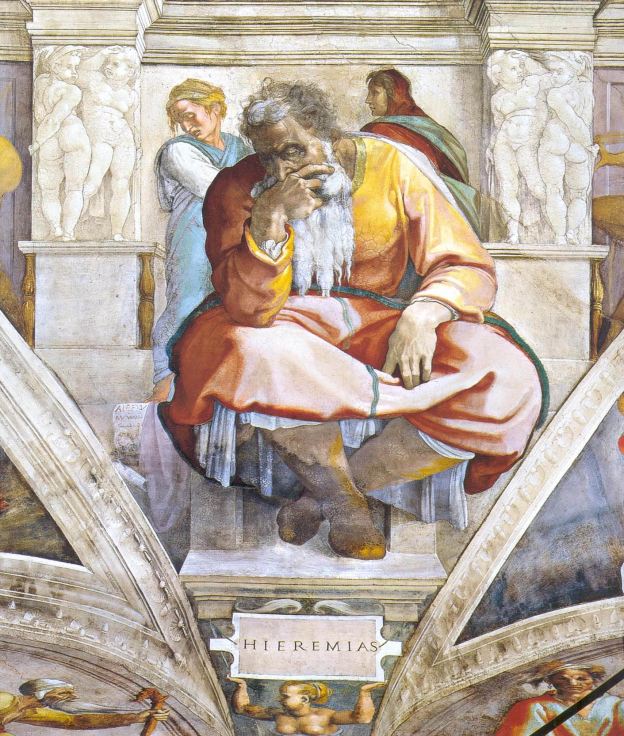
Daniel: God’s Kingdom is Supreme

DANIEL
is the revelation of
GOD’S KINGDOM
in which God is
SUPREME.

God’s Kingdom in Exile (ch. 1)

The beginning of the book is similar to a dystopian novel: it begins with teenagers, in their most formative years, being brainwashed by a godless system and society. Nonetheless, Daniel’s steadfastness in prayer is a bulwark to his faith (6:10), and he and his friends live on in exile, not without pain, but without stain.

In their first examination, they were found “ten times better” than the pagan magicians of Babylon (1:20). Not only in his spiritual life, but in his intellectual life, his social life, and his work life, “they could find no charge or fault.” (6:4) Joseph Parker said in a sermon on Daniel, “Men are influential not according to their numbers, but according to their convictions.”⁠1 Daniel was thus enabled to influence several pagan kings and kingdoms, even as a minority in exile.

Jesus came to his own, and his own didn’t receive him. Until the ushering of a new era, exile is the natural state of righteousness on this earth. Other religions may come with political theories; the kingdom of Christ is not of this world (John 18:36-7), and comes not with observation (Luke 17:20-21).

Revelations and Revelation (ch. 2)

The key confession of Daniel’s prophecy is that of Nebuchadnezzar, the pagan Babylonian king: “Truly, your God is God of gods and Lord of kings, and a revealer of mysteries, for you have been able to reveal this mystery” (2:47). For Nebuchadnezzar, divine revelation is evidence of the superiority of Israel’s God.

Daniel’s tale mirrors that of Joseph quite closely. In Daniel’s case, God’s revelation saved him from death and brought him an exalted position. Revelation is heavenly; it comes from another realm. God is able to reveal even another’s dreams, if it serves providence. Every secret bows to God’s kingdom.

He Is God of Gods (ch. 3, 6)

The Lord’s supremacy over other gods is demonstrated in his deliverance of his people. Daniel and his friends are not persecuted because of cultural insensitivity, or issues of religious form, but specifically because they were public proclaimers of the God of Daniel. God delivers them both because he cares about them and because they are proclaimers of his glory.

In ch. 2, God shows mercy to Daniel and his friends (2:18) by revealing the king’s dream; in ch. 3, Shadrach, Meshach, and Abednego rejected the Babylonian gods with impunity; their God was with them in the furnace. Likewise, in ch. 6, Daniel prays to his own God rather than Babylon’s; again he is punished, but with God as his defender. God’s deliverance reinforces the point that, even in exile, even among lawlessness and corrupt kingdom, God holds sway.

He Is Lord of Kings (ch. 4-5)

God’s supremacy over human kings and kingdoms is demonstrated in almost every passage of Daniel. God’s sovereignty does not mean that he cannot be rejected in working his will, but that he is not constrained in working his counsel. “The Lord has established his throne in the heavens, and his kingdom rules over all” (Ps. 103:19).

Nebuchadnezzar’s dream in ch. 2 illustrates the supremacy of God’s kingdom.

The shaming of Nebuchadnezzar (ch. 4) and the “writing on the wall” of Belshazzar (ch. 5) teach the same lesson: “The Most High rules the kingdom of men and gives it to whom he will” (4:25, 32).

He Is Revealer of Mysteries (ch. 7-12)

Daniel’s Second Vision

The apocalyptic section of Daniel consists primarily of three visions. The first vision (ch. 7) is about four beasts, and it is the most uncontroversial of his visions, since it can be connected to Daniel’s first vision in ch. 2. One of Daniel’s guides explains that the beasts symbolize “kings” (7:17), and Bible interpreters have further identified these as four kingdoms: Neo-Babylonian, Medo-Persian, Greek and Roman. Again, this prophetic vision concludes with a statement of God’s supremacy over all kingdoms (7:14, 18, 27).

The vision is interrupted, too, by a vision of “one like a son of man” (7:13). “And to him was given dominion and glory and a kingdom, that all peoples, nations, and languages should serve him; his dominion is an everlasting dominion, which shall not pass away, and his kingdom one that shall not be destroyed” (7:14). Jesus identifies himself as this figure before the high priest at his trial (Mark 14:62). (See the motif study on “The Son of Man.”)

Daniel’s Third Vision

Daniel’s third vision (ch. 8) involves a ram and a goat, symbolizing the Medo-Persian and Greek kingdoms (8:20-21). Like Daniel’s second vision, it includes some very clear interpretive guidelines (8:15-26).

Daniel’s Prayer

In ch. 9, Daniel repents on behalf of his people. His fasting and repentance is intimately  connected to his prophetic understanding of current events, based on the words of Jeremiah (Jer. 25:11-12, 29:10). Although God had even orchestrated the timing, he wanted Daniel to cry out on behalf of his people. What an encouraging thought about prayer!

When Gabriel answers Daniel’s prayer, he tells him, “Seventy weeks are decreed about your people and your holy city, to finish the transgression, to put an end to sin, and to atone for iniquity, to bring in everlasting righteousness, to seal both vision and prophet, and to anoint a most holy place” (9:24). Based on the work of Sir Robert Anderson in the 19th century, this is believed to date from Artaxerxes’ decree to rebuild Jerusalem in 445 B.C., to Jesus’ Triumphal Entry into Jerusalem on Palm Sunday.

Daniel’s Fourth Vision

Daniel’s fourth vision begins with a terrifying vision of Christ (ch. 10). Matthew Henry writes of this vision, “Let us admire his condescension for us and our salvation. The greatest and best of men cannot bear the full discoveries of the Divine glory; but glorified saints see Christ as he is, and can bear the sight.”⁠2

Daniel’s fourth and last apocalyptic vision (ch. 10-12) is more intricate and controversial than those that precede it, in particular in ch. 11, which deals with the kings of the south and the north. Unlike his other visions, Daniel’s guide doesn’t give him much guidance in understanding this vision (see 12:9).

The vision of the Daniel 11 deals with either Antiochus Epiphanes, who defiled the temple during the Maccabean period; or the Antichrist who has yet to come; or both. This debate extends back many centuries. This is probably the most detailed prophecy in the entire Old Testament, to the extent that secular scholarship (since the third century A.D.) seeks to place the dating of Daniel after the events he described concerning Antiochus Epiphanes (known as the “Maccabean thesis”). It is interesting that Nonetheless, as Daniel’s guide says, “The words are shut up and sealed until the time of the end” (12:9).

Study Recommendations

For thoughts on success in exile, read The Daniel Files by Winkie Pratney.

David Cross usefully relates Daniel 1-6 to tentmaking missions in his book, Work of Influence.

Irving Jensen’s Survey of the Old Testament has helpful charts on the prophetic sections of Daniel, although several resources should be consulted, since theologians are not unanimous on some points.

1 Ezekiel and Daniel. Volume 19 of The People’s Bible. Kindle edition. Location 3863.

2 Matthew Henry on Daniel 10.
Call to Sacrifice

By Samuel Zwemer

Source: Neglected Arabia, no. 96 (March 1916)

We plough deep furrows and scatter the seed of the Word, hoping for the harvest. But God Himself is waiting for the sowing of the good seed— the children of the Kingdom. “That a furrow be fecund,” said Sabatier, “it must have blood and tears, such as Augustine called the blood of the soul.” The Moslem world must have its Gethsemane and Calvary before it can have its Pentecost. The present condition of that world, therefore, is a supreme call to sacrifice: the sacrifice of our provincialisms or the narrow horizon of our sectarianisms for cosmopolitan statemanship as missionary leaders.  e must sink our differences and unite on the essentials. The sacrifice of wealth for investment in schools, the publication of literature, hospitals, and every form of evangelisation, on a scale adequate to meet the new opportunities. There is a call for the sacrifice of life—making it sacred—to force an entrance into the unoccupied mission fields where doors long closed are about to open. “As the Father hath sent Me, even so send I you.”

Out of the realm of the glory light,
Into the far-away land of night;
Out from the bliss of worshipful song,
Into the pain of hatred and wrong;
Out from the holy rapture above,
Into the grief of rejected love;
Out from the life at the Father’s side,
Into the death of the crucified;
Out from high honour, and into shame
The Master willingly, gladly came:
And now, since He may not suffer anew,
As the Father sent Him, so sendeth He you.

A Bibliography of Samuel M. Zwemer (Chronological)

This is a bibliography of works by Samuel Zwemer, adapted and corrected from Apostle to Islam by J. Christy Wilson, Sr.

Zwemer may have been the most famous missions mobilizer of the 20th century. He pioneered in Bahrain, Iraq, and Egypt, in addition to missions tours and conferences virtually everywhere that Islam is found. He preached in English, Arabic, and Dutch. His sermons and books called the Church to acknowledge the challenge of Islam head-on.

While some of his works are left for specialists in religion, his devotional works are just as compelling today. I highly recommend The Glory of the Cross and The Solitary Throne.

Books by Samuel M. Zwemer

  1. Arabia: The Cradle of Islam. Fleming H. Revell, New York. 1st Edition, 1900. 434 pages.
    4th Edition, 1912.
    Urdu Translation (Unauthorized): Pesa Akhbar, 1910.
  2. Raymond Lull: First Missionary to the Muslims. Funk and Wagnalls, New York. November 1902. 172 pages.
    German Translation: Sudan Pioneer Mission, Wiesbaden, 1912.
    Arabic Translation: Nile Mission Press, Cairo, 1914.
    Chinese Translation: 1924.
    Spanish Translation: Sociedad de Publicaciones Religiosas, Madrid. 1926. [Raimundo Lulio, Primer Misionero a Los Musulmanes, tr. Alejandro Brachmann.]
    Dutch Translation (Unauthorized): 1928.
  3. The Moslem Doctrine of God. American Tract Society, New York. 1st Edition, 1905.
    2nd Edition, 1924. 120 pages.
  4. Islam, A Challenge to Faith. Student Volunteer Movement, New York. 1st Edition, 1907. 295 pages.
    2nd Edition, Marshall Brothers, London, 1909.
    German Translation: 1909. 324 pages. [Der Islam: Eine Herausforderung an Den Glauben, tr. Elisabeth Grouben.] (Link is view only.)
    Danish Translation: Copenhagen, 1910.
    French Translation: Paris, 1922.
  5. The Moslem World. Young People’s Missionary Movement of the United States and Canada. Eaton, New York, 1908. 239 pages. (Revised edition of Islam, A Challenge to Faith, abridged for use by the Young People’s Missionary Union.)
  6. The Unoccupied Mission Fields of Africa and Asia. Student Volunteer Movement, New York. 1911. 260 pages.
    German Translation: Basel, 1912.
    Danish Translation: Copenhagen, 1912.
  7. The Moslem Christ. Oliphant, Anderson and Ferrier, London. 1st Edition, 1912.
    2nd Edition, 1927. 198 pages. American Tract Society, New York.
    Arabic Translation: Nile Mission Press, Cairo. 1916.
    German Translation: Stuttgart, 1921. [Die Christologie des Islams, tr. Dr. E. Frick.]
    Urdu Translation: 1929.
  8. Mohammed or ChristSeeley Service and Company, London. 1916. 292 pages.
    Fleming H. Revell, New York. 1916.
  9. Childhood in the Moslem World. Fleming H. Revell, New York. 1915. 274 pages.
    Danish Translation: Copenhagen. 1917.
    Arabic Translation: 2nd Edition, Cairo, 1921.
  10. The Disintegration of Islam. Fleming H. Revell, New York. 1916. 227 pages.
  11. The Influence of Animism on Islam. Macmillan, New York. 1920. 246 pages.
    S.P.C.K, London. 1921.
  12. Christianity the Final Religion. Eerdmans Sevensma Co., The Pilgrim Press, Grand Rapids, Michigan. 1920. 108 pages.
  13. A Moslem Seeker After God. Life of Al-Ghazali. Fleming H. Revell, New York. 1920. 302 pages.
    Arabic Translation: Nile Mission Press, Cairo, 1922.
    Urdu Translation: 1925.
  14. The Law of Apostasy in Islam. Marshall Brothers, London. 1924. 164 pages.
    German Translation: Guetersloh, 1926.
  15. Call to Prayer. Marshall Brothers, London. 1923. 79 pages.
    Dutch Translation: Kampen, 1926.
  16. The Glory of the Cross. Marshall Brothers, London. 1st Edition, 1928. 128 pages.
    2nd Edition, 1935.
    3rd Popular Edition, 1938.
    Arabic Translation: 1928. [السر العجيب في فخر الصليب]
    Urdu Translation: 1929.
    Swedish Translation: 1930.
  17. Across the World of Islam. Fleming H. Revell, New York. 1st Edition, 1929. 382 pages.
    2nd Edition, 1932.
  18. Thinking Missions with Christ. Zondervan Publishing House, Grand Rapids, Michigan. 1st Edition, 1934.
    3rd Edition, 1935.
  19. The Origin of Religion. Cokesbury Press, Nashville, Tenn. 1st Edition, 1935.
    2nd Edition, 1936.
    3rd Revised Edition, 1946.
    Loizeaux Brothers, New York. 256 pages.
  20. Taking Hold of God. Marshall, Morgan and Scott, London 1936. 188 pages.
    Zondervan Publishing House, Grand Rapids, Michigan. 1936.
  21. It is Hard to be a Christian. Marshall, Morgan and Scott, London, 1937. 159 pages.
  22. The Solitary Throne. Pickering and Inglis, London. 1937. 112 pages.
  23. Studies in Popular Islam. Macmillan, New York. 1939. 148 pages.
    Sheldon Press, London.
  24. Dynamic Christianity and the World Today. Inter-Varsity Fellowship, London. 1939. 173 pages.
  25. The Glory of the Manger. American Tract Society, New York. 1940. 232 pages.
  26. The Art of Listening to God. Zondervan Publishing House, Grand Rapids, Michigan. 1940. 217 pages.
  27. The Cross Above the Crescent. Zondervan Publishing House, Grand Rapids, Michigan. 1941. 292 pages.
  28. Into All the World. Zondervan Publishing House, Grand Rapids, Michigan. 1943. 222 pages.
  29. Evangelism Today: Message Not Method. Fleming H. Revell, New York. 1st Edition, 1944. 125 pages.  (Copyright renewed.)
    4th Edition, 1948.
  30. Heirs of the Prophets. Moody Press, Chicago. 1946. 137 pages. (Link is view only.)
  31. The Glory of the Empty Tomb. Fleming H. Revell, New York. 1947. 170 pages. (Copyright renewed.)
  32. How Rich the Harvest: Studies in Bible Themes and Missions. Fleming H. Revell, New York. 1948. 120 pages. (Copyright renewed.)
  33. Sons of Adam: Studies of Old Testament Characters in New Testament Light. Baker Book House, Grand Rapids, Michigan. 1951. 164 pages.

Works of Joint Authorship

  1. Topsy-Turvy Land: Arabia Pictured for Children, with Amy E. Zwemer. Fleming H. Revell, New York. July 1902. 124 pages.
  2. The Mohammedan World of Today, with E. M. Wherry. Fleming H. Revell, New York. 1906. 302 pages.
  3. Our Muslim Sisters, with Annie Van Sommer. Fleming H. Revell, New York. 1907. 299 pages.
    Swedish Translation: Stockholm, 1908.
    Danish Translation: Odense, 1909.
  4. The Nearer and Farther East, with Arthur J. Brown. Macmillan, New York. 1908. 325 pages.
  5. Lucknow, 1911, with E. M. Wherry. Madras, 1912. 298 pages.
  6. Zigzag Journeys in the Camel Country, with Amy E. Zwemer. Fleming H. Revell, New York. 1st Edition, 1911.
    2nd Edition. 126 pages.
  7. Daylight in the Harem, with Annie Van Sommer. Fleming H. Revell, New York. 1911. 224 pages.
  8. Islam and Missions, report of the Lucknow conference with E. M. Wherry. Fleming H. Revell, New York. 1912. 300 pages.
  9. Christian Literature in Moslem Lands, with a committee. Doran, New York. 1923.
  10. Moslem Women, with Amy E. Zwemer. United Study Committee, New York. 1926. 306 pages.
  11. The Golden Milestone, with James Cantine. Fleming H. Revell, New York. 1938. 157 pages.  (Copyright renewed.)

Short Works and Contributions

  1. “Report of a Mission Tour Down the Euphrates from Hillah to Busrah.” The Christian Intelligencer, Jan. 4 & 11, 1893.
  2. “Report of a Journey into Yemen and Work among the Jews for the Mildmay Mission.” The Christian Intelligencer. c. 1894.
  3. “Epilogue: A Sketch of the Arabian Mission.” Kamil Abdul Messiah. 1898.
    Reprint edition: Kamil Abdulmasih. Pioneer Library. 2017.
  4. “Mohammedan World of Today.” 1898.
  5. “Advice to Volunteers.” The Call, Qualifications and Preparation of Candidates for Foreign Missionary Service Ed. Robert Speer. 1901.
  6. “Thinking Gray in Missions.” n.d.
  7. “The Message and the Man.” Student Volunteer Movement. 1909. (Link is view only.)
  8. “The Impending Struggle in Western Asia.” An address delivered January 2, 1910.
  9. “Are More Foreign Missionaries Needed?” Student Volunteer Movement. 1911. 19 pages.
  10. “Islam, the War, and Missions.” c. 1914.
  11. Introduction to The Progress and Arrest of Islam in Sumatra. Gottfried Simon. London: Marshall Bros., 1914.
  12. Introduction to The Vital Forces of Christianity and Islam: Six Studies by Missionaries to Moslems. W. H. T. Gairdner, et al. Humphrey Milford, London. 1915.
  13. “A Primer on Islam.” Continuation Committee, Shanghai. 1919. 24 pages.
    Chinese Translation: 2nd Edition, 1927. (Link is view only.)
  14. Introduction to A Twice-Born Turk: Reminiscences of the Turkish Revolution. Abdallah Husainy. J. L. Oliver. n.d. [c. 1920.]
  15. “Report of a Visit to Mesopotamia, the Persian Gulf and India.” Summer of 1924.  American Christian Literature Society for Muslims, New York. 1924. 31 pages.
  16. “Report of a Visit to India and Ceylon.” September 23, 1927, to February 28, 1928. A.C.L.S.M., New York. 1928. 33 pages.
  17. Introduction to The Foreign Missionary: An Incarnation of a World Movement. Arthur Judson Brown. 1932. (Copyright renewed.)
  18. Introduction to Adventures with God, in Freedom and in Bond. Jenny E. de Mayer. 1942.
  19. “A Factual Survey of the Muslim World.” Fleming H. Revell, New York, 1946. 34 pages.
  20. Introduction to Hidden Highway; experiences on the Northwest Frontier of India. Flora Marion Davidson. New York, London and Glasgow: Fleming H. Revell Co, [1948].
  21. “The Glory of the Impossible.” Church Herald. 1950.

A Bibliography of Herbert Lockyer, Sr. (Chronological)

This is a detailed list of all available titles by Herbert Lockyer (1986-1984), in chronological order.

The same list can be seen in alphabetical order here.

  1. The Rapture of the Saints (UK 1935, US 1979)
  2. The Fairest of All and Other Sermons (US, 1936)
  3. Roses in December and Other Sermons (Eerdmans, 1936; Pioneer Library, 2015)
  4. The Swan Song of Paul, Or, Fascinating Studies in Second Timothy (American Bible Conference Association, 1936)
  5. When Revival Comes (a.k.a. The Mulberry Trees) (Eerdmans, 1936; Pioneer Library, 2014)
  6. Evangelize or Fossilize! (Chicago, 1938)
  7. The Immortality of Saints: A Handbook on the Hereafter for Christian Workers (UK, Pickering & Inglis, n.d., c. 1938)
  8. Sorrows and Stars (Eerdmans, 1938; Pioneer Library, 2014)
  9. The Gospel in the Pentateuch (1939; Pioneer Library, 2015)
  10. When God Died (Eerdmans, 1939; Pioneer Library, 2014)
  11. V for Victory: Sermons on the Christian’s Victories (Zondervan, 1941)
  12. Cameos of Prophecy: Are These the Last Days? (Zondervan, 1942, public domain)
  13. The Christ of Christmas (Loizeaux, 1942; Pioneer Library, 2014)
  14. Give Us This Day: Daily Portions for Pilgrims (Zondervan, 1942)
  15. God’s Promise Box (Lockley Press, 1945)
  16. Satan and the Spider (1945, renewed)
  17. The Breath of God (Union Gospel, 1949)
  18. The Heritage of Saints or Studies in the Holy Spirit (UK, Pickering & Inglis, n.d., c. 1950)
  19. A Modern Praying Hyde: The Romantic Story of the Evansville Rescue Mission (1950)
  20. The Art of Winning Souls (US, 1954, renewed; UK, 1955)
  21. How To Make Prayer More Effective (Zondervan, 1954)
  22. All the Men of the Bible (Zondervan, 1955, renewed)
  23. The Art of Praying and Speaking in Public: Practical Hints for Christians Who Desire to Witness (UK, Parry Jackman, 1955)
  24. How I Can Make My Life More Effective: Secrets and Avenues of Christian Service (UK/US, 1955; Marshall Morgan & Scott/Zondervan) [= How To Make Your Life More Effective (Whitaker, 2014)]
  25. The Mystery and Ministry of Angels (UK,  Parry Jackman, 1955; US, Eerdmans, 1958)
  26. Satanic Conflict of the Ages: The Romantic Story of the Seed Royal (UK, Victory Press, 1955)
  27. Voice Culture for Speakers and Students (UK, Parry Jackman, 1955)
  28. The Gift of Pentecost or the Person and Power of the Holy Spirit (London, 1956)
  29. The Art of Knowing and Doing God’s Will (UK, Victory Press, 1956)
  30. The Comfort of God: Meditations on the Goodness of God (UK, Victory Press, 1956)
  31. All the Holy Days and Holidays: Or, Sermons on All National and Religious Memorial Days (Zondervan, 1958)
  32. All the Prayers of the Bible (1959, renewed)
  33. All the Miracles of the Bible (1961, renewed)
  34. All the Kings and Queens of the Bible (1961, renewed)
  35. All the Promises of the Bible (1962, renewed)
  36. All About the Second Coming (Zondervan, 1962)
  37. All the Parables of the Bible (1963, renewed)
  38. The Berean Miracle: The Story of the Life and Labors of Ford Porter (Berean Gospel Distributors, 1963)
  39. All the Doctrines of the Bible (1964)
  40. All the Books and Chapters of the Bible (1966)
  41. The Man Who Changed the World: Conquests of Christ Through the Centuries (2 vol.) (1966)
  42. Death and the Life Hereafter (1967) [= The Immortality of the Saints?]
  43. The Funeral Sourcebook  (UK/US 1967)
  44. The Gospel of the Life Beyond (H.E. Walter/Revell, 1967) [= The Life Beyond (1995)] [= Death and the Life Hereafter?]
  45. All the Music of the Bible (1968)
  46. The Lenten Sourcebook: Including Thoughts and Messages for Easter Day (1968)
  47. The Week That Changed the World (1968)
  48. All the Trades and Occupations of the Bible (UK/US, Pickering & Inglis/Lamplighter, 1969)
  49. Last Words of Saints and Sinners (1969) [= All the Last Words of Saints and Sinners]
  50. All the Children of the Bible (Zondervan, 1970)
  51. The Sins of Saints: Scriptural Unfolding of Victorious Living (Loizeaux, USA, 1970)
  52. All the Apostles of the Bible: Studies in the Characters of the Apostles, the Men Jesus Chose and the Message They Proclaimed (Zondervan, 1972)
  53. All the Messianic Prophecies of the Bible (1973)
  54. Twin Truths of Scripture (The Lockyer Bible Preacher’s Library, Volume 1) (1973) [= All the 2s of the Bible]
  55. Triple Truths of Scripture (The Lockyer Bible Preacher’s Library, Volume 2) (1973) [= All the 3s of the Bible]
  56. All the Divine Names and Titles in the Bible (UK/US, Pickering & Inglis/Zondervan, 1975)
  57. Ancient Portraits in Modern Frames, Bible Biographies, vol. 1 (Baker, 1975)
  58. Ancient Portraits in Modern Frames, Bible Biographies, vol. 2 (Baker, 1975) [= World Changers: Fascinating Figures from Church History]
  59. God’s Witnesses: Stories of Real Faith (Revell, 1975; 1997) [= Ancient Portraits in Modern Frames, vol. 1?]
  60. Selected Scripture Summaries from the New Testament (1975) [=Major Themes of the New Testament; also 41 Major Bible Themes Simply Explained]
  61. Seven Words of Love (Word, [1969?] 1975)
  62. All the Women of the Bible (1976)
  63. Everything Jesus Taught (1976) [= What Jesus Taught (1977); also All the Teachings of Jesus (1990)]
  64. Bible-Centered Devotions on Purity and Hope (Seasons of the Lord, v. 1) (Harper & Row, all vols. 1977)
  65. Bible-Centered Devotions on Resurrection and Glory (Seasons of the Lord, v. 2)
  66. Bible-Centered Devotions on Fulfillment and Splendor (Seasons of the Lord, v. 3)
  67. Bible-Centered Devotions on Silence and Remembrance (Seasons of the Lord, v. 4)
  68. All About Bible Study (UK/US 1977)
  69. How to Find Comfort in the Bible (Word, 1977) [= The Comfort of God?]
  70. Cure For Troubled Hearts (1979)
  71. Dark Threads the Weaver Needs (1979)
  72. The Man Who Died for Me: Meditations on the Death and Resurrection of Our Lord (Word, 1979)
  73. Their Finest Hour: Thrilling Moments in Ancient History (1979)
  74. Dying, Death, and Destiny (1980) [= Death and the Life Hereafter?]
  75. Revelation: Drama of the Ages (1980)
  76. Satan: His Person and Power (Word, 1980)
  77. The Holy Spirit of God (1981) [revision of The Breath of God]
  78. The Keeping Power of God (Grason/Nelson, 1981)
  79. Love Is Better Than Wine (New Leaf Press, 1981)
  80. The Power of Prayer (Thomas Nelson, 1982)
  81. God’s Book of Poetry: Meditations from the Psalms (1983) [= Psalms: A Devotional Commentary (Kregel, 1992)]
  82. Portraits of the Savior (1983)
  83. Daily Promises (Nelson, 1984)
  84. God’s Book of Faith: Meditations from Job (1984)

Edited Publications

  1. From a Bishop’s Basket: Twelve Sermons (Bishop Taylor Smith; UK, Pickering & Inglis, London, c. 1940)
  2. Light to Live By (Selections from the New International Version; Zondervan, 1979)
  3. Illustrated Dictionary Of The Bible (With F. F. Bruce & R. K. Harrison; Thomas Nelson, 1986)

Posthumous Volumes

  1. All About God in Christ (Hendrickson, 1995) [largely edited from The Christ of Christmas]
  2. All the Angels in the Bible (Hendrickson, 1995) [possibly edited from The Mystery and Ministry of Angels]
    [All About the Holy Spirit (Hendrickson, 1995) = The Holy Spirit of God]
    [All God’s Comfort (Hendrickson, 2001) = How to Find Comfort in the Bible]
  3. A Lump of Clay & Other Sermons (Pioneer Library, 2016)
  4. The Mystery of Godliness, or, The Virgin Birth, or Was Christ Virgin Born? (n.d.) [= The Seven Pillars of God’s Wisdom (Whitaker, 2013)]

Tracts & Booklets

  1. The Gates of Grace [not extant]
  2. The Gold Star [not extant]
  3. The Grim Shadow (London, 1933)
  4. Chaos and Cure (1935)
  5. Earthquakes! The Prophetic Significance of Physical Upheavals (Colportage Association, 1935)
  6. The Hands of Jesus (1935)
  7. Harps or Spears (Colportage Association, 1935)
  8. An Instrument of Ten Strings (USA, 1935)
  9. The Love Story of Ruth (USA, 1935)
  10. Triads of Scripture (Colportage Association, 1935)
  11. Two in One (Colportage Association, 1935)
  12. Visiting the Empty Grave (Colportage Association, 1935)
  13. Christ in the Scriptures (Zondervan, 1936)
  14. Dancing: Ancient and Modern (1936 or earlier)
  15. Decision in the Scriptures (1936)
  16. The Double Name (Zondervan, 1936)
  17. The Healer and Healing Movements (1936 or earlier)
  18. The Holy Spirit in the Scriptures (Zondervan, 1936) [not extant]
  19. A Lump of Clay (Chicago, 1936)
  20. The North Side in the Scriptures (Zondervan, 1936)
  21. Our Lord’s Return (Moody, n.d., c. 1936)
  22. Over the Air (1936)
  23. The Panorama of Prophecy (USA, 1936)
  24. Revival in the Scriptures (Zondervan, 1936)
  25. Satan in the Scriptures (Zondervan, 1936)
  26. The Three Crosses on Calvary’s Hill (Moody Press, 1936)
  27. The Trinity in the Scriptures (Zondervan, pamphlet, 1936)
  28. The Vision Splendid (Chicago, 1936; Pioneer Library, 2014)
  29. The Blessed Hope in the Scriptures (Zondervan, 1937)
  30. Death in the Scriptures (Zondervan, 1937)
  31. Dreams in the Scriptures (Zondervan, 1937)
  32. God in the Scriptures (Zondervan, 1937)
  33. Guidance in the Scriptures (Zondervan, 1937)
  34. He Could Not! (Chicago, 1937)
  35. Keswick: The Place and the Power (UK, Stirling Tract Enterprise, 1937)
  36. Prayer in the Scriptures (Zondervan, 1937)
  37. The Surname in the Scriptures (Zondervan, 1937)
  38. The Making of an Atheist [not extant, c. 1937]
  39. The Making of an Apostle; or, Peter the Fisherman (Zondervan, 1937)
  40. The Making of the Bible [not extant, c. 1937]
  41. The Making of a Saint [not extant, c. 1937]
  42. The Making of a Sermon [not extant, c. 1937]
  43. The Making of a Student [not extant, c. 1937]
  44. The Creed of Fools (Eerdmans, 1938)
  45. Not Here But Risen (Chicago, pamphlet, 1938)
  46. Russians and Romans: Will the European Crisis Result in the End of the Age? (Zondervan, 1940)
  47. Palms and Willows (Zondervan, 1941)
  48. The H-Bomb and the End of the Age (B. McCall Barbour, UK & USA, 1950, renewed)
  49. Are These the Last Days? (Zondervan, 1951)
  50. Drama of Fast-Moving Events (Zondervan, 1951)
  51. It Is Later Than We Think (Zondervan, 1951)
  52. Prophetic Footnotes on Today’s Headlines (Zondervan, 1951)
  53. The Bridegroom Cometh! (Zondervan, 1952)
  54. The Four Horsemen of the Apocalypse (Zondervan, 1952)
  55. The Four Women of the Apocalypse (Zondervan, 1952)
  56. Is Christ Coming Soon? (Zondervan, 1952)
  57. Predictions of Things to Come (Zondervan, 1952)
  58. The Unpardonable Sin (UK, Marshall Morgan & Scott, 1952)
  59. Great White Throne (Zondervan, 1953, renewed)
  60. Victory over Worry (Zondervan, 1953, renewed)
  61. Heaven (Zondervan, 1954, renewed)
  62. Is There a Hell? (USA, pamphlet?, 1954, renewed)
  63. Jehovah’s Witnesses Exposed (1954, renewed)
  64. Victory over the “Blues”: Deliverances from Wild Alarms Disturbing the Believer’s Peace (Zondervan, 1954, renewed)
  65. Blessed Assurance (UK, Marshall Morgan & Scott, 1955)
  66. One Sin God Hates: The Curse of Pride (Zondervan, 1955, renewed)
  67. Are America, Great Britain, China, Russia and Egypt in Prophecy? (Zondervan, 1957)
  68. The Fascinating Study of Prophecy (1957)
  69. The Thousand Year Reign of Christ (1958, renewed)
  70. The Romantic History of Israel (American Association for Jewish Evangelism, c. 1960)
  71. The Church’s Hope (UK, Prophetic Witness, 1971)
  72. The Future of the Gentile Nations (UK, Prophetic Witness, 1971)
  73. The Unseen Army (UK, Prophetic Witness, [1969?] 1972)

A Detailed Bibliography of F. W. Boreham

This page lists detailed copyright information for the published books of F. W. Boreham (1871-1959), including links to the (United States) Catalogue of Copyright Entries. All UK dates were obtained from Ian F. McLaren’s Frank William Boreham (1871-1959): A Select Bibliography, published by Whitley College in 1997.

TTMH = Texts That Made History

  1. The Whisper of God
    UK/NZ 1902
  2. Loose Leaves
    NZ c. 1903 (n.d.)
  3. George Augustus Selwyn
    UK May 1911
  4. The Luggage of Life
    UK September 1912, US September 1918
  5. Mountains in the Mist
    UK January 1914, US May 1919
  6. The Golden Milestone
    UK 1915, US September 1918
  7. Mushrooms on the Moor
    UK June 1915, US 1915
  8. Faces in the Fire
    UK September 1916, US 1920
  9. The Other Side of the Hill
    UK September 1917, US 1917
  10. The Silver Shadow
    UK May 1918, US 1918
  11. The Uttermost Star
    UK October 1919, US 1919
  12. A Reel of Rainbow
    UK October 1920, US 1920
  13. A Bunch of Everlastings [TTMH 1]
    UK May 1920, US 1920
  14. The Home of the Echoes
    UK September 1921, US 1921
  15. A Handful of Stars [TTMH 2]
    UK 1922, US 1922
  16. Shadows on the Wall
    UK September 1922, US 1922
  17. Rubble and Roseleaves
    Simultaneous UK/US, September 1 1923
  18. A Casket of Cameos [TTMH 3]
    Simultaneous UK/US, April 4 1924
  19. Wisps of Wildfire
    US August 1 1924, UK September 1924
  20. The Crystal Pointers
    US August 1 1925, UK September 1925
  21. A Faggot of Torches [TTMH 4]
    Simultaneous UK/US, March 1 1926, US copyright renewed February 26 1954
  22. A Tuft of Comet’s Hair
    US August 1 1926, UK September 1926
  23. The Nest of Spears
    US August 1 1927, UK September 1927
  24. A Temple of Topaz [TTMH 5]
    Simultaneous UK/US, March 1 1928
  25. The Fiery Crags
    US August 1 1928, UK September 1928
  26. The Three Half-Moons
    Simultaneous UK/US, August 1 1929
  27. The Blue Flame
    Simultaneous UK/US, August 1 1930
  28. When the Swans Fly High
    Simultaneous UK/US, September 1 1931
  29. A Witch’s Brewing
    Simultaneous UK/US, August 1 1932
  30. The Drums of Dawn
    Simultaneous UK/US, August 1 1933
  31. The Ivory Spires
    Simultaneous UK/US, August 1 1934
  32. The Heavenly Octave
    UK July 1935, US March 23 1936
  33. Ships of Pearl
    Simultaneous UK/US, August 1 1935
  34. The Passing of John Broadbanks
    Simultaneous UK/US, August 1 1936
  35. I Forgot To Say
    US April 28 1939, UK May 1939
  36. My Pilgrimage
    UK April 1940, US 1950
  37. The Prodigal [sermons]
    UK 1941
  38. Boulevards of Paradise [sermons]
    UK August 1944
  39. A Late Lark Singing
    UK December 1945
  40. The Man Who Saved Gandhi
    UK August 1948
  41. Cliffs of Opal
    UK December 1948
  42. The Arrows of Desire
    UK 1951
  43. My Christmas Book [mostly repeated material]
    UK August 20 1953, US October 26 1953
  44. In Pastures Green [sermons]
    UK April 22, 1954
  45. Dreams at Sunset
    UK June 24 1954
  46. The Gospel of Robinson Crusoe
    UK October 1955
  47. The Gospel of Uncle Tom’s Cabin
    UK September 1956
  48. The Tide Comes In
    UK January 23 1958
  49. The Last Milestone
    UK July 17 1961

Lamentations: A Guide out of Grief

 LAMENTATIONS
is a book about
GRIEF
in which God shows his
COMPASSION.

Introduction

Lamentations is a cycle of five separate poems (comprising five chapters in most modern versions) about the fall of Jerusalem, 9th of Ab, 586BC.⁠1 This important event is recorded in four places in the Old Testament. The Babylonian siege resulted in horrific human suffering as well as the destruction of Solomon’s temple. Jeremiah’s poetic account implies not only murder and starvation (4:9), but rape (5:11) and even cannibalism (2:20, 4:10).

The fuller title of the book is sometimes “The Lamentations of Jeremiah,” but in Hebrew its title is simply the interjection “how!” from the first verse: “How empty lies the city!” The poem’s conclusion is just as bleak as the beginning; however, the “weeping prophet” (as Jeremiah is sometimes called) does make some sense out of their suffering in the course of the poem, and points to his hope in God’s enduring faithfulness.

Communal Suffering, Communal Repentance

Suffering and grief in the Lamentations are communal. Throughout the first poem (ch. 1), Jerusalem is allegorized as a friendless widow, defiled and deceived. The prophet laments not just personally, but on behalf of the great capital, Jerusalem. His poems encompass men and women, old and young (2:21), king and princes (2:9), and prophets.

Repentance likewise must be communal. Jeremiah confesses and repents on the people’s behalf (1:18). Like Moses (33:1-17, 34:9) and Ezra (9:5-10:4) before him  and Daniel after him (Dan. 9:1-19), Jeremiah repents vicariously on behalf of the people, standing in the gap as their representative before God in his prayer. By interceding before God for Israel, these prophets point to Christ who “lives to intercede” (Heb. 7:25; see Rom. 8:34, etc.). 

God’s Righteous Judgment

Jeremiah is unapologetic about two things: First, God brought this about (2:17); second, we deserved it (3:37-38, 5:7). In the first poem, he sings: “The LORD has afflicted her for the multitude of her transgressions” (1:5, ESV). Again, he writes: “The LORD is in the right, for I have rebelled against his word” (1:18, ESV; compare Ezra 9:15, Neh. 9:33).

No matter how dark times get, an attitude of humility should always lead us to these two conclusions: God is still at work, and righteousness leads to an attitude of repentance.

Suffering: Did God Cause It?

First, God is always at work, even in the worst of times.  “The LORD has done what he purposed; he has carried out his word, which he commanded long ago” (2:17, ESV). “Who has spoken and it came to pass, unless the Lord has commanded it” (3:37, ESV)? Everywhere in the poem, God’s agency is acknowledged, especially in passages like 1:12-15, 2:1-8, 3:1-17, 42-45, 56-61 and 4:11. In these verses, God is the agent of more than 80 verbs, a remarkable testimony to his activity in times of trouble.

The worst affliction of all is the closing of divine channels. See especially 3:1-8: God “shuts out” prayer (3:8; the prophets “find no vision” (2:9); “the Lord has become like an enemy” (2:5). Few Scriptures are as forthright 

Suffering: Does Judah Deserve It?

Regardless of his personal righteousness, Jeremiah freely admits that Judah is suffering in guilt, not in innocence. God does not owe them any favors. Unlike Job, Jeremiah does not question whether the suffering is personally deserved or not. He cuts to the chase: This is judgment! We are guilty, and God is in the right. “Why should a living man complain, a man, about the punishment of his sins” (3:39, ESV; see also 3:42; Neh. 9:33, Mic. 7:9, 1 Pet. 2:18-24)?

Jeremiah does, however, petition God for justice where justice is lacking, especially in the fifth and final poem (3:64-66; 5:1-22). Admitting guilt before God and pleading for reversal of fortune are not mutually exclusive.

God’s Compassion—Our Hope

The core of Lamentations is found in its message of hope in the middle of the third poem:

“But this I call to mind,
   and therefore I have hope:
The steadfast love of the Lord never ceases;
    his mercies never come to an end;
they are new every morning;
    great is your faithfulness. . . .

For the Lord will not
    cast off forever,
but, though he cause grief, he will have compassion
    according to the abundance of his steadfast love;
for he does not afflict from his heart
    or grieve the children of men.” (3:21-23, 31-33, ESV)

Jeremiah mentions three character traits of God: his steadfast love, his mercy, and his faithfulness. The character of God is his reason to have hope.

Summary: Four Applications for Times of Grief

Jeremiah’s book offers an important example for those crushed by grief. There are four ways that we can see Jeremiah finding a pathway out of grief:

1. The first solution is simply to express yourself in grief. Trauma often leads to avoidance behaviors, but Jeremiah counsels us to pour out our hearts:

“Arise, cry out in the night,
at the beginning of the night watches!
Pour out your heart like water
before the presence of the Lord!” (2:19, ESV)

2. Next, repentance is always a good idea; even if you cannot recall any personal sin to confess before God, you can repent on behalf of your nation. Take an attitude of humility and lift your heart to God.

“Let us test and examine our ways,
and return to the LORD!
Let us lift up our hearts and hands
to God in heaven.” (3:40-41, ESV)

3. Third, remember God’s faithfulness. Jeremiah says “this I call to mind, and therefore I have hope” (3:21, ESV). We must remind ourselves of God’s faithfulness by calling it to mind, whether through song, through reading his Word or through other acts of devotion.

4. Fourth, ask for justice. (See 3:40-66, 5:1-22.) Even though they are guilty, Jeremiah does not hesitate to ask God to restore justice by coming to the aid of the penitent and restoring his covenant people. We should never wallow in injustice, but entreat God’s aid and the comfort of his mercy.

Book Recommendations

Besides the books recommended on Jeremiah, I recommend a compilation called Devotional Poets of the Seventeenth Century. It includes a paraphrase of Jeremiah’s Lamentations. Poetry and song can be a great comfort in times of grief.

1 However, some contest this date to be in 587BC.

Amiel’s Journal

April 21, 1855.—I have been reading a great deal: ethnography, comparative anatomy, cosmical systems. I have traversed the universe from the deepest depths of the empyrean to the peristaltic movements of the atoms in the elementary cell. I have felt myself expanding in the infinite, and enfranchised in spirit from the bounds of time and space, able to trace back the whole boundless creation to a point without dimensions, and seeing the vast multitude of suns, of milky ways, of stars, and nebulae, all existent in the point.

And on all sides stretched mysteries, marvels and prodigies, without limit, without number, and without end. I felt the unfathomable thought of which the universe is the symbol live and burn within me; I touched, proved, tasted, embraced my nothingness and my immensity; I kissed the hem of the garments of God, and gave Him thanks for being Spirit and for being life. Such moments are glimpses of the divine. They make one conscious of one’s immortality; they bring home to one that an eternity is not too much for the study of the thoughts and works of the eternal; they awaken in us an adoring ecstasy and the ardent humility of love.

Source: Henri-Frederic Amiel’s Journal. Tr. Mrs. Humprey Ward.

Psalms: The Believer’s Prayer Book

PSALMS
is a book about
WORSHIP
in which God is
WORTHY.

What Is Worship?

Worship is not music, but a posture of the heart. Etymologically, worship means worthship or worthiness; worship, then, declares his worth and our surrender to his good will.

What we worship ends up defining us. One definition of worship is “the reflection of the worshipped on the worshipper.” Our lives are a reflection of whatever we value most highly, whether that be an idol, a lover, or the Most High God.

Psalms: The Anatomy of the Soul

John Calvin wrote, “I have been accustomed to call this book [the Psalms], The Anatomy of All the Parts of the Soul. There is not an emotion of which anyone can be conscious that is not here represented as in a mirror.”

While it is common to try to exclude the emotional life from our spirituality, the Bible makes it clear that the whole man is to be involved. The warning God gives us about emotions is not that we should avoid them; it is that emotion can make a useful servant, but a terrible master.

Ways of Categorizing Psalms

What follows is an attempt to delineate the most important categories of psalms, first by theme; by author; by historical context; and lastly, by Messianic context.

By Theme: Psalms’ Pageant of Experiences

While the Psalms have a traditional division into five books, it can be more useful in study to compare them based on the experiences which they convey. Some psalms are very closely connected or have shared material, like Psalm 42 and Psalm 43 (written as one psalm in many ancient versions). Other ways of grouping psalms, like the so-called “penitential psalms,” have been given that name and grouping for many centuries, although they are not adjacent to each other in the Psalter.

Hymns: 8, 100, 103, 104, 145-150
Thanksgiving: 32, 75, 116, 118, 136
Trust: 23, 27, 91, 121, 131
Penitential psalms: 6, 32, 38, 51, 102, 130, 143
Laments: 13, 42-43, 80, 120, 126

By Author

The psalms are unique in that many of them contain notes about their authorship, usage in worship, and sometimes the author’s circumstances. While these epigrams are sometimes considered later additions to the text itself, they appear to be very ancient and contain important information.

In the whole book of Psalms, David is listed as the author of 73 psalms. New Testament cross-references would add two more to the list: Psalm 2 (in Acts 4:25) and Psalm 95 (in Hebrews 4:7). Below is the full listing of psalms that are identified by author, although the remaining 48 are anonymous:

David wrote (or assisted in writing) at least 75 psalms: 2-9, 11-41, 51-65, 68-70, 86, 95, 101, 103, 108-110, 122, 124, 131, 133, and 138-145.
Asaph wrote 12 psalms: 50, and 73-83.
The sons of Korah wrote 11 psalms: 42, 44-49, 84-85, and 87-88.
Solomon wrote two psalms: 72 and 127.
Heman wrote one psalm, with the sons of Korah: 88.
Ethan the Ezrahite wrote one psalm: 89.
Moses wrote one psalm: 90.

Our understanding of some psalms is greatly enhanced, though, by knowing not just who wrote them, but when. Psalm 51, the greatest psalm of repentance, was written “when Nathan the prophet went to him, after he had gone in to Bathsheba.” (ESV) We can go deeper by studying these contexts, especially the life of David.

By Context: Psalms with Jewish Contexts

A few psalms relate to specific aspects of Jewish life, like:

Torah wisdom: 1, 119, and 133
The temple: 24
God’s covenant: 78, 89 and 132

(See also, below, the “Songs of Ascents.”)

Other psalms are unique in their subject matter or require more contextual considerations for modern readers to understand their meaning. Imprecatory psalms, for example, implore God to intervene between the singer and his enemy. (While these might be difficult for believers living in power and influence, they are easier to understand when we are suffering persecution.)

Imprecatory psalms: 35, 52, 58, 69, 109, 137, 140

A specific group of psalms, 120-134, are traditionally known as songs of ascents and related to Jewish pilgrimages to the temple in Jerusalem.

Songs of Ascents: 120-134

Many other psalms relate to royalty. As always, it is best to read these first in light of their ancient context, before applying any metaphorical meanings.

Royal psalms: 45, 93, 95-99, 110

Prophetic and Messianic Meanings

Prophetic passages often refer to Jerusalem’s king or David, and, by extension, Jesus. Jews do not only find prophecies in passages specifically marked as prophecy; they also found prophetic meanings in Psalms, and the Book of Ruth for example.

The Epistle to the Hebrews explains the Messianic meanings of Psalms 8, 45 and 110. Psalm 2 and Psalm 22 are also somewhat difficult to understand outside the story of the Messiah, so that is the primary lens through which Christians see them.

Psalm 8 is the Hymn of Creation, in which man is the apex of God’s Creation since he bears God’s image.

Psalm 22 is the Psalm of the Messiah’s Crucifixion.

Psalm 2 and Psalm 110 are the Psalms of the Messiah’s Coronation.

Psalm 45 is the Psalm of the Messiah’s Wedding Day.

The Importance of Poetry to the Spiritual Life

Poetry, in and of itself, has always had importance for the spiritual life. Nearly every book of the Bible includes some poetry, and some world religions rely heavily on poetic language. Poetry has been called “language distilled.”

Poetry always resists dogmatic or one-sided interpretations. The abundance of poetry in the Bible shows us that the Bible is more than a cerebral book. It exceeds the limits of our brains, and involves the whole spiritual person.

Interpreting Psalms

Understanding poetry can be difficult enough in English. Although believers have always expanded outward from the Psalms by interpreting some of them as prophecy, it is much more difficult to interpret them in narrow limits but plucking proof texts from them. Of all the Bible’s books, the Psalter resists this practice the most.

Parallelism is the primary source of “prosody” in Hebrew poetry; it also serves as a hedge for interpretation, since it almost never makes sense to introduce a radically new theological concept on only one side of a parallelism. (The Masoretic text included the parallel lines in two columns, so the parallels were clearly seen as you read the text.)

Recommendations for Further Study

For study of the Psalms, I recommend the following books:

Dietrich Bonhoeffer has a very good devotional book called Psalms: The Prayer Book of the Bible.

John Calvin’s preface to his Commentary on the Psalms is a helpful introduction.

Dennis Bratcher’s website has a very helpful way of classifying the psalms, although there is no perfect way of dividing them. His list includes all 150.

John Owen’s Exposition of Psalm 130 (also called The Forgiveness of Sins) draws heavily on the Book of Psalms, although it ostensibly is written on Psalm 130. Owen deals with subjects related to depression, guilt, and the need for a continuing experience of grace.

Notes on the Psalms by G. Campbell Morgan gives a straightforward summary of themes in each psalm one by one.

Herbert Lockyer, Walter Brueggemann, Alexander Maclaren and C. S. Lewis all have books on the Psalms that I have not read yet! Brueggemann, in fact, has several, although most of his works are for a scholarly audience.

I also highly recommend the reading of devotional poets such as John Donne, George Herbert, William Cowper; or hymnwriters such as Isaac Watts and F. W. Faber. A hymnbook that you like is a great place to start.

New Edition on the Karen Revival!

In 1981, Don Richardson’s book Eternity in Their Hearts put into a systematic form the theology of missions that he had earlier expressed in his biography, The Peace Child (1974). Both books were considered revolutionary in the study of missions. But a major contributing factor in Richardson’s work is the story of missions in present-day Myanmar (previously the Kingdom of Burma)—and especially the story of the Judsons, the Boardmans, and the Wades among the Karen peoples of Burma.

The story of the Karen revival is detailed in a few obscure books of the mid-19th century, and Mrs. Macleod Wylie’s The Gospel in Burma is probably the most famous of those.  Wylie details how the Karen peoples—now seven million people speaking 13 different languages—had believed that a man would come from far away to bring them the truth about an ancient book that they had lost. They already had traditional concepts of the Creation and the Fall of Man.

This book deals mainly with primary sources like letters and journals, giving firsthand accounts of work among the Karen, the Burmese, the Mon people (then known as Talaings), and other people groups in the Kingdom of Burma.

Interestingly, a chapter is devoted to Arracan (Rakhine), today famous as the violence-torn region from which hundreds of thousands of Rohingya have been displaced.

This book is the most complete overview of early missions in Burma, and will continue to hold an important place for those interested in missions in South and Southeast Asia.

The new paperback edition of The Gospel in Burma is available for $19.99, and the Kindle edition is only $5.99.

New Compilation on Women in Missions!

“And afterward,
I will pour out my Spirit on all people.
Your sons and daughters will prophesy,
your old men will dream dreams,
your young men will see visions.
Even on my servants, both men and women,
I will pour out my Spirit in those days.
I will show wonders in the heavens and on the earth,
blood and fire and billows of smoke.”
Joel 2:28-30, NIV

March is Women’s History Month! And today we are pleased to announce that we haven’t missed our chance to brag on a few women in missions history. Our newest book is Sixteen Pioneer Women in Early Modern Missions. We love to bring to light biographies that have gone out of print, including stories of women in missions and indigenous peoples participating in missions. If you only believed the popular books on the topic, you would think that Protestant missions only involved white, English or American men until around 1960. We hope in time to restore some balance to the narrative of God’s glorious and global enterprise of building his church.

Thomas Timpson (author of The Angels of God) arranged this book in 1841 based mostly on previous memoirs, letters and journals of British women who had been missionaries. Of the sixteen women in the compilation, only eight of them reached the age of 35. In an era that preceded the steam engine, the telegraph, or modern medicine, these women “forsook all” to follow Christ to the ends of the earth. Timpson shows the height of their consecration and the depths of their humility through their personal letters and journal entries.

The narratives are challenging and profound. When Jesus taught in Capernaum, his disciples said, literally, “That’s a tough word.” (John 6:60, my translation) That is exactly how I felt reading these simple and frank narratives of triumph and tragedy on the mission field.

These memoirs focus on having a heart for missions. Each of these ladies is unknown today, but they had a chance to play a significant role in Protestant missions, and they took it. The time period extends from the late 1600s to 1840, and the scope of the book is global. Missionaries in this book reached out in the American colonies, Malta, Guyana, Jamaica, many parts of India, Sierra Leone, eastern Siberia, and many Pacific islands.

There is an introductory chapter—probably worth the price of the book—that surveys the conditions of gender inequality on a global scale, especially where Christianity had little or no influence. This chapter was arranged by Jemima Luke (née Thompson)—author of the hymn “I think when I read that sweet story of old”—when she was 28 years old. It conveys some sense of the influence of the gospel on gender relations in the past 200 years.

The entire book has been proofread, updated, and re-typeset into a new edition, released March 2018.

Now available in paperback: $11.99
Kindle edition: $5.99
(The Kindle download will be free with the paperback.)