Free Complete Works of Jonathan Edwards

A friend recently asked about a readable edition of Jonathan Edwards’ complete works.

You can download his complete works in PDF format for FREE from archive.org, using the following links—WARNING: the full volumes will have VERY LARGE file sizes:


vol 1vol 2vol 3vol 4
These links are all to the 1879 edition of ‘The Works of President Edwards,’ which is the most recent complete edition available online.


Arranged by topic:

BIOGRAPHICAL WORKS:

  1. Memoirs of President Edwards
  2. An Account of the Life of the Rev. David Brainerd
  3. Narrative of Surprising Conversions

SERMONS:

  1. A Farewell Sermon
  2. Six Occasional Sermons
  3. Sermons on Various Important Subjects

WORKS DEFENDING OR PROMOTING CALVINISM:

  1. A Careful and Strict Inquiry into the Prevailing Notions of the Freedom of the Will
  2. Miscellaneous Observations concerning the Divine Decree in General and Election in Particular
  3. Concerning the Perseverance of the Saints

OTHER THEOLOGICAL DOCTRINES:

  1. The Great Christian Doctrine of Original Sin Defended
  2. A History of the Work of Redemption (originally sermons)
  3. Miscellaneous Observations on Important Doctrines
  4. Mysteries of Scripture
  5. Observations upon Particular Passages of Scripture
  6. Theological Questions

CHRISTIAN PHILOSOPHY:

  1. Dissertation on the Nature of True Virtue
  2. Dissertation on the End for which God Created the World

PRACTICAL THEOLOGY:

  1. The Distinguishing Marks of a Work of the Spirit of God
  2. Thoughts on the Revival of Religion in New England, 1740
  3. Inquiry Concerning Qualifications for Communion
  4. A Treatise Concerning Religious Affections
  5. A Humble Attempt to Promote Explicit Agreement and Visible Union of God’s People in Extraordinary Prayer

POLEMICAL WORK:

  1. Misrepresentations Corrected and Truth Vindicated, in Reply to the Rev. Solomon Williams
  2. Reasons Against Dr. Watts’ Notion of the Pre-Existence of Christ’s Human Soul

Arranged by volume:

Volume 1:

  1. Memoirs of President Edwards
  2. A Farewell Sermon
  3. Inquiry Concerning Qualifications for Communion
  4. Misrepresentations Corrected and Truth Vindicated, in Reply to the Rev. Solomon Williams
  5. A History of the Work of Redemption
  6. The Distinguishing Marks of a Work of the Spirit of God
  7. Miscellaneous Observations on Important Doctrines
  8. An Account of the Life of the Rev. David Brainerd

Volume 2:

  1. A Careful and Strict Inquiry into the Prevailing Notions of the Freedom of the Will
  2. Dissertation on the End for which God Created the World
  3. Dissertation on the Nature of True Virtue
  4. The Great Christian Doctrine of Original Sin Defended
  5. Miscellaneous Observations concerning the Divine Decree in General and Election in Particular

Volume 3:

  1. A Treatise Concerning Religious Affections
  2. Narrative of Surprising Conversions
  3. Thoughts on the Revival of Religion in New England, 1740
  4. A Humble Attempt to Promote Explicit Agreement and Visible Union of God’s People in Extraordinary Prayer
  5. Concerning the Perseverance of the Saints
  6. Reasons Against Dr. Watts’ Notion of the Pre-Existence of Christ’s Human Soul
  7. Mysteries of Scripture
  8. Observations upon Particular Passages of Scripture
  9. Theological Questions
  10. Six Occasional Sermons

Volume 4:

  1. Sermons on Various Important Subjects

The Order of Melchizedek

I

Never again!’ exclaimed Nettie Campbell, with the air of one who, by the skin of her teeth, has escaped with her life. On coming down to hard facts it turned out that, in a weak moment, Nettie had invited the boys in her Sunday-school class to ask questions concerning points that seemed to them obscure. She was astonished at the complexity of the problems that were immediately raised. Like the brave little woman that she is, Nettie grappled valiantly with these profound and ponderous enigmas, and was, as she fancied, approaching firm ground on the other side of the quagmire into which she had inadvertently plunged, when Ted Pringle, who had been relieving the tedium of these abstruse discussions by turning the pages of the epistle to the Hebrews, raised a new spectre with which to paralyse poor Nettie’s powers.

‘What,’ he demanded, ‘is the order of Melchisedek?’

Sparring for time, Nettie suggested that they should look up the passages in which the cryptic phrase occurs. ‘Thou art a priest forever after the order of Melchisedek.’ ‘Another priest should rise after the order of Melchisedek and not be called after the order of Aaron.’ And so on. The expression is used ten times within the compass of a couple of pages, and it was probably this frequent repetition that had caught Ted Pringle’s restless eye.

‘What,’ he blurted out, ‘is the order of Melchisedek?’

Nettie, to show that her discretion was at least equal to her valor, diplomatically replied that she would have to compare the various passages carefully before venturing upon a complete explanation, and, soothing Ted’s troubled mind with a winning and characteristic smile, she promised to deal with the point on the following Sunday. This accounts for her presence at the Manse on the Monday evening.

II

This, of course, is an experience of long ago. But, in the years that have followed, it has often recurred to my mind. I recalled it, for example, in Canada. On the train between Toronto and Montreal, we noticed opposite us a young man and woman, making such strenuous efforts not to look self-conscious that they made us feel how terribly self-conscious they really were. My companion, whose verdicts in such matters I never dispute, explained to me that they were a honeymoon couple; and, seeing that such an elucidation would have never occurred to me, I thanked her for information that made clear much that would otherwise have remained incomprehensible.

From that moment I felt irresistibly drawn to these young people. He was a dapper little fellow, of pleasant countenance and quick nervous movement, nattily dressed, everything about him being brand new. Her apparel was also new; but, somehow, in her case, that factor seemed less pronounced. She was a pretty little thing with very fair hair and pale blue eyes. She tried, almost frantically, to give us the impression that she was completely mistress of herself; and it was no fault of hers that she so pitifully failed. After all, the best of us can only try. In the bustle incidental to the train’s arrival at Montreal, they vanished; and, in their case at least, to be out of sight was to be out of mind. We were ships that had passed in the night, and we never expected to cross each other’s paths again.

In continuing our journey next day, however, we alighted at Quebec to post some letters, and to enjoy a few minutes in the open air, when, whom should we see, similarly employed, but our honeymoon couple of the day before! We fancied that they were a little more at their ease this time, and they even summoned up courage to favor us with a faint smile of recognition. At Sackville, New Brunswick, we left the express and took the local train that conveys those so destined to the ferry that crosses to Prince Edward Island. On this local train we found ourselves again sharing a carriage with the young people. On the boat from Cape Tormentine to Borden we met them several times on deck and in the saloon. On the train from Borden to Charlottetown we were thrown together once more; and, that evening, when we went down to dinner at our hotel at Charlottetown, we found our near friends seated at a table within a few feet of us!

Here the story ends! We never once spoke to them nor they to us. We smiled—they to us and we to them—whenever we met: how could we help it? We got to know their Christian names, for had we not frequently heard them address each other? We felt the deepest interest in them, for, on long journeys, the mind readily concentrates on anything that attracts interest or awakens curiosity. We felt a kind of possessive concern for them. We caught ourselves speaking of them as our honeymoon couple, and, long after we had left the Gulf of St. Lawrence behind us, we would hazard speculation as to how the bride and bridegroom were getting on.

That tour through Eastern Canada was full of fascination and wonder: the views of green hills, blue waters and forest of maple are indelibly imprinted upon our minds. Yet whenever those enchanting scenes rush back upon our memories, we invariably descry our timid little honeymoon couple moving up and down among them. Their romance is our romance. And yet how little we know! And how much there is that we should dearly like to know! How did they meet, and where? How long have they known each other? Is he in a good position, or have they to awaken from their rainbow-tinted dream to face a grim and patient struggle? What led up to this courtship and marriage? And again—where are they now? Has it all turned out as happily as we could wish? Are they both well—and happy—and happy in each other? Has the hand of a little child yet led them into an even deeper and richer felicity? The answers to these questions would be as captivating—at least to us—as the pages of any novel. But these questions can never be answered. The fond pair emerged from the everywhere and vanished into the everywhere again. Like meteors flashing across the evening sky, they shot out of the Vast and into the Vast returned. For us their sweet romance had no beginning and no ending. We cannot trace it back to its source nor pursue it to its climax. It stands there, birthless, deathless. It is a love story after the order of Melchisedek.

III

I remember an afternoon, years ago, in which it fell to my lot to entertain a group of children. It was a birthday, but its joys had been clouded. There were to have been guests, but a variety of reasons had prevented their appearance. Moreover, the day was wet and dreary; and out-of-door frolics were impossible. Suddenly we were startled by a naive suggestion. ‘Take us to the picture!’ cried one of the disappointed youngsters. Straightway they began to tell of the wonderful film that was to be exhibited. Had they not stood open-mouthed before the thrilling and highly-colored portrayals on the hoardings?

The film was entitled The Song of the Circus. Seeing that they had set their hearts upon it, and unwilling to add still further to their disappointments, I feebly took the line of least resistance, and we set out. In the darkened hall, amidst the felicities of chocolates and ice creams, the bleak drizzle and the absent guests were soon forgotten, and, after a comedy or two, The Song of the Circus made its appearance.

The first thing that struck me was that the producer appeared to be taking a good deal for granted. I found it difficult to grasp the relationships in which the various characters stood to one another. Much of the movement completely mystified me, and I could see that my young companions were similarly bewildered.

The second thing that struck me was that our perplexity was evidently not shared by the audience as a whole. Lots of people round about us were applauding excitedly incidents that we were at a loss to understand.

After a while, however, we began to pick up the threads of the story, and were just beginning to feel the thrill of things, when the characters all vanished from the screen, and, in their place, we read a legend to this effect: ‘The Fourth Installment of The Song of the Circuswill appear on Thursday’

It was a serial! We could not return on the Thursday. And so, for us, the story had no beginning and no end. The spice of pathos and humor and tragedy that we had that afternoon tasted was but a part of a larger whole. In our perplexity we attempted to conceive of the instalments that we had not witnessed, and of the instalments yet to come; but it was an utter failure. Our little spoonful of romance had emerged from the Vast and vanished into the Vast again. It was a picture after the order of Melchisedek.

IV

Sitting at the fireside the other evening I picked up a religious journal that my bookseller had just delivered. After glancing over the articles and the news, I found my attention engrossed by the correspondence columns. Two vigorous controversies were in progress. One concerned the matter of Evolution: the other related to the Second Coming of Christ. One of these controversies, that is to say, had to do with the stupendous Programme of the Past; the other had to do with the no less impressive Programme of the Future. As I glanced over the letters that these excellent people had addressed to the editor, I was amazed at the assurance with which many of them tabulated and detailed the things that happened millions of years ago and the things that are to happen in eras yet unborn.

Personally, I have to confess that I simply do not know. I see the remote Past only in shadowy outline; and I see the remote Future through a golden haze. I find a vague hint here and a vague hint there; and, whether looking Backwards or Forwards, I find the study exceedingly captivating. But I swiftly lose myself in infinity. I cannot see at all clearly what happened in the dawn of Time: I cannot see at all distinctly what will happen when Time’s twilight gathers. I see the universe as it now is: I cannot see how it came to be or how at last it will reach its climax and its close. It issues from an obscurity so immense that my little mind staggers in the attempt to comprehend it: it moves towards a destiny so august and so dazzling that I am blinded by excess of light. It is a universe after the order of Melchisedek.

V

In point of fact, I belong to the same order myself. Here I am! There can be no doubt about that. But what of my origin? And what of my destiny? It is as clear as clear can be that my birth was not the beginning of me; and it is no less clear that my death will not be the end of me.

In the course of our stay in Canada, I found myself one afternoon in conversation with an elderly missionary, away in the depths of the great forests. The wine-colored tints of the maples were imparting to the woods their most gorgeous autumn splendor. After watching for a while the antics of the coal-black squirrels gambolling around us, my old friend began to tell of his work, years ago, among the Indians. Nothing had impressed him more, he said, than the fact that the red man always felt, in some vague way, that he had come from Somewhere and was going Somewhere. Out of what immensity had he sprung? Into what infinity was he about to plunge?

‘I remember,’ my companion continued, after directing my attention to the behavior of a chipmunk at the foot of a neighboring hemlock and of a skunk some little distance along the track, ‘I remember being called to an old chief who was dying in his wigwam on the shores of Lake Huron. As I bent over his strangely wrinkled, strangely tattooed and strangely scarred visage, he asked me to repeat to him all that I had said at different times about the human spirit—the real self—the soul that is so much more than the body. He listened with strained attention as I attempted to unfold the mystery.

‘“Yes,” he murmured, “it must be so; it must be so! But where does it come from? Tell me that! Where does it come from? And where does it go to?” He lay perfectly still for a moment, his fine eyes closed and his bronzed countenance looking puzzled but passive. Then suddenly he startled me in a way that I shall never forget. To my astonishment he sat bolt upright, glared at me with eyes that flamed with intensity—almost with anger —and demanded once more, with ten times his former passion, “Where does it come from? And where is it going to?”

‘In the consciousness of his imminent departure, the problem had assumed in the old warrior’s mind, not merely an academic, but a sternly practical, interest. To this day I am often haunted in my sleep by the fire that flashed from his piercing eyes as, in the very act of death, he hurled at me his burning questions.

The red men in their wigwams felt, as we each feel, that we are pilgrims of eternity. Out of the Vast we come: into the Vast we go. By the ordination of a divine will, and by the act of a divine hand, we are made members of the order of Melchisedek.

VI

And He, my Saviour and my Lord, is—so these passages declare—a priest forever after the order of Melchisedek. I see now the meaning of the phrase. It means that I am to take all that I know of Him and project that knowledge into infinity. The order is named after Melchisedek because of the meagreness of our knowledge, and the spaciousness of our ignorance, concerning that royal priest of Salem. He flashes upon our sight in connexion with a single episode. Whence came he? Whither went he? What manner of man was he? What of his parents? What of his children? Who were his predecessors? Who were his successors? Who were his colleagues? It is all hidden from us.

What we know is as nothing when compared with what we do not know. That is the point. What we see of the moth, as it flutters through the shaft of sunlight that streams across the dimly-lighted room, is as nothing in comparison with the entire life-history of the tiny creature. What we saw of the honeymoon couple in Canada was as nothing in comparison with their entire experience and romance. What I know of the universe is as nothing in comparison with the long drama of its age-long progress and development. And, in the same way, what I know of Christ, amazing though it be, is as nothing in comparison with the wealth of revelation that yet awaits my wondering and adoring eyes. All that my Bible, my experience, my teachers, and the testimonies of those who have loved and trusted Him, have unfolded to me of His love and grace and power must be multiplied a million-million-fold; it must be projected back into the eternal Past and forward into the eternal Future.

The revealed is but a drop in the ocean as compared with the unrevealed. We miss the glory of the whole scheme of revelation when we fancy that the sweetest story ever told begins at Bethlehem and ends at Calvary. Like the flight of the tiny moth across the shaft of light, that was merely a sudden and fitful emergence into visibility. He Himself is the kingly head of that most mysterious and most splendid of all ancient orders—the royal and priestly Order of Melchisedek.

Source: F. W. Boreham. When the Swans Fly High. Part I, Chapter I. Public domain in the United States.

Review: John Hus and the Czech Reform

Rating: ★★★★

Author: Matthew Spinka (1890-1972) was a professor of church history and the foremost modern scholar of John Hus. In addition to publishing the best translation of Hus’ letters—published within a week of Spinka’s death—he wrote more than 20 books, including Christianity Confronts Communism (1936), Nicolas Berdyayev: Captive of Freedom (1950), Advocates of Reform: From Wyclif to Erasmus (1953), The Church in Soviet Russia (1956) and John Hus: A Biography (1968). Spinka was a minister in the United Church of Christ.

Overview:

The unique focus of this monograph is the “Wyclifism” of Hus, i.e. his originality in dealing with the thoughts and writings of the English reformer. This little book includes a lot of biographical and historical information along with a good look at the originality of Hus’ thought. Spinka’s main contention is expressed thus: “Hus never accepted the teaching of Wycliffe without scrupulous discrimination, and remained to the end among the moderate adherents of the English Reformer.” (italics mine, p. 12)

Meat:

Hus implicitly presaged the Protestant Reformation by several key elements in his theology. Ullmann, like others, calls Hus “a Reformer before the Reformation” (pg. 3, loc. 39). “There were elements implicit in Hus’s teaching which the Reformation made explicit.” (p. 75) “Luther testified that the reading of the works of Hus has had a considerable influence on his conversion.” (p. 3) Hus’ “insistence on the use of reason foreshadowed the Age of Reason, and made for Protestant individualism, which was essentially destructive of ecclesiastical authority.” (p. 77) However, “nothing would be more misleading than to affirm that Luther received his ideas from Hus, who in turn derived them from Wycliffe. (emphasis mine, p. 76) All three men were original and independent thinkers, and all three of them held ideas that modern readers would find unpalatable.

Spinka also points out that Stanislav and Stephen Palec, who had accepted Wycliffe wholesale, under pressure denied him wholesale. This shows that they lacked clarity of conscience and intellectual backbone.

Hus himself was part of a native reform movement—”the Czech reform”. “It may be affirmed . . . at the outset that Hus was the product of the native reform movement.” (p. 5) “The chief characteristic of the Czech reform was its emphasis upon preaching in the vernacular, and moral reform of the clergy and the people—not theological speculation or anti-ecclesiastical revolt.” (p. 6) Again, “his essential characteristics are not of the Wyclifite, but of the native reform movement.” (p. 75)

Hus compiled and disseminated Wycliffe’s works, but he didn’t agree with everything Wycliffe wrote.  Since Wycliffe’s writings were only published in the 1800s, Wycliffe was known through Hus’ work for hundreds of years. According to Spinka, Hus had gathered “probably most” of Wycliffe’s writings, which was a huge task.

  • “Many medieval theological writers were essentially compilers of currently acknowledged authorities, nor did they always take the trouble to indicate [their sources] . . .” (p. 13)
  • As one key example, in 1921, they discovered that The Imitation of Christ (by Thomas à Kempis) was largely based on an earlier work by Gerard Groote!
  • This kind of publishing was never considered unethical or bad scholarship. Wycliffe and Hus both followed this practice.

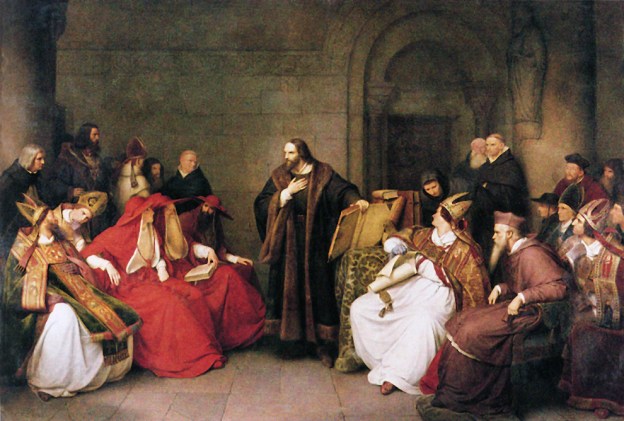
Hus’ trial at Constance “revolved around the specific attitude of Hus toward the teaching of Wycliffe” (p. 53), but it caricatured Hus as a “Wyclifite.” Spinka writes, “the Council persisted in making him a Wyclifite in spite of himself.” (p. 58)

  • Hus “categorically repudiated” Wycliffe’s denial of transubstantiation. (p. 56)
  • Wycliffe held that priests must live in “apostolic poverty.” Hus was not so radical about this. (p. 63)
  • Wycliffe promoted sola scriptura but Hus affirmed papal authority (in general) and sought to submit to papal rule and tradition. (p. 67-68)

Taking all this together, Spinka has made an interesting contribution to understanding Hus, and he has certainly convinced this reviewer that the chronologically appealing “Wycliffe → Hus → Luther” triad is less than perfect.

Bones: Spinka, as a lifelong Hus scholar, obviously has a pro-Hus inclination. In reading the introduction, I couldn’t help but feel that Spinka is drawn to Hus’ theology and life. (Who isn’t?) But he does qualify this by bringing in some elements of Hus’ thought that most Protestant Hus scholars wouldn’t agree with. Two examples are: 1. Hus clearly wasn’t devoted to sola scriptura; and 2. Hus clearly affirmed transubstantiation! (As a minister of the United Church of Christ, Spinka himself most likely affirmed sola scriptura and denied transubstantiation.)

Quotes:

“Hus . . . stressed conscience, rather than intellect. It was his moral courage, enabling him to stand alone against the judgment of the supreme tribunal of the Church, which marked him as great.” (p. 78)

Review: The Perfect Swarm

Rating: ★★★★

Author: Len Fisher is an honorary research fellow in the department of physics, University of Bristol, England. He has authored several popular science books.

Genre: This popular science book is outside our normal range for book reviews, but it is summarized here because of its fascinating implications for leadership.

Overview: The chief value of this popular science book is its brief, yet full-orbed introduction to the burgeoning science of swarm intelligence, also called “the science of complexity.” To define this theme in the author’s words:

“Swarm behavior becomes swarm intelligence when a group can use it to solve a problem collectively, in a way that the individuals within the group cannot.” (p. 10, loc. 224)

“The modern science of complexity has shown that collective behavior in animal groups (especially those of insects such as locusts, bees, and ants) emerges from a set of very simple rules of interaction between neighbors.” (p. 2, loc. 124)

Meat: The applications of these studies are briefly summarized in ch. 10. I have grouped the spiritual applications of this book under four headings:

Swarm Evangelism:

“Groups that use swarm intelligence need no leader, and they have no central planning.” (p. 10, loc. 230) Similarly, the Church of the Spirit in Acts 15 had no pope or king—only a simple set of rules and the sanctifying power of God’s Word and Spirit.

“When networking, find, use, or establish those few long-range links that bring clusters together into a small world. . . .” (p. 168, loc. 2508)

Alphaeus Hardy, who had lost his dream of preaching, led one Japanese boy to Christ after the boy had stowed away on his ship. Joseph Neesima then went back to Japan to glorify Christ among the Japanese.

Faithful Discipleship:

Fisher quotes Barabási’s Linked to the effect that exponential growth is “the inevitable consequence of self-organization due to local decisions made by [individuals].” In other words, the only plan in a self-propelling movement is not just for new members to bring others, but for each successive generation to decide independently that the movement is worthwhile (leading to exponential growth (on a power law) as long as the exponent is more than 1).

Church Planting:

A key idea in biblical church planting methods is the “person of peace.” But networking science says you cannot place the whole burden of a movement on one hub: “Don’t rely on persuading someone with influence to pass the message on. It is far better to try for a critical mass of early adopters—people who will take the idea or product up, after a single exposure.” (p. 168, loc. 2516) Even if a person of peace is found, we should hold off the celebration: a “critical mass of early adopters” is probably the inflection point (or turning point) that we should be aiming for.

Invisible Leadership:

“Lead from the inside (if possible with a coterie of like-minded friends or colleagues), but take care not to let other members of the group know what you are doing. Just head in the direction that you want to go, and leave it to the laws of the swarm to do the rest.” (p. 34, loc. 592)

“The leadership of small groups [that is, a few leaders] can engage a whole army.” (p. 36, loc. 605)

“Just a few informed individuals can lead a much larger group of uninformed individuals simply by moving faster and in the appropriate direction.” (p. 30, loc. 533)

Fisher explains this as an informational cascade, in which the bees follow three rules: avoidance, alignment, and attraction. The larger the group, the fewer leaders needed in proportion. (p. 30; also p. 32, loc. 565)

“We can lead a group simply by having a goal, so long as the others in the group do not have different goals.” (p. 32, loc. 558)

“Members of a group can be totally unrecognized as leaders by those whom they are leading.” (p. 32, loc. 563)

There are also many Scriptural metaphors in the book:

Fisher mentions that locust plagues when dense enough, transition into “highly aligned marching”—an army of locusts “marches” in Joel 2:7. (p. 24, loc. 435)

Fish in schools have only two rules: “follow the fish in front (if there is one) and keep pace with the fish beside you.” (p. 13, loc. 273) Fish have been symbolic of Christians since the earliest times because of the many New Testament stories about fishing. Jacob also prays for Joseph to be “as fishes do increase” (Gen. 48:16). Fish, in this context, mean multiplication!

Solomon admonishes us to “consider the ant” (Prov. 6:6). Ants also operate using swarm intelligence, something mentioned throughout the book.

Review: Unoccupied Mission Fields of Asia & Africa

Rating: ★★★

Author: Samuel M. Zwemer was a pioneer missionary among Arabs along the Persian Gulf. His later career was spent writing, teaching and mobilizing for missions among Muslims while he was based in Egypt for many years, and later at Princeton Theological Seminary.

Click here for more on Samuel M. Zwemer’s writings, or read his biography.

Genre:

The genre of this book requires some explanation. Unoccupied Mission Fields, especially the first half, falls into the category of missions survey. Missions survey books sought to compile information from European explorers and pioneer missionaries to explain basic information that we would expect to read today on Wikipedia: geography, demographics, population statistics, religious statistics, as well as other information pertinent for missionaries and intercessors. Missions survey is not well represented today in publishing, but in comprehensive resources and websites such as Operation World, The Joshua Project, and some resources by Voice of the Martyrs. Missions newsletters, biographies, and some large-scale studies (like A Wind in the House of Islam) also may meet the same goals as missions survey.

Overview:

Zwemer writes in the preface:

The purpose of this book is to give a survey of the extent and condition of the wholly unoccupied mission fields in Africa and Asia . . . and to consider the questions that bear on their occupation. (Preface, loc. 18)

This twofold purpose is roughly how the book is divided. After a lengthy rundown of neglected areas (especially Muslim-majority populations), the second half of Unoccupied Fields deals with heart issues and head issues involved with missionary advancement in these pioneer fields.

The book begins with many accounts of geographical areas with no missionaries (as of 1911). These are mildly interesting, since we can clearly see which areas have experienced rapid progress in the past century (mainly sub-Saharan Africa, and parts of Asia), and others that have seemingly changed little since Zwemer’s day.

Zwemer then discusses the obstacles to missionary advancement in each region, the social and religious poverty among the unreached, missionary strategy, and the need for pioneer efforts.

Zwemer’s sources are primarily missions reports and missions biographies, with some explorers’ accounts and travelogues.

Despite many dated quotations, the second half of the book shows what made Zwemer famous. Aside from his very thorough research, the book is dripping with a pioneer spirit for the glory of Christ among the unreached, and that is the book’s chief value. The last few chapters are especially potent, and “The Glory of the Impossible” is worth the price of the book.

Quotes:

“These fields are the enemy’s citadels, the high places of his dominion, flaunting defiance in the face of a militant church.” (ch. 1, loc. 167)

“The first Missionary came unto His own and His own received Him not.” (ch. 1, loc. 169)

“God does not deal with mankind in the mass, but as individuals, nor should we. [sic]” (ch. 1, loc. 678)

“Decentralization in the mission field itself is another pressing problem.” (ch. 2, loc. 855)

“Meanwhile, how slowly move the hosts of God
To claim the crown He hath already won!” (ch. 3, loc. 1099)

“The march of missionary progress throughout the past century of Protestant missions has, with some exceptions, been along the line of least resistance. When the whole non-Christian world was awaiting pioneer effort, the Church sometimes postponed the harder tasks. . . . ” (ch. 3, loc. 1128)

“The gradual breaking down of barriers . . . is a call to greater faith and enterprise.” (ch. 3, loc. 1594)

“Long neglect, trying climates, political barriers, national jealousies and religious intolerance in all the unoccupied fields are only a challenge to faith and intended of God to lead us to prayer. All difficulties can be surmounted by those who have faith in God.” (ch. 3, p. 107, loc. 1630)

“The eyes of the Christian world turn as instinctively toward the lands closed to the Gospel in this missionary age, as do the eyes of a conquering army toward the few remaining outposts of the enemy.” (John Muir, qtd. in ch. 6, p. 166, loc. 2546)

“The pioneer stands in a class by himself, like Paul among the Apostles. His glory and joy is the magnitude and the difficulty of the task. The unknown attracts him. Obstacles allure him, and difficulties only knit his moral fibre and strengthen his purpose.” (ch. 7, p. 198, loc. 3027)

” . . . men who do not know what discouragement means. . . .” (ch. 7, p. 200, loc. 3059)

“God does not put the Polar bear on the Congo, nor the hippopotamus in the heart of Arabia . . . Lambs are provided with wool, and it is untrue that God tempers the wind to the shorn lamb. He does not need to temper the wind, because He does not shear the lamb.” (ch. 7, p. 214, loc. 3267)

“Heap the difficulties together recklessly . . . He is the God of the impossible.” (Lillias Trotter, qtd. in ch. 8, p. 225, loc. 3436).

“We are not to choose conditions, but to meet them. The early apostles did not wait until the Roman Empire was ‘opened.'” (S. C. Rijnhart, qtd. in ch. 8, p. 227, loc. 3467)

Zwemer cites Bishop French’s tale, adding that MacKay had called for six young men and only French responded (ch. 8, p. 233, loc. 3572)

Livingstone challenged Cambridge men: “Do you carry out the work which I have begun. I leave it with you.” (ch. 8, p. 240, loc. 3674)

Selected quotes on Arabia and Islam:

“But in its native Arabian soil, the tree planted by the Prophet has grown up with wild freedom and brought forth fruit of its own kind. As regards morality, Arabia is on a low plane . . . ” (p. 142, loc. 2171)

“A religion that does not purify the home cannot regenerate the race.” (Fairbairn, qtd. p. 136, loc. 2085)

“The Gospel is the only hope for the social uplift of the world.” (p. 135, loc. 2061)

Zwemer cites amulet use (p. 118, loc. 1801); open slavery (p. 113, loc. 1729-1730); prostitution in Mecca veiled as ‘temporary marriage’ and the like.

“The chief barrier is that of Moslem political authority and not primarily religious fanaticism.” (p. 94, loc. 1437)

“Northern Oman together with the coast along the western side of the Persian Gulf has a large number of villages and cities. Only the coast towns thus far have been visited by missionaries and colporteurs and the people would welcome medical missions, yet there is no station in the entire area of the map.” (p. 45, loc. 675)

“Missionary work in Arabia so far has been largely preliminary.” (p. 34, loc. 518)

“The eastern tribes . . . are pagan . . . Their dialect is distinct . . . their customs are peculiar and primitive.” (p. 33)

Sources cited with recommendations:

In the Torrid Sudan
With Tibetans in Tent and Temple
Across the Sahara 
(Vischer)
Fighting the Slave-Hunters in Central Africa (Swann, 1910)
The Lower Niger & Its Tribes (Leonard, 1906)
Leaves from an Afghan Scrapbook
Six Months in Meccah
(Keane, 1881)

The Danger of an Exalted Mission

An exalted mission is an ever-present tonic to the Christian. The mission will brook no lazy or chicken-hearted missionary. He stands up straight and checks his pulse at the tug of the apostolic chain. She who once neglected her body will now bring it under submission, for she is not shadow-boxing.

The mission demands much; it demands God. It puts us in immediate need of the Holy Spirit. The seven sons of Sceva find themselves out of their depth; hearsay has no power over the usurping devils in the human heart. We must have personal knowledge of him we preach.

The mission demands much—sometimes too much. It must not demand all. Then it becomes like a proud mustard tree, inviting foul birds to infest its branches. Mission may outstrip calling. Mission may outfly faith. Then we find ourselves, like Sceva’s sons, unable to provide the very power that our mission demands.

The apostolic missionary must take care that mission always submits to calling. Calling encompasses all of Christian life; mission, only a part. Calling is an expression of our relation to our Creator; mission is how we join him in rectifying a broken Creation. Mission is work; calling is not primarily work. We are called to:

  • The fellowship of his Son (1 Cor. 1:9)
  • Peace (1 Cor. 7:15)
  • The grace of Christ (Gal. 1:6)
  • Freedom (Gal. 5:13)
  • His kingdom and glory (1 Th. 2:12)
  • Holiness (1 Th. 4:7)
  • Marvellous light (1 Pet. 2:9)
  • Suffering (1 Pet. 2:21)
  • Blessing (1 Pet. 3:9)
  • Glory and virtue (2 Pet. 1:3)

Never let the mission become more important than your calling. Don’t let being a hero become more important than being a Christian. Answer your Creator’s call with your waking breath, and let the mission be your response to that infant helplessness of prayer.

Review: A Pilgrim of the Infinite

Rating: ★★★★

Author: William Valentine Kelley (1843-1927) was an American Methodist preacher and author. He was a talented essayist and was editor of The Methodist Review from 1893 to 1919.

Kelley is an engaging writer with a florid, literary style. His breadth of subject matter is similar to literary preachers like Boreham, Gossip, or Stewart; but his content is less pointed.

Overview: A Pilgrim of the Infinite (1914) is a long essay on the subject of personality. Its overall argument, while rather philosophical, will ring a bell for readers of Mere Christianity or The God Who Is There; Kelley argues from human personality to the infinite.

Meat: Kelley argues convincingly that we have “eternity in our hearts”; the potential of human personality is boundless, and it can only be satisfied by an infinite God. Truly each of us is a “pilgrim of the infinite.”

Bones: Kelley’s style is sometimes over the top.

Gairdner at Niagara

Temple Gairdner was a prolific writer, an erudite scholar, and a committed missionary to the people of Egypt. The following is Temple Gairdner’s thoughtful account of visiting The Cave of the Winds at Niagara Falls. He reflects on climbing into a dangerous cave, where winds can reach up to 68 mph. According to Wikipedia, guided tours were conducted there from 1841, but the cave was closed permanently in 1954 after a massive rockfall, making Gairdner’s description all the more precious.

I feel the same reluctance to begin writing about Niagara as I felt to approaching it. I hung about and finally approached the river above the Falls themselves—as bashfully as one approaches a mistress. And how shall I begin to write of it?

It is a roaring sea tilted up, seething down in great billows, gigantic waves leaping madly, not because they strike a rock but simply because they are burst upwards by the intolerable pressure of the furious waters beneath, all tearing pell-mell down, shoving each other down, up, aside, in the rush for annihilation over the fatal brink. And weirder and more terrific than the noise and the commotion of the rapid, is the silence, the helplessness with which they finally disappear over that edge. It is in the curve of that Horse-Shoe Fall that the waters really heap up, and that you realise the quantities that are going over. It is there that the water, as it seems to pause for an infinitesimal moment, shows the clear, deep body that reminded me again and again of that astounding description in Exodus “as it were the body of heaven in his clearness.”

When the audacious mortal tries to force an entrance into the very arcanum of Niagara, and dares the passage behind the Fall! That is the most thrilling—and the most baffled moment—of all.

This is the entrance into what is called the Cave of the Winds. Why it is so called will be clear in a moment. It is situated behind a small section of the American Fall, about fifty feet broad, isolated from the remainder by the occurrence of a very small islet above. One goes over to Goat Island, enters a changing-room, takes off every stitch of one’s clothing and dons a suit of flannels with a complete oilskin which is drawn over the head, and weird canvas shoes which make one’s two feet look like the tail of a seal. Then comes the descent by a spiral staircase enclosed in a chimney of wood, down the face of the cliff of Goat Island, till the screes at the bottom are reached.

We turn to the right and make towards the corner of the American Fall. Where it hits the screes, it divides into two or three cascades which come foaming down the rocks in two or three channels. These are spanned by small wooden bridges. Then, as we set foot on the first of them we are immediately enveloped in fine spray-mist. . . . We penetrate into the middle of the cloud. . . .

And then—oh wonder! Marvel of beauteous marvels! What sight is this? A rainbow. But what a rainbow! The like was never seen, save by S. John, around the Throne. A brilliant sun is shining overhead. Its rays of intense light fall on and suffuse this saturation of fine spray in the midst of which we stand, and the result is a rainbow of unimaginable intensity and brilliance—a double Rainbow. But—how shall I put the rapturous sight into words—it is not an arch! It is a circle! It bends about me on this side and on that side, yea, seems almost to meet behind me at my very feet! And oh ye gods, what is this? It moves, it moves as I move!!! It surrounds me and moves with me!! When I go forward my rainbow goeth forward!! It is my rainbow! I go back, it goeth back, for it will by no means leave its lord. Ha! What is this? Am I a god? By Jupiter—I am Jupiter! What ho, Ganymede! Bring me my golden flagon of nectar! My eagle, perch on my right hand! Hither to me, Lady Juno, and hear the behest of the rainbow-encircled one . . . Heavens! It was a godlike moment. The oil-skinned one with fishlike tail of canvas yelled with exultation against the bellow of the cataract, and cavorted, encaged in his rainbow, upon that slippery bridge.

Oh godlike moment, must thou pass? Yes, for I came to discover not a divinity for myself, but to track down the divinity of Niagara within her own temple. The Valhalla of this goddess is not the Rainbow-bridge on which I stand, but the deep mysterious recess to which this Rainbow is but the bridge. On, then, again.

I crossed the bridge and began to go up the path by the cascade direct towards the Fall. Already on the bridge one had been drenched from head to foot, in spite of the oilskins: a torrent of water had at once found its way down by the neck over one’s whole body. But torrential though the rain of spray on the footbridge was, it was child’s play to what followed. As I approached the foot of the cataract I was assailed by a perfect blizzard of wind and water, hurricaned across the path by the impact of the falling water on the rocks. One must half shut one’s eyelids and sidle along by the hand-rail peering and blinking. And yet that again was child’s play—only the vestibule to this tempest-goddess’s shrine. We now prepared to pass right behind the Fall, or rather, you understand, that small band of it which is isolated by the two islands above. The passage into this Cave of the Winds is made possible by the occurrence of a hollow, which the cataract clears in its leap from the ledge above. Into this veritable Hall of Aeolus, we now struggle.

A fight it is indeed. We have only some fifty feet to go, but they must be struggled through. The Cave of the Winds! Justly named! A perfect hurricane is blowing; this is no metaphor; the speed of the wind is that of a violent gale: it is the air that has been violently driven down by the falling water, packed and compressed, and now has been turned inwards and, being liberated, smashes obliquely, up and across, towards the opposite cliff-wall, bouncing off from that again, meeting the opposing current, fighting it, and with it producing a wind-inferno. With this alone one would have had almost to close one’s eyes and grope along by the hand-rail; but that is not all; these winds carry along with them flying gallons of thick drenching spray. It dashes itself against one’s face; it assails and assaults the eyes till they smart: mouth and nostrils are smitten till breathing labours; while the ears are deafened and the brain cleaved by the shrieking of the blast and the pelting-sound of the driven water striking the cliff, far more (apparently) than the noise of the Fall itself. The very senses with which one must look upon the goddess are giving out, used up and paralysed by the goddess’s mere attendant slaves. Nevertheless I made one last, and supreme, effort to behold her. Standing fairly in the centre of the footway, where the fury and the din were at their height, I faced—not so much the Fall, as the direction where I knew the Fall was. Disregarding the shrieking and the buffeting, I slowly pulled my eyelids apart and forced the smarting eyes to look straight ahead. . . . In vain! Utterly and entirely in vain! Niagara I saw not: only a vague dimness and obscurity, flying scud, and infernal, elemental din: that was no more Niagara than to stand on a dark night in a gale on a spray-swept deck. No! Divinity Veils itself by excess of light, and blinds the powers of perception that would scan it, not by taking them away but by the intolerable over-supply of the percept. Niagara I found not—saw not (unlike Gerontius) even “for one moment.” I only saw her terrible attendants. Lo, these were but the outskirts of her ways; but the thunder of her mighty power who can comprehend?

Source: William Henry Temple Gairdner. W. H. T. G. To His Friends: Some Letters & Informal Writings of Canon W. H. Temple Gairdner of Cairo, 1873-1928. Ed. Constance E. Padwick. London: SPCK, 1930.

The Ideal Christianity

“… who have said, With our tongue will we prevail; our lips are our own: who is lord over us?” (Ps. 12:4)

That is the beginning of the iniquity. When we mistake our proprietorship we cease to be religious, and we give up the possibility of being religious. What is the first lesson in true Christian religion? The first lesson is that we are not our own, have no right, title, or claim to ourselves; we are branded: we have the burnt-in mark upon us that we belong to Christ Jesus, that we are blood-bought, that we are not our own; we have not a moment of time, not a single energy, thought, wish, will, desire that is our own. That is the ideal Christianity, the very purpose and consummation of Christ’s priesthood, the true meaning—that is, the large and complete meaning—of self-denial, saying No when anything within us claims to have an existence or a right of its own. But this cannot be taught in lectures, nor can men receive it through the medium of preaching; this is the last lesson as well as the first doctrine which is to be learned in the school of Christ. We can only learn what it is to have no right in ourselves, not after we have been to church, but after we have been nailed to the Cross of Christ in the very presence and companionship of Christ. Who can attain this wisdom? Who will not say before attaining it, “My God, my God, why hast thou forsaken me?” Who does not know that before obtaining this there are Gethsemane days, sweltering of blood, sense of loneliness, and, at the last, crashing temples and opening tombs, and a whole apocalypse of wonder and transformation? So long as we think that our lips are our own we shall speak what we please; when we begin to learn that our lips are not our own, nor our hands, nor feet, nor head, nor heart, we shall have but one question: “Lord, what wilt thou have me to do? Tell me, and give me strength to do it.” That will be the day of jubilee, the morning of coronation.

Source: Joseph Parker. The People’s Bible: Psalms. “The Ideal Christianity.”

Review: The Grave Robber

Rating: ★★★½

Author: Mark Batterson is the pastor of National Community Church in Washington, D.C. and author of several Christian living books. His training and affiliation are from the Assemblies of God.

Overview: This book deals with Jesus’ seven miracles in the Gospel of John, organized into 25 short chapters. Although Jesus performs more than thirty miracles in the four Gospels, John only details seven, leading expositors to believe that each one has a  specific theological purpose.

This is the first of Batterson’s books that I have reviewed. One high point in Batterson’s writing/homiletical style is his variety of sources. He tells personal anecdotes, uses scientific examples, and recounts unique biographical material. This must resonate with his urban, well-educated congregation, and it makes his writing very engaging.

Meat: The most memorable section of the book for me was in the last few chapters (ch. 22-24) in which he asks why Jesus allowed Lazarus to die. It is a fascinating question for expositors. Batterson talks about how God can—and often does—allow a dream to die. He mentioned making an offer on a house and being turned down, but afterwards buying the same house for the same price, one year later. But Batterson could have gone much further on this topic:

  • He could have discussed Joseph’s imprisonment.
  • He could have discussed Abraham, Sarah, and the birth of Isaac.
  • He could have discussed Abram leaving Haran, setting out for the second time.
  • He could have used other examples in the life of Jesus—his wilderness experience, Gethsemane, the loss of John—or Jesus’ resurrection, in more detail that is.

Jesus as “the grave robber” and reviver of dreams is a theme that could be explored at more length.

Bones: One low point is the somewhat trite Pentecostal obsession with miracles and how to make them happen—usually something about either avoiding rationalization or risking reputation. I am not sure if miracles in and of themselves are a topic so central to the gospel that we should preach week after week on them. My position is closer to that of George MacDonald: miracles continue to fill an indispensable place in the witness of the gospel, as they did during Christ’s lifetime; but their role in our Christian lives is rarely as monolithic as it is in Pentecostal preaching. Sometimes I think that the logic might be, because cessationists are preaching almost nothing about miracles, we have to preach double.

Quotes:

“Don’t seek miracles. Follow Jesus. And if you follow Jesus long enough and far enough, you’ll eventually find yourself in the middle of some miracles.”

“God is in the business of strategically positioning us in the right place at the right time, but it’s up to us to see and seize those opportunities that are all around us all the time.”