Category Archives: The Vault

This Day in 1838: Freed Jamaicans Bury Their Chains

. . . At an early hour in the morning further proceedings took place, intended to be emblematical of the extinction of slavery. A hole having been dug in the ground attached to the Suffield school-room, a coffin also having been prepared, and the ordinary instruments of slavery — a chain, a whip, an iron collar, &c. — having been deposited in it, a large concourse of persons assembled between five and six o’clock, as for the purpose of celebrating a funeral. The coffin was then duly lowered into the hole prepared for it, the congregation singing the following stanza:

Now, Slavery, we lay thy vile form in the dust.
And, buried forever, there let it remain :
And rotted, and covered with infamy’s rust,
Be every man-whip, and fetter, and chain.

After this ceremony, the flag of freedom, with the union jack at the corner of it, was hoisted, and three more cheers were given.

Religious services were held throughout the day, and Knibb preached at his own chapel, from Nehemiah 12:42–43. He presided afterwards at a public meeting, memorable from this circumstance, that all the
speakers on the occasion were descendants of Africans; and greatly to their credit, both in matter and manner, did they acquit themselves.

Hinton, John Howard. Memoir of William Knibb, Missionary in Jamaica. 2nd ed. London: Houlston & Stoneman. 1849, p. 262.

This Day in 1892

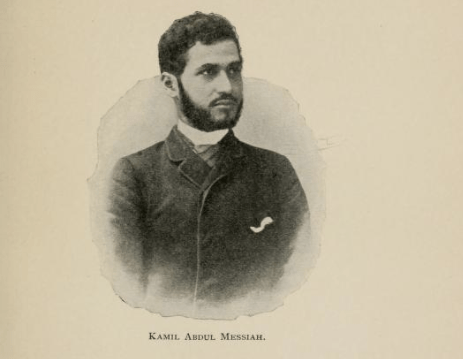
Kamil Abdulmasih died on June 24, 1892 (131 years ago today). I'm reposting this entry about him from September 2017, which was also the week Nabeel Qureshi died.

Kamil Abdulmasih (or Abdul Messiah) was a Syrian Christian in the 19th century. He had befriended Cornelius van Dyck, the Bible translator, and Henry J. Jessup, a veteran missionary, and converted from Islam to the Messiah, reflected in his chosen change of name. As a young believer, he travelled with Samuel M. Zwemer to Aden (in present-day Yemen) and to Basra, Iraq. He was a bold but tactful witness to the Christian faith, and for several months spent much of his time witnessing to Muslims with Zwemer. Some of the last records of his life are about discussing faith with dozens of Muslims, sometimes for several hours at a stretch. You can read about them in a short book published by Henry H. Jessup about Kamil’s life. After a short illness, he died on June 24, 1892, under mysterious circumstances. Before any of his close friends knew that he had died, Muslim funeral rites were being performed over his body, which was guarded by soldiers. Although Basra has some of the hottest summers on the planet, it seems obvious that the officials who surrounded him immediately after his death must have also played some part in expediting it.

The sudden death of this gifted and young disciple was one of those bitter trials which can only be relieved by reference to the unerring wisdom of God, who doeth all things well.

It is the opinion of’ those associated with him that he was poisoned, but the hostility of the government, the fact that he was buried in the Moslem cemetery, and that no postmortem would have been allowed make it impossible to obtain positive proof.

The sad facts are as follows:

On Friday, June 24, 1892, Kamil died. Early in the morning Mr. Zwemer was called to conduct the funeral of the carpenter on board a foreign steamer. Owing to the extreme heat he did not call on Kamil before going home to breakfast. Mr. Cantine called on Kamil in the morning and found him suffering with symptoms of bowel disorder, violent vomiting and purging. Dr. Riggs, who was himself sick, sent him medicine by a servant. The heat was intense, and many of the people were prostrated with fevers. Kamil lived near the harbor, and the missionaries nearly two miles distant in the native quarter. At five o’clock p. m. Mr. Zwemer went to call on him and help him. Yakoob Yohanna, a Christian native, met him half way and told him of Kamil’s death. He hastened to the house, and found it occupied by Turkish soldiers, mullahs, and people who had seized his papers, sealed up his room, and were busy with Moslem prayers over his body. They protested that he was a Moslem. Mr. Zwemer insisted that he was a Christian, and begged and entreated that he should be buried with Christian burial.  The evidence of his Christian faith was among the papers they had seized. But it was vain to resist this very exceptional display of armed force.

Mr. Zwemer left the body and went to the Turkish waly, and to appeal to the British consul. Meantime Mr. Cantine arrived, and Mr. Zwemer had to hasten away on receipt of a note stating that Dr. Riggs was very ill, and with high temperature.

At 10.30 p.m. Mr. Cantine came with the news that the Moslems, in spite of his protest, had performed their funeral rites and buried Kamil. But the seal of the British consul was added to that of the Turks on the room containing his property. The next day the whole town was talking over the event. Many of the Moslems told the missionaries that they knew Kamil to be a Christian and a man of pure and upright life, that he was converted from Islam, and a preacher of Christianity.

The exact spot where the Moslems buried him could never be found. The consulate did not succeed in securing his little property, but his books and papers were afterwards sold at auction, excepting the few claimed by the missionaries as their personal property.

The evidence of foul play in his death is regarded as very strong:

I. He was a young man of strong physique and had not been long unwell.

II. Had he died from ordinary disease none but his companions would have known it, and the missionaries would have been told of it before any one else.

III. It is regarded as impossible that the Turks and mullahs could have prepared his body for burial, sealed all his property, and had the military police agree to oppose any help or interference on the part of the missionaries, in so short a time as that which intervened between his death and their arrival. The washing and enshrouding of the body according to Moslem custom is a long and elaborate ceremony, and the sheikhs and mullahs must repeat the Kelimat ash-Shehada, or word of witness, ‘There is no deity but Allah, and Mohammed is his apostle,’ at every ablution, and three times after the washing, when three pots of camphor and water are poured over the body.

The following are two of the prayers recited by Moslems at a funeral:

God is Great. Holiness to thee, oh God, And to thee be praise. Great is thy Name. Great is thy greatness. Great is thy praise. There is no deity but thee.’

O God, forgive our living and our dead, and those of us who are present and those who are absent, and our children and our full-grown persons, our men and our women. O God, those whom thou dost keep alive amongst us keep alive in Islam, and those whom thou causest to die let them die in the faith.

Those who place the corpse in the grave repeat the following sentence:

We commit thee to earth in the name of God and in the religion of the prophet.

IV. Government officials were on hand to take possession of all his effects and seal up his room before his Christian brethren could arrive.

There is every indication that poison had been given him by some unknown persons, either in coffee, the usual eastern way of giving it, or as medicine.

V. The burial took place in the evening and the place of interment was concealed.

VI. According to the Moslem law, a male apostate (murtadd) is liable to be put to death, if he continue obstinate in his error. If a boy under age apostatize, he is not to be put to death, but to be imprisoned until he come to full age, when, if he continue in the state of unbelief, he must be put to death.” According to Dr. Hughes, quoting from the book “Sahih ul Bukhari”  “Ikrimah relates that some apostates were brought to the Khalifa Ali and he burnt them alive; but Ibn Abbas heard of it and said that the Khalifa had not acted rightly, for the prophets had said, “Punish not with God’s punishment (i. e., fire), but whosoever changes his religion, kill him with the sword.”

VII. Kamil’s own father once wrote him virtually threatening to kill him as an apostate.

In these days the sword is not generally used to dispose of apostates from the faith. Strychnine or corrosive sublimate are more convenient, and less apt to awaken public notice, especially where an autopsy would not be allowed.

It may be that Kamil’s father used the language simply for intimidation, for I can hardly believe him to be so utterly devoid of natural affection;  but religious fanaticism, whether originating in Arabia or in Rome, seems to override all laws of human affection or tenderness.

The Lord himself, the chief Shepherd, knows whether his loving child Kamil is worthy of a martyr’s crown. We know that he was faithful unto death. He fought the good fight, he kept the faith, he finished his course. His life has proved that the purest and most unsullied flowers of grace in character may grow even in the atmosphere of unchristian social life. It mattered not to him who buried him or where he was buried. He was safe beyond the reach of persecution and harm.

I have rarely met a more pure and thoroughly sincere character, sine cera.  From the beginning of our acquaintance in “our flowery bright Beirut,” to his last days on the banks of the Tigris, he was a model of a humble, cheerful, courteous, Christian gentleman.

Kamil’s history is a rebuke to our unbelief in God’s willingness and power to lead Mohammedans into a hearty acceptance of Christ and his atoning sacrifice.

We are apt to be discouraged by the closely riveted and intense intellectual aversion of these millions of Moslems to the doctrines of the Trinity and of the divinity of Jesus Christ. But Kamil’s intellectual difficulties about the Trinity vanished when he felt the need of a divine Saviour. He seemed taught by the Spirit of God from the first. He exclaimed frequently at the wonderful scheme of redemption through the atoning work of Christ.

El fida, el fida,” “redemption” he once said to me, “redemption, how wonderful! I now see how God can be just and justify the sinner. We have nothing of this in Islam. We talk of God’s mercy, but we can not see how his justice is to be satisfied.” What the Mohammedan needs above all things is a sense of sin, of personal sin, and of his need of a Saviour. (Henry H. Jessup, The Setting of the Crescent the Rising of the Sun: or, Kamil Abdul Messiah, pp. 137-144. Philadelphia: Westminster Press,1898.) 

Kamil’s story is being put back into print by Pioneer Library. Click here to see the new edition.

Why Jesus Healed

Surely, no one who honours the Saviour will for a moment imagine him, as he entered the chamber where the woman lay tormented, saying to himself, “Here is an opportunity of showing how mighty my Father is!” No. There was suffering; here was healing. What I could imagine him saying to himself would be, “Here I can help! Here my Father will let me put forth my healing, and give her back to her people.” What should we think of a rich man, who, suddenly brought into contact with the starving upon his own estate, should think within himself, “Here is a chance for me! Now I can let them see how rich I am!” and so plunge his hands in his pockets and lay gold upon the bare table? The receivers might well be grateful; but the arm of the poor neighbour put under the head of the dying man, would gather a deeper gratitude, a return of tenderer love. It is heart alone that can satisfy heart. It is the love of God alone that can gather to itself the love of his children.

Source: George MacDonald, “The Cure of Simon’s Wife’s Mother”, Sermon III in The Miracles of Our Lord., 1870.

Two Extremes

There are two great Extremes, which are both Enemies to Christ and Godliness: Either to think we may be saved without the Remedy, or that we can do nothing with the Remedy; either to think that the Gospel is a needless Thing, or now that it is come, that it is an useless Thing—either that we have not destroy’d our selves, or that there is not offer’d Help in God. The one, in effect, denies the Fall; the other, our Redemption.

Samuel Fancourt, The Greatness of the Divine Love Exemplified and Display’d [a sermon on 1 John 4:9, published in 1725, reprinted in 1729 in the 2nd ed. of The Greatness of the Divine Love Vindicated in Three Letters.]

This Day in 1770

May 27, 1770 is a day John Howard considered his spiritual birthday. Howard was imprisoned by a French privateer in 1755 while performing disaster relief for the Lisbon earthquake. His imprisonment led him to a systematic, statistical inquiry of European prisons. In time, these efforts led to widespread prison reform. He visited hundreds of prisons, travelled tens of thousands of miles, and died after contracting typhus in Kherson, Ukraine, at the age of 63.

Naples, May 27, 1770.—Lord, I believe; help Thou mine unbelief! Here, on this sacred day, in the dust before the Eternal God, I cast my guilty and polluted soul on the sovereign mercy of the Redeemer. Oh, compassionate and divine Lord, save me from the dreadful guilt and power of sin, and accept my solemn, free, and unreserved surrender! Look upon me, a repenting, returning prodigal! Thus, O Lord God, am I humbly bold to covenant with Thee! Ratify and confirm it, and make me the everlasting monument of Thy mercy. Glory to God—Father, Son, and Holy Ghost—forever and ever. Amen and Amen.

John Howard’s Journal, as quoted in F. W. Boreham, A Temple of Topaz.

Fancourt’s Wager

Is it ontologically and ethically 'safer' to believe in free will rather than determinism? Samuel Fancourt thought so. Here is a passage from one of his many books on free will theology.

Were we to err in this matter, it were infinitely more safe (even in our fallen State) to err on the side of Liberty than against it. … If we are not free, but wholly passive, it can do us no hurt to think ourselves free. What I am under a Necessity to do and be, I shall do and be notwithstanding. But if we are really free, and think we have no Freedom, it may do us much Hurt, it may turn to our infinite Hurt, as it may tempt us to neglect that Part upon which Life and Immortality depend. Ay, it may not only prove an Injury to our selves, but to the World about us, whilst those valuable Talents, which were given for the publick Good, are either wickedly imploy’d against it, or slothfully buried, for want of a Vigorous and timely Resistance against the Flesh, the World, and the Devil.

Source: Samuel Fancourt. An Appendix to a Letter to the Reverend Mr. Norman, in Two Parts. Now available on Kindle.

The Prescience Papers: The 300-Year-Old Open Theism Debate We All Forgot About

The Prescience Papers is my name for an early 18th-century debate (1725–1735) that involved seven(?) English ministers and revolved around the (in)compatibility of God’s foreknowledge with human liberty.

This bibliography has the power to reshape the debate about divine foreknowledge, as we see the diversity of both Calvinist and Arminian views that were held by fellow ministers. As the works are perused, the debate becomes eerily similar to debates that swirled around North America in the 1990s:

  • One group proposes that God cannot foreknow the decisions of a libertarian free will;
  • Another responds that this is a misconception, as God clearly foreknows all things, and foreknowledge does not imply causation or decree;
  • A third group replies that foreknowledge does mean causation, that God in fact has decreed all things, including sin, but is not therefore accountable for sin, which he hates.

Here follows the bibliography of the debate, with titles clipped for readability. I’ve linked a few books to my own Kindle editions, with hopefully more to come. I am indebted to Tom and Christine Lukashow who have done a lot of the hard work of discovering these books.

  1. Samuel Fancourt, The Greatness of the Divine Love Exemplified and Displayed, in a Sermon on 1 John 4:9 (1725, 2nd ed. 1729)
  2. Samuel Fancourt, The Greatness of the Divine Love Vindicated in Three Letters (1727, 2nd ed. 1729)
  3. Samuel Fancourt, Appendix on Original Sin (1729)
  4. (Anonymous), The Divine Prescience of Free Contingent Events, Vindicated and Proved (1729)
  5. Samuel Fancourt, An Essay Concerning Liberty, Grace, and Prescience (1729)
  6. John Norman, God’s Foreknowledge of Contingent Events Vindicated (1729)
  7. Samuel Fancourt, What Will Be Must Be, or Future Contingencies No Contingencies (3/10/1730)
  8. John Norman. An Appendix to a Letter to the Rev. Mr. Fancourt in Vindication Of God’s Foreknowledge of Contingent Events (1730)
  9. Anthony Bliss, A Letter in Vindication of God’s Prescience of Contingencies (1730)
  10. Samuel Fancourt, Apology, or Letter to a Friend Setting Forth the Occasion, &c., of the Present Controversy, 2nd ed. (7/27/1730)
  11. David Millar, The Principles of the Reformed Churches (3/22/1731)
  12. David Millar, The Omniscience of God, Stated and Vindicated (dated 12/22/1731, published 1732)
  13. David Millar, All Future Free Actions: Future Contingencies (7/31/1732)
  14. Samuel Fancourt, The Greatness of the Divine Love Further Vindicated (1732)
  15. Samuel Fancourt, Appendix to a Letter to the Rev. Mr. Norman (1732)
  16. (Anonymous), Free Agency of Accountable Creatures (6/6/1733)
  17. Joseph Burroughes(?), The Certain Futurity of Free Actions No Contradiction; or, God’s Foreknowledge of All Events Not Inconsistent with Human Liberty (1733)
  18. David Millar, The Prescience of God Well Agreeing with the Liberty of Created Agents (dated 7/3/1734, published 1735)

Amazingly, this is not even all of the pamphlets and books that circulated during this period on the compatibility of human free will with divine foreknowledge. Here are three others worth looking into; the second and third, like Fancourt, defend a position corresponding to modern open theism.

  1. J. Greenup, A Vindication of Human Liberty (1731)
  2. John Jackson, Some Reflections on Prescience: in which the Nature of the Divinity is Enquired Into (1731)
  3. (Anonymous), An Essay on the Divine Prescience and Man’s Free-Agency (1741)

Edit: Of the 22 books listed above, we’ve now published nine as Kindle editions. Be on the lookout for more!

Argula von Grumbach’s Letter to the University of Ingolstadt

Argula von Grumbach wrote this letter (here translated from German and abridged) in 1523 when the University of Ingolstadt forced Arsacius Seehofer to recant his Protestant views. It became a sensation, going through 14 editions in two months, and launched Argula von Grumbach as the first female Protestant writer. I'm sharing it here on the occasion of International Woman's Day because it was difficult to come by the text.

The account of a Christian woman of the Bavarian nobility whose open letter, with arguments based on divine Scripture, criticizes the University of Ingolstadt for compelling a young follower of the gospel to contradict the word of God . . .

The Lord says, John 12, “I am the light that has come into the world, that none who believe in me should abide in darkness.” It is my heartfelt wish that this light should dwell in all of us and shine upon all callous and blinded hearts. Amen.

I find there is a text in Matthew 10 which runs: “Whoever confesses me before another, I too will confess before my heavenly Father.” And Luke 9: “Whoever is ashamed of me and of my words, I too will be ashamed of when I come in my majesty,” etc. Words like these, coming from the very mouth of God, are always before my eyes. For they exclude neither woman nor man.

And this is why I am compelled as a Christian to write to you. For Ezekiel 33 says: “If you see your brother sin, reprove him, or I will require his blood at your hands.” In Matthew 12, the Lord says, “All sins will be forgiven; but the sin against the Holy Spirit will never be forgiven, neither here nor in eternity.” And in John 6, the Lord says: “My words are spirit and life…”

How in God’s name can you and your university expect to prevail, when you deploy such foolish violence against the word of God; when you force someone to hold the holy Gospel in their hands for the very purpose of denying it, as you did in the case of Arsacius Seehofer? When you confront him with an oath and declaration such as this, and use imprisonment and even the threat of the stake to force him to deny Christ and his word?

Yes, when I reflect on this, my heart and all my limbs tremble. What do Luther or Melanchthon teach you but the word of God? You condemn them without having refuted them. Did Christ teach you so, or his apostles, prophets, or evangelists? Show me where this is written! You lofty experts, nowhere in the Bible do I find that Christ, or his apostles, or his prophets put people in prison, burnt or murdered them, or sent them into exile…Don’t you know what the Lords says in Matthew 10? “Have no fear of him who can take your body but then his power is at an end. But fear him who has power to dispatch soul and body into the depths of hell.”

One knows very well the importance of one’s duty to obey the authorities. But where the word of God is concerned, neither Pope, Emperor, nor princes – as Acts 4 and 5 make so clear – have any jurisdiction. For my part, I have to confess, in the name of God and by my soul’s salvation, that if I were to deny Luther and Melanchthon’s writing, I would be denying God and his word, which may God forfend forever. Amen…

I beseech you. Trust in God. He will not desert us, for every hair on our heads is numbered and in his care, as Matthew 10 says. I had to listen for ages to your Decretal preacher crying out in the Church of Our Lady: Ketzer! Ketzer!, “Heretic, Heretic!” Poor Latin, that! I could say as much myself, no doubt, and I have never been to university. But if they are to prove their case, they’ll have to do better than that. I always meant to write to him, to ask him to show me which heretical articles the loyal worker for the Gospel, Martin Luther, is supposed to have taught.

However, I suppressed my inclinations; heavy of heart, I did nothing. Because Paul says in 1 Timothy 2: “The women should keep silence and should not speak in church.” But now that I cannot see any man who is up to it, who is either willing or able to speak, I am constrained by the saying, “Whoever confesses me,” as I said above. And I claim for myself Isaiah 3: “I will send children to be their princes; and women, or those who are womanish, shall rule over them . . .

My heart goes out to our princes, whom you have seduced and betrayed so deplorably. For I realize that they are ill informed about divine Scripture. If they could spare the time from other business, I believe they, too, would discover the truth that no one has a right to exercise sovereignty over the words of God. Yes, no human being, whoever he be, can rule over it. For the word of God alone – without which nothing was made – should and must rule…

What have our princes done to merit such conduct from you? Is this the reward for their frequent generosity, bestowing wealth on the poor among you? How do you make them look? Why do you make them and this university of yours, which they are rightly praised for founding, the laughingstock of the whole world? Ah, what loyalty you return for the good they have done you! What gratitude! How dare you?…

I am quite convinced that, if they knew the truth, they would not continue to act on your requests as they have now done with Seehofer and would not have given permission for him to be murdered, as indicated in his oath. May God be their reward eternally. I hope things will improve. Who knows why they gave such an instruction?

Have no doubt about this: God looks mercifully on Arsacius, or will do so in the future, just as he did on Peter, who denied the Lord three times. For each day the just person falls seven times and gets up on his feet again. God does not want the death of the sinner, but his conversion and life. Christ the Lord himself feared death; so much so that he sweated a bloody sweat. I trust that God will yet see much good from this young man. Just as Peter, too, did much good work later, after his denial of the Lord. And, unlike this man, he was still free, and did not suffer such lengthy imprisonment, or the threat of the stake . . .

Are you not ashamed that Seehofer had to deny all the writings of Martin, who put the New Testament into German, simply following the text? That means that the holy Gospel and the Epistles and the story of the Apostles and so on are all dismissed by you as heresy. It seems there is no hope of a proper discussion with you. And then there’s the five books of Moses, which are being printed too. Is that nothing? I hear nothing about any of you refuting a single article of Arsacius from Scripture…

I beseech you for the sake of God, and exhort you by God’s judgement and righteousness, to tell me in writing which of the articles written by Martin or Melanchthon you consider heretical. In German, not a single one seems heretical to me. And the fact is that a great deal has been published in German, and I’ve read it all. Spalatin sent me a list of all the titles. I have always wanted to find out the truth . . . My dear lord and father insisted on me reading [the Bible] when I was ten years old. Unfortunately, I did not obey him, being seduced by the afore-named clerics, especially the Observants who said that I would be led astray.

Ah, but what a joy it is when the spirit of God teaches us and gives us understanding, flitting from one text to the next – God be praised – so that I came to see the true, genuine light shining out. I don’t intend to bury my talent if the Lord gives me grace. “The gospel,” says Christ, Luke 7, “is preached to the poor, and blessed is the one who is not offended by me . . .”

I cry out with the prophet Jeremiah, chapter 22: “Earth, earth, earth! Hear the word of the Lord!” I beseech and request a reply from you if you consider that I am in error, though I am not aware of it. For Jerome was not ashamed of writing a great deal to women, to Blesilla, for example, to Paula, Eustochium, and so on. Yes, and Christ himself, he who is the only teacher of us all, was not ashamed to preach to Mary Magdalene, and to the young woman at the well.

I do not flinch from appearing before you, from listening to you, from discussing with you. For by the grace of God I, too, can ask questions, hear answers, and read in German. There are, of course, German Bibles which Martin has not translated. You yourselves have on which was printed forty-one years ago, when Luther’s was never even thought of.

If God had not ordained it, I might behave like the others, and write or say that he perverts Scripture; that is contrary to God’s will. Although I have yet to read anyone who is his equal in translating it into German. May God, who works all this in him, be his reward here in time and in eternity. And even if it came to pass – which God forfend – that Luther were to revoke his views, that would not worry me. I do not build on his, mine, or any person’s understanding, but on the true rock, Christ himself, which the builders have rejected. But he has been made the foundation stone and the head of the corner, as Paul says in I Corinthians 3: “No other base can be laid, than that which is laid, which is Christ . . .”

I have no Latin; but you have German, being born and brought up in this tongue. What I have written you is no woman’s chit-chat, but the word of God; and I wrote as a member of the Christian Church, against which the gates of Hell cannot prevail. Against the Roman, however, they do prevail. Just look at that church! How is it to prevail against the gates of Hell? God give us his grace, that we all may be saved, and may God rule us according to His will. Now may his grace carry the day. Amen.

Dietfurt. Sunday after the exaltation of the holy Cross. The year of the Lord One thousand five hundred and in the twenty-third year. My signature, Argula von Grumbach, von Stauff by birth.

To the reverent, honorable, well-born, most learned, noble and esteemed Rector and general council of the whole University of Ingolstadt.

A Sunday Morning at the City Temple (1896)

I am sharing this magazine article from the height of Joseph Parker's fame. It includes a great description of his imposing personality and preaching style, as well as some great aphorisms.

Among London churches of more than denominational fame, the City Temple takes one of the foremost places, and now that Liddon and Spurgeon have passed into “the great silence,” there is no preacher left to us equal in force and originality to its minister, the Rev. Joseph Parker, D.D.

The personality of Dr. Parker is doubtless the strongest attraction for the crowd of strangers who mingle with the regular congregation at every service, but to many, and notably to the thousands of Americans— descendants of the Pilgrim Fathers—who yearly visit our shores, the church is historically interesting as the oldest Independent or Congregational church in London.

The Church was founded in 1640 by the celebrated Dr. Thomas Goodwin, chaplain to Oliver Cromwell, in Anchor Lane, Thames Street. …

Not until he rises to read the first lesson do we get a clear view of the preacher. In old Scots, Dr. Parker would be called “ken-speckle.” In a crowd he would be conspicuous. In figure he is big and burly. His leonine head is crowned with long grizzled locks, well brushed back from a lofty brow which age has begun to furrow. Dr. Parker is now sixty-five, and his ministry covers a period of forty-three years. Small, deep-set, peering eyes, that flash at will into piercingnness, and a mouth that closes with a vice-like grip, give a stern character to a clean-shaven face of rugged outline and massive strength. In his bearing there is an air singularly defiant and combative; but in prayer the sympathetic and tenderer qualities shine out. Dr. Parker wears a gown in the pulpit, but otherwise does not affect conventional clerical garb. He habits himself in a mode suggestive of a bygone generation of Independents.

It is difficult to convey a mental picture of Dr. Parker’s manner in the pulpit. It may be strange, but it is his own ; it may be eccentric, but it is magnetic. And we would not wish it otherwise. …

No pen can describe the deep bass tones of his voice, or visualise the striking gestures with which he illustrates and emphasises his message. At times, the rapidity of his speech is irresistible, and again de-lib-er-ate-ness can alone style it. Sententious he always is. In aphoristic strength no other preacher comes near him. With one pregnant sentence or striking paradox he grips the attention of his hearers, and the hold is never slackened. He speaks in flashes:

“Who can keep down the fool?”

“There are no trivialities in the Bible.”

“We are called to high considerations.”

“‘Son of Man, can these bones live?’”

“God gives us insoluble problems. I know Ezekiel was a great and a wise man by his answer: “O Lord God, Thou knowest.”

“I believe in the impossible—the im- possible to man—because I believe in Thee. I live in God’s Hereafter.”

“We are in the valley to-day. Can these shattered lives be pieced together; can these evil passions be quenched? O Lord, Thou knowest. That is peace, that is faith.”

‘Do not hold the farthing candle to the sun.”

“I thank God that from my mother’s breast I drank in a love for my Bible. To me it is the word of God. The all-time book.”

“Don’t be so clever to finish what God began.”

“Can the body rise again from the dead? O Lord, Thou knowest. I am no creed maker, no theology inventor. On my ‘not know’ I set my faith.”

“Go home to bed and learn the first prayer—to hold your tongue.”

Source: A Sunday Morning at the City Temple, George T. Moore. The Sunday Magazine, vol. 25, February 1896, p. 103–107.

Tokichi Ishii’s Text

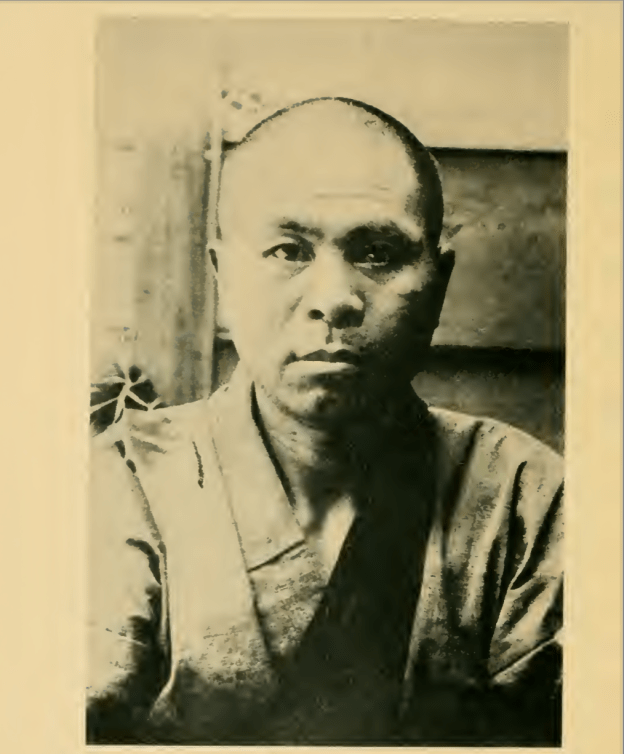
This essay, summarizing the inspirational story of Tokichi Ishii, is one chapter in A Bundle of Torches, coming back to print in January 2022 in the newest addition to the F. W. Boreham Signature Series. The full story of Tokichi Ishii, A Gentleman in Prison (1922) will also be returning to print.  Ishii's remarkable story was first published in Japanese in 1919 under the title 聖徒となれる悪徒: 石井藤吉の懺悔と感想 ("The Scoundrel Who Became a Saint").  Editions followed in English (1922), Danish (1923), German (1924), Dutch (1925), Hungarian (1927), Chinese (1933), and Arabic (1980).

I

The spiritual pilgrimage of Tokichi Ishii is, Dr. Kelman declares, the strangest story in all the world. It is, he adds, one of our great religious classics. ‘There is in it something of the glamour of the Arabian Nights and something of the hellish nakedness of Poe’s Tales of Mystery and Horror. There is also the most realistic vision I have ever seen of Jesus Christ finding one of the lost. You see, as you read, the matchless tenderness of His eyes and the almighty power of the gentlest hands that ever drew a lost soul out of misery into peace.’

The story was first told in the saloon of the Empress of Russia. The cold winds swept across the sea, having a touch of the northern ice in them, and a group of passengers had gathered in a sheltered spot. They were relating to each other all kinds of experiences with which they had met. But, after a while, every narrative was overshadowed and driven into the oblivion of forgetfulness by the story that was told by Miss Caroline Macdonald, a quiet little Scottish lady. As soon as she had finished her amazing recital, everybody felt that they had been listening to one of the world’s most thrilling and absorbing romances. It is, as Mr. Fujiya Suzuki, M.P., says, just such a story as Victor Hugo’s Les Miserables. Tokichi Ishii is Jean Valjean over again, but Jean Valjean with a profound spiritual experience. Dr. Kelman, who was of the party on board the Empress of Russia, insisted that the story, which had already been published in Japanese, must be translated into Western tongues. And, as a consequence, here it is! It is worthy, as the publishers claim in their introductory note, to be cherished among the classical prison documents which are among the priceless treasures of the Christian Church. It is entitled A Gentleman in Prison; and he would be of cold blood and sluggish soul who could read it without deep emotion. Nor is its interest merely—or mainly—sentimental. ‘The most striking aspect of the book for many readers will be its psychology.’ Dr. Kelman declares, ‘One can imagine the glee with which Professor William James would have seized upon it and given it world-wide fame. The narrative discloses a true psychologist, full of curiosity about himself and bewildered by the masterless passions of his amazing soul.’ It has, too, a very high apologetic value. If I knew a man who had any doubt about the reality of religion, or about the existence of God, or about the eternal Deity of Jesus Christ, I would rather hand him a copy of A Gentleman in Prison than any volume of argument or of divinity that has ever been published. If A Gentleman in Prison did not scatter his scepticism, nothing would.

II

The book is dedicated To All in Every Land Who Have Never Had a Chance. Ishii certainly never had. He was born in heathenism; his father was an inveterate drunkard; his mother was the daughter of a Shinto priest. Up to the time of his death, he only knew two Christians; and he met them during the brief period of his last imprisonment, and after he himself had avowed his faith in Christ. At the age of thirteen he had to decide whether he would steal or starve. He resolved the problem in the way in which most of us, similarly situated, would have settled it. He stole. ‘This,’ he says, ‘was the beginning of my life of crime. As I look back now I realize keenly how easily a child is influenced by bad friends and surroundings.’ Stealing quickly led to gambling; gambling led to more stealing; and stealing and gambling together soon plunged him into prison. In prison he consorted with hardened criminals who laid themselves out to make the boy as callous as themselves. ‘The fact of the matter is,’ says Ishii, and he underlines the words, ‘the fact of the matter is that a prison is simply a school for learning crime.’ He was an apt pupil. During the years that followed, he committed one atrocity after another in the most shameless and audacious fashion. He spent most of his time in gaol; and, immediately upon his release, he committed some new felony or murder which once more brought the police upon his trail. And, on the twenty-ninth of April, 1915, his career of crime reached a hideous climax. He murdered the geisha girl who waited upon him at a tea-house near Tokyo. This, the most dastardly and dreadful of all his misdeeds, nevertheless had in it the germ that developed into better things.

III

Ishii crept away from the tea-house without leaving any clue that could lead to the conviction of the culprit. But, some time afterwards, when he was imprisoned on a later charge, he overheard his fellow-prisoners discussing the tea-house murder. A man named Komori, the lover of the girl, was, they said, being tried for the murder of the geisha. Within the grimy soul of Ishii a knight lay slumbering, and this startling news awoke him. ‘For a moment,’ Ishii says, ‘I could scarcely believe my ears. But upon enquiry I found that the men knew the facts, and that it was actually true that an innocent man—the lover of the dead girl—was on trial for her murder. I began to think. What must be the feeling and the suffering of this innocent Komori? What about his family and relatives? I shuddered to think of the agony that must have been theirs. I kept on thinking; and, at last, I decided to confess my guilt and save the innocent Komori.’

It is this quality in Ishii that led Dr. Kelman to call the book A Gentleman in Prison. ‘At his worst,’ the doctor says, ‘he retains the pride and honour of a gentleman; and, in the supreme test, insists on dying to save an innocent man. Cruel as a tiger, he yet responds, like a charming little child, to any kindness shown him. In the midst of a career of systematic and outrageous vice, he sometimes acts in a spirit which many of the elect might envy.’

During the days that followed his confession, Ishii laboured ceaselessly to establish Komori’s innocence by proving his own guilt. Never in all the calendars of crime did a man work so hard to prove his innocence as Ishii worked to collect evidence that would secure his own conviction. To strengthen his case, he made a clean breast of all his offences; and owned frankly that he was the murderer of several victims whose deaths had been shrouded in impenetrable mystery.

The trial of Ishii for the murder of the geisha girl dragged on for days and months. It was one of the most baffling cases in the criminal records of Japan. At length Ishii was found Not Guilty. ‘I was greatly disheartened about this,’ he says, ‘for I knew that if I were acquitted the innocent Komori would suffer the penalty of the crime. I was so distressed about it that I could not sleep.’ He instructed his lawyer to leave no stone unturned in getting justice done. In accordance with the provisions of Japanese law, he appealed against his acquittal; the case was reheard in the Appeal Court; and Ishii—to his delight—was sentenced to death.

IV

Like everybody else, Miss Macdonald, who lived in Tokyo, was profoundly interested in the strange case, and determined, if possible, to visit Ishii in prison. ‘Early in the morning of New Year’s Day,’ Ishii says, ‘a special meal was brought me instead of the ordinary prison fare; and I was told that two ladies—Miss Macdonald and Miss West—had sent it. Who could these persons be? I had never heard of them before. There was no reason why I should receive anything from people I did not know, and I told the official that I could not accept the gift.’ The gaoler induced him, however, to reconsider his proud decision. ‘The food was sent to me during the first three days of the New Year. A few days later a New Testament was received from the same source; but I put it on the shelf and did not even look at it.’ In the end, however, the monotony of his prison life proved too much for his pride.

‘I took the New Testament down from the shelf,’ he says, ‘and, with no intention of seriously looking at it, I glanced at the beginning and then at the middle. I was casually turning over the pages when I came across a place that looked rather interesting.’ It was the passage that tells how Jesus set His face like a flint to go to Jerusalem, although He knew that it was certain death to do so. The conception appealed to Ishii’s sense of daring, of gallantry, of adventure. He laid the book aside, but he resolved to dip into it again. When next he picked it up, it opened by chance at the story of the man who had a hundred sheep, and who, leaving the ninety and nine in the fold, went out into the mountains to search for that which was lost until he found it. Again Ishii was interested, though not quite as deeply as before. But he promised himself that he would give the little book a third trial. He did.

‘This time I read how Jesus was handed over to Pilate by His enemies, was tried unjustly and put to death by crucifixion. As I read this I began to think. Even I, hardened criminal that I was, thought it a shame that His enemies should have treated Him in that way. I went on, and my attention was next taken by these words: And Jesus said, Father, forgive them, for they know not what they do. I stopped. I was stabbed to the heart as if pierced by a five-inch nail. What did the verse reveal to me? Shall I call it the love of the heart of Christ? Shall I call it His compassion? I do not know what to call it. I only know that, with an unspeakably grateful heart, I believed. Through that simple sentence I was led into the whole of Christianity.’

On each of the following pages, Ishii harps upon his text. Every time he repeats it, it seems more wonderful to him. ‘The last words that a man utters,’ he says, ‘come from the depths of his soul; he does not die with a lie upon his lips. Jesus’ last words were: Father, forgive them, for they know not what they do; and so I cannot but believe that they reveal His true heart.’

‘I wish to speak,’ he says again later, ‘of the greatest favour of all—the power of Christ, which cannot be measured by any of our standards. I have been more than twenty years in prison since I was nineteen years of age, and during that time I have known what it meant to endure suffering. I have passed through all sorts of experiences and have often been urged to repent of my sins. In spite of this, however, I did not repent, but, on the contrary, became more and more hardened. And then, by the power of that one word of Christ’s, Father, forgive them, for they know not what they do, my unspeakably hardened heart was changed, and I repented of all my crimes. Such power is not in man.’

V

What was it in that dying prayer that so affected Ishii? He was impressed by the possibilities of a cry from the Cross. And, indeed, those possibilities are appalling. Jesus was still the Son of God, and the hands that were nailed to the tree were the creators of both nails and tree. He could have asked His Father and immediately have received more than twelve legions of angels. When they taunted Him on His inability to save himself, He could have left the Cross in an instant, and, with angelic bands for His escort and heavenly music ringing in His ears, could have returned to His Father, leaving the world to its inevitable doom.

Or, without forsaking the work which He had set Himself to do, He might have called down fire from heaven upon His murderers. He might have cried ‘Father, destroy them!’ and withered them where they stood.

Or, without in any way acting inconsistently with His divine nature, He might have cried ‘Father, judge them: vengeance is Thine; do Thou repay!’

But, no! Father, forgive them, he prays, for they know not what they do. Did he scan those murderous faces, listen to their oaths and jests, and wonder what plea He could justly urge in extenuation of their awful deed? There was only one thing to be said on their behalf, and He discovered and presented that one plea. So skilful and masterly an Advocate is He who ever liveth to intercede for us! Forgive them, for they know not what they do! The plea in that prayer broke the heart of Ishii. It went to his soul, he says, like a five-inch nail.

VI

The New Testament of Ishii’s contains a striking statement which, during his last imprisonment, he may have noticed and pondered. It is to the effect that he that is in Christ Jesus is a new creation. It is the only phrase that can possibly convey an impression of the transformation that overcame Ishii. He became literally and actually, a new creation in Christ Jesus. He was made all over again. And, from his point of view, it seemed as if the world about him had been made all over again. ‘It was only after I came to prison,’ he says, ‘that I came to believe that man really has a soul. I will tell you how I came to see this. In the prison yard chrysanthemums have been planted to please the eyes of the inmates. When the season comes, they bear beautiful flowers, but in the winter they are nipped by the frost, and wither. Our outer eye tells us that the flowers are dead, but this is not the real truth. When the season returns the buds sprout once more and the beautiful flowers bloom again. And so I cannot but believe that if God in His mercy does not allow even the flowers to die, there surely is a soul in man which He intends shall live for ever.’ Here was fresh vision vouchsafed to the eyes of this new creation; and, in keeping with it, there was a new and radiant joy in his heart.
‘Today,’ he writes, in that wonderful journal that he kept all through his last imprisonment, ‘today I am sitting in my cell with no liberty to come and go, and yet I am far more contented than in the days of my freedom. In prison, with only poor coarse food to eat, I am more thankful than I ever was out in the world when I could get whatever food I wanted. In this narrow cell, nine feet by six, I am happier than if I were living in the largest house I ever saw. The joy of each day is very great. These things are all due to the grace and favour of Jesus.’ The Governor of the prison, Mr. Shirosuke Arima, heard of Ishii’s extraordinary bearing, and decided to visit him. ‘One day,’ he tells us, ‘I went to see Ishii in his cell and found him sitting bolt upright and looking very serious. My first glance showed him to be a powerfully built fellow, with heavy bushy eyebrows and a large flat nose. I could not help thinking that, if his heart were as rough as his exterior, one would have every right to fear him. But his eyes told a different story. They shone with a quiet beautiful light; his cheeks were clear and healthy looking, and his spirit was brimming over with gentleness. My heart went out to him with a great tenderness.’

Miss Macdonald was Ishii’s last visitor. ‘We both knew,’ she says, ‘that it might be the last time. I read to him words that were penned centuries ago; but as I stood there in a tiny cubby-hole, and talked to him across a passageway and through a wire screen, it seemed impossible to believe that they were not written for the very conditions that we faced there in that Japanese prison-house. “I have finished all my writing,” Ishii told me, “and my work is done. I am just waiting now to lay down this body of sin and go to Him.” I looked at him and his eyes were glowing with joy.’ He had not long to wait.

‘This morning,’ wrote the Buddhist chaplain, in sending Miss Macdonald Ishii’s journal and effects, ‘this morning Tokichi Ishii was executed at Tokyo prison. He faced death rejoicing greatly in the grace of God and with steadiness and quietness of heart. His last request was that you be told of his going, and be thanked for your many kindnesses. He has left his books and his manuscripts to you, and you will receive them at the prison office. His last words, which are in the form of a poem, he asked me to send to you. They are as follows:

My name is defiled,
My body dies in prison,
But my soul, purified,
Today returns to the City of God!

‘Ishii seemed to see nothing but the glory of the heavenly world to which he was going. Among the officials who stood by and saw the clear colour of his face and the courage with which he bore himself, there was no one but involuntarily paid him respect and honour.’ The Gentleman in Prison, released from the cage of his early conditions, and released from the prison bars that hedged him in in later years, was gloriously free at last!