Author Archives: A.A.

Unknown's avatar

About A.A.

Go where no one else will go. Do what no one else will do.

The Characteristics of Robert Louis Stevenson

This article is taken from the 1902 book that G. K. Chesterton wrote with the Scottish minister W. Robertson Nicoll. The book was one of a series of eight books called “The Bookman Biographies,” six of which Chesterton co-wrote in 1902 and 1903 in collaboration other men of letters. The “Bookman Biography” on Robert Louis Stevenson was his second or third book of non-fiction.

This article is re-posted here because it epitomizes Chesterton’s philosophy of life, and the book is difficult to obtain; it is also easy to confuse with Chesterton’s much longer solo-authored book on Robert Louis Stevenson, which was published 25 years later, in 1927.


All things and all men are underrated, much by others, especially by themselves; and men grow tired of men just as they do of green grass, so that they have to seek for green carnations. All great men possess in themselves the qualities which will certainly lay them open to censure and diminishment; but these inevitable deficiencies in the greatness of great men vary in the widest degree of variety. Stevenson is open to a particularly subtle, a particularly effective and a particularly unjust disparagement.

The advantage of great men like Blake or Browning or Walt Whitman is that they did not observe the niceties of technical literature. The far greater disadvantage of Stevenson is that he did. Because he had a conscience about small matters in art, he is conceived not to have had an imagination about big ones. It is assumed by some that he must have been a bad architect, and the only reason that they can assign is that he was a good workman.

The mistake which has given rise to this conception is one that has much to answer for in numerous departments of modern art, literature, religion, philosophy, and politics. The supreme and splendid characteristic of Stevenson, was his levity; and his levity was the flower of a hundred grave philosophies. The strong man is always light: the weak man is always heavy. A swift and casual agility is the mark of bodily strength: a humane levity is the mark of spiritual strength. A thoroughly strong man swinging a sledge-hammer can tap the top of an eggshell. A weaker man swinging a sledge-hammer will break the table on which it stands into pieces. Also, if he is a very weak man, he will be proud of having broken the table, and call himself a strong man dowered with the destructive power of an Imperial race.

This is, superficially speaking, the peculiar interest of Stevenson. He had what may be called a perfect mental athleticism, which enabled him to leap from crag to crag, and to trust himself anywhere and upon any question. His splendid quality as an essayist and controversialist was that he could always recover his weapon.

He was not like the average swashbuckler of the current parties, tugged at the tail of his own sword. This is what tends, for example, to make him stand out so well beside his unhappy friend Mr. Henley, whose true and unquestionable affection has lately taken so bitter and feminine a form. Mr. Henley, an admirable poet and critic, is, nevertheless, the man par excellence who breaks the table instead of tapping the egg. In his recent article on Stevenson he entirely misses this peculiar and supreme point about his subject.

He there indulged in a very emotional remonstrance against the reverence almost universally paid to the physical misfortunes of his celebrated friend. “If Stevenson was a stricken man,” he said, “are we not all stricken men?” And he proceeded to call up the images of the poor and sick, and of their stoicism under their misfortunes. If sentimentalism be definable as the permitting of an emotional movement to cloud a clear intellectual distinction, this most assuredly is sentimentalism, for it would be impossible more completely to misunderstand the real nature of the cult of the courage of Stevenson. The reason that Stevenson has been selected out of the whole of suffering humanity as the type of this more modern and occult martyrdom is a very simple one.

It is not that he merely contrived, like any other man of reasonable manliness, to support pain and limitation without whimpering or committing suicide or taking to drink. In that sense of course we are all stricken men and we are all stoics. The ground of Stevenson’s particular fascination in this matter was that he was the exponent, and the successful exponent, not merely of negative manliness, but of a positive and lyric gaiety.

This wounded soldier did not merely refrain from groans, he gave forth instead a war song, so juvenile and inspiriting that thousands of men without a scratch went back into the battle. This cripple did not merely bear his own burdens, but those of thousands of contemporary men. No one can feel anything but the most inexpressible kind of reverence for the patience of the asthmatic charwoman or the consumptive tailor’s assistant. Still the charwoman does not write “Aes Triplex,” nor the tailor “The Child’s Garden of Verses.”

Their stoicism is magnificent, but it is stoicism. But Stevenson did not face his troubles as a stoic, he faced them as an Epicurean. He practised with an austere triumph that terrible asceticism of frivolity which is so much more difficult than the asceticism of gloom. His resignation can only be called an active and uproarious resignation. It was not merely self-sufficing, it was infectious. His triumph was, not that he went through his misfortunes without becoming a cynic or a poltroon, but that he went through his misfortunes and emerged quite exceptionally cheerful and reasonable and courteous, quite exceptionally light-hearted and liberal-minded. His triumph was, in other words, that he went through his misfortunes and did not become like Mr. Henley.

There is one aspect of this matter in particular, which it is as well to put somewhat more clearly before ourselves. This triumph of Stevenson’s over his physical disadvantages is commonly spoken of with reference only to the elements of joy and faith, and what may be called the new and essential virtue of cosmic courage. But as a matter of fact the peculiarly interesting detachment of Stevenson from his own body, is exhibited in a quite equally striking way in its purely intellectual aspect.

Apart from any moral qualities, Stevenson was characterised by a certain airy wisdom, a certain light and cool rationality, which is very rare and very difficult indeed to those who are greatly thwarted or tormented in life. It is possible to find an invalid capable of the work of a strong man, but it is very rare to find an invalid capable of the idleness of a strong man.

It is possible to find an invalid who has the faith which removes mountains, but not easy to find an invalid who has the faith that puts up with pessimists. It may not be impossible or even unusual for a man to lie on his back on a sick bed in a dark room and be an optimist. But it is very unusual indeed for a man to lie on his back on a sick bed in a dark room and be a reasonable optimist: and that is what Stevenson, almost alone of modern optimists, succeeded in being.

The faith of Stevenson, like that of a great number of very sane men, was founded on what is called a paradox—the paradox that existence was splendid because it was, to all outward appearance, desperate. Paradox, so far from being a modern and fanciful matter, is inherent in all the great hypotheses of humanity. The Athanasian Creed, for example, the supreme testimony of Catholic Christianity, sparkles with paradox like a modern society comedy. Thus, in the same manner, scientific philosophy tells us that finite space is unthinkable and infinite space is unthinkable. Thus the most influential modern metaphysician, Hegel, declares without hesitation, when the last rag of theology is abandoned, and the last point of philosophy passed, that existence is the same as non-existence.

Thus the brilliant author of “Lady Windermere’s Fan,” in the electric glare of modernity, finds that life is much too important to be taken seriously. Thus Tertullian, in the first ages of faith, said “Credo quia impossibile.”

We must not, therefore, be immediately repelled by this paradoxical character of Stevenson’s optimism, or imagine for a moment that it was merely a part of that artistic foppery or “fuddling hedonism” with which he has been ridiculously credited. His optimism was one which, so far from dwelling upon those flowers and sunbeams which form the stock-in-trade of conventional optimism, took a peculiar pleasure in the contemplation of skulls, and cudgels, and gallows.

It is one thing to be the kind of optimist who can divert his mind from personal suffering by dreaming of the face of an angel, and quite another thing to be the kind of optimist who can divert it by dreaming of the face of an angel, and quite another thing to be the kind of optimist who can divert it by dreaming of the foul fat face of Long John Silver. And this faith of his had a very definite and a very original philosophical purport. Other men have justified existence because it was a harmony.

He justified it because it was a battle, because it was an inspiring and melodious discord. He appealed to a certain set of facts which lie far deeper than any logic—the great paradoxes of the soul. For the singular fact is that the spirit of man is in reality depressed by all the things which, logically speaking, should encourage it, and encouraged by all the things which, logically speaking, should depress it.

Nothing, for example, can be conceived more really dispiriting than that rationalistic explanation of pain which conceives it as a thing laid by Providence upon the worst people. Nothing, on the other hand, can be conceived as more exalting and reassuring than that great mystical doctrine which teaches that pain is a thing laid by Providence upon the best. We can accept the agony of heroes, while we revolt against the agony of culprits. We can all endure to regard pain when it is mysterious; our deepest nature protests against it the moment that it is rational.

This doctrine that the best man suffers most is, of course, the supreme doctrine of Christianity; millions have found not merely an elevating but a soothing story in the undeserved sufferings of Christ; had the sufferings been deserved we should all have been pessimists.

Stevenson’s great ethical and philosophical value lies in the fact that he realised this great paradox that life becomes more fascinating the darker it grows, that life is worth living only so far as it is difficult to live. The more steadfastly and gloomily men clung to their sinister visions of duty, the more, in his eyes, they swelled the chorus of the praise of things. He was an optimist because to him everything was heroic, and nothing more heroic than the pessimist.

To Stevenson, the optimist, belong the most frightful epigrams of pessimism. It was he who said that this planet on which we live was more drenched with blood, animal and vegetable, than a pirate ship. It was he who said that man was a disease of the agglutinated dust. And his supreme position and his supreme difference from all common optimists is merely this, that all common optimists say that life is glorious in spite of these things, but he said that all life was glorious because of them. He discovered that a battle is more comforting than a truce. He discovered the same great fact which was discovered by a man so fantastically different from him that the mere name of him may raise a legitimate laugh—General Booth.

He discovered, that is to say, that religious evolution might tend at last to the discovery, that the peace given in the churches was less attractive to the religious spirit than the war promised outside; that for one man who wanted to be comforted a hundred wanted to be stirred; that men, even ordinary men, wanted in the last resort, not life or death, but drums.

It may reasonably be said that of all outrageous comparisons one of the most curious must be this between the old evangelical despot and enthusiast and the elegant and almost hedonistic man of letters. But these far-fetched comparisons are infinitely the sanest, for they remind us of the sanest of all conceptions, the unity of things.

A splendid and pathetic prince of India, living in far-off aeons, came to many of the same conceptions as a rather dingy German professor in the nineteenth century; for there are many essential resemblances between Buddha and Schopenhauer. And if any one should urge that lapse of time might produce mere imitation, it is easy to point out that the same great theory of evolution was pronounced simultaneously by Darwin, who became so grim a rationalist that he ceased even to care for the arts, and by Wallace, who has become so fiery a spiritualist that he yearns after astrology and table-rapping.

Men of the most widely divergent types are connected by these invisible cords across the world, and Stevenson was essentially a Colonel in the Salvation Army. He believed, that is to say, in making religion a military affair. His militarism, of course, needs to be carefully understood. It was considered entirely from the point of view of the person righting.

It had none of that evil pleasure in contemplating the killed and wounded, in realising the agonies of the vanquished, which has been turned by some modern writers into an art, a literary sin, which, though only painted in black ink on white paper, is far worse than the mere sin of murder. Stevenson’s militarism was as free from all the mere poetry of conquest and dominion as the militarism of an actual common soldier. It was mainly, that is to say, a poetry of watches and parades and camp-fires. He knew he was in the hosts of the Lord: he did not trouble much about the enemy. Here is his resemblance to that Church Militant, which, secure only in its own rectitude, wages war upon the nameless thing which has tormented and bewildered us from the beginning of the world.

Of course, this Stevensonian view of war suggests in itself that other question, touching which so much has been written about him, the subject of childishness and the child. It is true, of course, that the splendidly infantile character of Stevenson’s mind saved him from any evil arising from his militarism. A child can hit his nurse hard with a wooden sword without being an aesthete of violence. He may enjoy a hard whack, but he need not enjoy the colour harmonies of black and blue as they are presented in a bruise. It is undoubtedly the truth, of course, that Stevenson’s interest in this fighting side of human nature was mainly childish, that is to say, mainly subjective.

He thought of the whole matter in the primary colours of poetic simplicity. He said with splendid gusto in one of his finest letters:

“Shall we never taste blood?” But he did not really want blood. He wanted crimson-lake.

But of course, in the case of so light and elusive a figure as Stevenson, even the terms which have been most definitely attached to him tend to become misleading and inadequate, and the terms “childlike” or “childish,” true as they are down to a very fundamental truth, are yet the origin of a certain confusion. One of the greatest errors in existing literary philosophy is that of confusing the child with the boy.

Many great moral teachers, beginning with Jesus Christ, have perceived the profound philosophical importance of the child. The child sees everything freshly and fully; as we advance in life it is true that we see things in some degree less and less, that we are afflicted, spiritually and morally, with the myopia of the student. But the problem of the boy is essentially different from that of the child.

The boy represents the earliest growth of the earthly, unmanageable qualities, poetic still, but not so simple or so universal. The child enjoys the plain picture of the world: the boy wants the secret, the end of the story. The child wishes to dance in the sun; but the boy wishes to sail after buried treasure. The child enjoys a flower, and the boy a mechanical engine. And the finest and most peculiar work of Stevenson is rather that he was the first writer to treat seriously and poetically the aesthetic instincts of the boy.

He celebrated the toy gun rather than the rattle. Around the child and his rattle there has gathered a splendid service of literature and art; Hans Andersen and Charles Kingsley and George Macdonald and Walter Crane and Kate Greenaway and a list of celebrities a mile long bring their splendid gifts to the christening. But the tragedy of the helpless infant (if it be a male infant—girls are quite a different matter) is simply this, that, having been fed on literature and art, as fine in its way as Shelley and Turner up to the age of seven, he feels within him new impulses and interests growing, a hunger for action and knowledge, for fighting and discovery, for the witchery of facts and the wild poetry of geography. And then he is suddenly dropped with a crash out of literature, and can read nothing but “Jack Valiant among the Indians.” For in the whole scene there is only one book which is at once literature, like Hans Andersen, and yet a book for boys and not for children, and its name is “Treasure Island.”

G.K. Chesterton.

Review: The Club of Queer Trades

Rating: ★★★★

Author: G. K. Chesterton was a devoutly Catholic journalist, poet and novelist of the early 20th century. His most apt nickname is “The Prince of Paradox.”

Genre: Detective fiction, humor, short stories.

Overview:

The Club of Queer Trades is a collection of six related mystery stories published in 1905.  All six stories involve “the Club of Queer Trades” in one way or another:

“What on earth is ‘C.Q.T.’?” asked Rupert Grant, looking over the Major’s shoulder.

“Don’t you know?” returned Northover. “Haven’t you ever heard of the Club of Queer Trades? The Club of Queer Trades is a society consisting exclusively of people who have invented some new and curious way of making money.” (p. 22)

Each story involves a mystery or “case,” but not necessarily related to any violence or crime. Couched in eccentric and explosive literary style, these short stories are sure to make you both ponder and laugh—sometimes at the same time—as you imagine the strange scenarios the author conjures up.

Meat:

As other reviewers have pointed out, these stories could be called anti-mysteries, since Chesterton toys with the genre so much. There are no murder suspects or smoking guns. Most of the plots revolve around two brothers, Rupert and Basil Grant. While Basil searches out “facts” à la Sherlock Holmes, his brother takes the long way round in solving mysteries, and may come out the better by the end of the book.

His brother Basil said of him: “His reasoning is particularly cold and clear, and invariably leads him wrong. But his poetry comes in abruptly and leads him right.” (p.91)

For much of the book, we are not sure if Rupert is a foil for Basil, or if Basil is a foil for Rupert. The solutions turn out to be anything but typical. The joy of the book is to try and solve the cases yourself.

These predate the advent of “Father Brown” by a few years, and in many ways they must be the predecessor of the “Father Brown” stories, scoffing as they do at “deduction” and choosing instead a more imaginative view of life. The biggest difference is that the “Father Brown” stories are much more serious, and they read more in the way that one expects detective stories to read.

Bones:

Although any Chesterton book is aphoristic on almost every page—whether through the narrator or his chosen surrogate—this book doesn’t have much of enduring wisdom in its pages. The book must have been a product of the author’s sheer joy for life, and while his fertile mind kept me laughing and thinking (reflected in my high rating), I couldn’t help but think that all the best fiction, like his Man Who Was Thursday, leaves you with some powerful and unforgettable impression that you will carry with you. This book, while it was a fantastic “light” read, does not have that. The “Father Brown” stories are in general longer, and more thought-out.

Quotes:

Being good is an adventure far more violent and daring than sailing round the world. (p. 24)

“Oh, the mere facts,” he cried out in a kind of despair. “The mere facts! Do you really admit—are you still so sunk in superstitions, so clinging to dim and prehistoric altars, that you believe in facts? Do you not trust an immediate impression?” (p. 26)

“Truth must of necessity be stranger than fiction,” said Basil placidly. “For fiction is the creation of the human mind, and therefore is congenial to it.” (p. 56)

“I know of nothing that is safe,” said Basil composedly, “except, possibly—death.” (p. 96)

Review: Robert Louis Stevenson (1902)

Rating: ★★★★½

Authors:

G. K. Chesterton was a devoutly Catholic journalist, poet and novelist of the early 20th century. His most apt nickname is “The Prince of Paradox.”

Sir William Robertson Nicoll was a Scottish Free Church minister as well as a prolific man of letters.

Series:

This little book is one of a series of six brief biographies of writers (“Bookman Biographies”), which were produced by Chesterton in 1902 and 1903:

  1. Thomas Carlyle (with J. E. Hodder Williams)
  2. Robert Louis Stevenson (with W. Robertson Nicoll)
  3. Charles Dickens (with F. G. Kitton)
  4. Tennyson (with Richard Garnett)
  5. Thackeray (with Lewis Melville)
  6. Leo Tolstoy (with Edward Garnett, G. H. Perris)

They are a mere 40 pages each, focusing on basic overviews of the works of these five writers (four of them being novelists, and Tennyson the only poet).

These six books are too short for proper biographies, but they have some redeeming qualities—especially if you are interested in eminent writers, and Chesterton’s view of them. In each book, Chesterton dives right into an essay about the author’s thought-life for many pages before giving you the facts about his birth, schooling, and accomplishments. He does this, I believe, lest we get “the facts right and the truth wrong” (Thackeray, ch. 1).

Overview:

Robert Louis Stevenson (1902), called in the title page of one edition The Characteristics of Robert Louis Stevenson, is probably the best of the six Bookman Biographies in which Chesterton took part. (Chesterton also published a different book by the same title in 1927!) This is one of Chesterton’s earliest books, and contains some of the clearest explanations of his philosophy of life, and especially suffering:

Stevenson’s great ethical and philosophical value lies in the fact that he realised this great paradox that life becomes more fascinating the darker it grows, that life is worth living only so far as it is difficult to live. The more steadfastly and gloomily men clung to their sinister visions of duty, the more, in his eyes, they swelled the chorus of the praise of things. He was an optimist because to him everything was heroic, and nothing more heroic than the pessimist.

Robert Louis Stevenson is known in our time mainly as the writer of two thrilling novels: Treasure Island (1883) and The Strange Case of Dr. Jekyll and Mr. Hyde (1886), but in his lifetime, he was known for much more. His novels Kidnapped (1886) and The Black Arrow (1888) are every bit as well produced as Treasure Island. The Master of Ballantrae (1889) was likewise spoken of highly by critics.  But he wrote much more than novels. His travel writings (An Inland Voyage, In the South Seas) were well known. His Child’s Garden of Verses went through numerous editions.

But that is not what made Stevenson so fascinating. Readers in Chesterton’s day would have known that Stevenson suffered from lifelong breathing problems, and died at 44 after relocating to Samoa for health. He was also the grandson of a minister, of whom he wrote:

Now I often wonder what I inherited from this old minister. I must suppose, indeed, that he was fond of preaching sermons, and so am I, though I never heard it maintained that either of us loved to hear them. (Memories and Portraits)

It not merely his books, but his life as a lens to see them through, that makes Stevenson worth reading about.

Meat:

Stevenson had an interesting relationship with the church and with the missionaries he met in the Pacific. Numerous ministers and lay theologians were enchanted by his philosophy of life; among them we have here two devout authors, but I can also add the eminent names of A. J. Gossip, Oswald Chambers, and F. W. Boreham. They pored over even his lesser known works like Virginibus Puerisque and the volumes of his Vailima Letters.

The secret of Stevenson’s appeal is uncovered by Chesterton more clearly than other critics. That secret, Chesterton says, is his triumphant suffering. He suffered not merely in resignation, but in triumph. That is why Christians find him so interesting; he is himself emblematic of the Christian understanding of “cosmic courage,” to use Chesterton’s phrase.

Bones:

The one annoying thing, as a twenty-first-century reader, in reading about Robert Louis Stevenson, is that we are always told how much he suffered and never told how or why. This is a weak point in Chesterton’s approach, in talking about Stevenson’s life but assuming that the reader already knows his life story. As far as I know, this is mainly a problem of audience; the audience of 1902 would have known the man; the audience of the 2020s knows only the books.

Read for Free: The Internet Archive (pdf), Project Gutenberg Australia (html).

Related: Robert Louis Stevenson (GKC, 1927).

Review: Seven Men

Rating: ★★★½

Author: Eric Metaxas is an author and talk show host, best known as the author of biographies of great Christians, including Martin Luther, William Wilberforce, and Dietrich Bonhoeffer. His work has garnered more criticism since 2016 as his comments have grown increasingly partisan, and he has characterized his political opposition as “demonic.”

Full Title: Seven Men: And the Secret of Their Greatness

Overview:

Seven brief portraits of men of God. Christian biographies are the history of God’s work in a human life. This book included William Wilberforce, Eric Liddell, Chuck Colson, Pope John Paul II, Jackie Robinson, George Washington, and Dietrich Bonhoeffer. Each life was very interesting, quick, and fun to read. What makes the book valuable is that it introduces to us several celebrated believers who have not really been celebrated as Christians, but for whom faith was the driving force behind their greatness.

Seven Men (2013) was later followed up by Seven Women (2015).

Meat:

I very much enjoyed this book, some chapters being more memorable and unique than others. My favorite was probably Jackie Robinson because I had heard the basics of the story, but history class completely neglected the spiritual dimension of Jackie’s life and work. It is really a fantastic story of a man willingly suffering without retribution. He paved the way for many others to suffer less than he himself did.

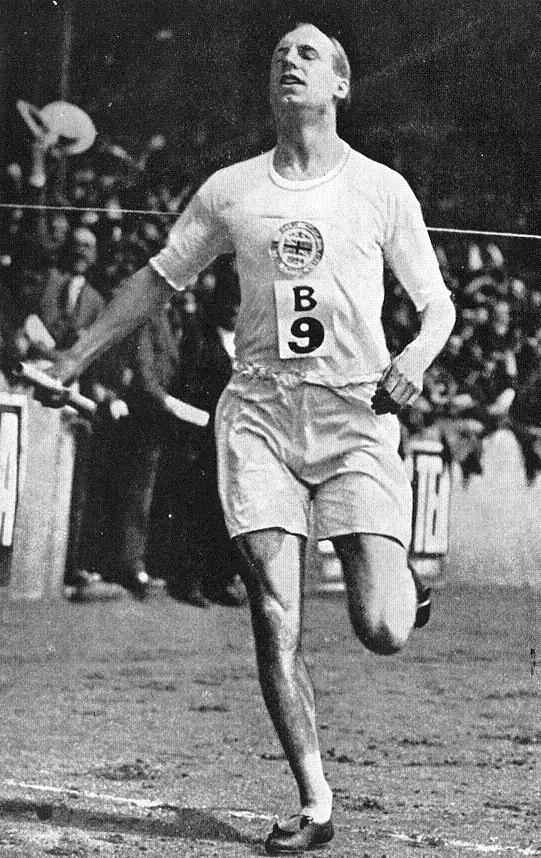
I’ve studied Eric Liddell’s life in particular and I thought that Mr. Metaxas did a great job of showing that Chariots of Fire was just the beginning for Liddell. Metaxas pulls together many interesting details and quotes on each person and I learned many new things about each of them, including Liddell.

On George Washington I also recommend “The Bulletproof George Washington.”

Bones:

Along with Metaxas criticisms for his snarky political partisanism, I can add that we could have seen it coming if we had thought more critically about his biographies—the full title is Seven Men: And the Secret of Their Greatness. And all seven of them indeed are great men. Two were heads of state (George Washington and John Paul II);  two others were involved in politics (Chuck Colson and William Wilberforce); two others were important athletes (Eric Liddell and Jackie Robinson); the seventh, Bonhoeffer, is mainly interesting to Metaxas because of the intrigue he was involved in against Hitler. Metaxas is often straightforward in his Christian moral stance on key social issues: of course we all oppose slavery (like Wilberforce), and Hitler (like Bonhoeffer), and segregation (like Robinson).

The deeper issue at play is, why did Metaxas choose these men, and not others? He chose these men because his worldview is Christian but it is not spiritual. He could not celebrate a bereaved missionary toiling in Mongolia like James Gilmour; he could not rain accolades on an elderly, multilingual scholar like Bishop French, dying in the desert in his twilight years for the hope of the sons of Ishmael. Metaxas would furrow his brow at such a story, and think in his heart of hearts that a scholar like French could have married himself to the institutions of his day, and gained tenure in any of the best universities of Europe, and effected change in that way, because that is the only path to change visible to Metaxas. If I have learned anything from Chesterton, Browning, and Tolkien, it is that morality united to power does not make the world Christian, and fails even to make the world moral. As much as we love the stories of the famous and powerful, we must celebrate in our fellowships the invisible and even untimely victories of hearts turned toward righteousness.

All in all, these are very good stories, but there are dozens of more spiritually-minded Christian biographies out there.


New Worlds Waiting

“The well-read man reads, not that he may boast of the books that he has read, nor that he may quote them or criticize them or discuss them or in any other way display with elation his familiarity with them, nor even in order that he may enlarge the range of his own mind and multiply the number of his own ideas, but just because here are new worlds waiting— worlds so wonderful that he cannot deny himself the raptures that they offer.”

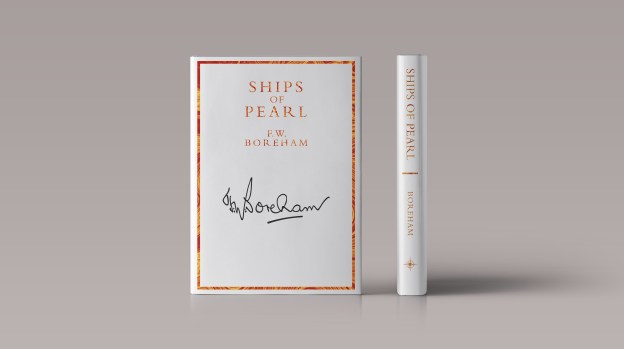
F. W. Boreham, Ships of Pearl.

Review: Jacob and the Divine Trickster

Rating: ★★★★

Author: John E. Anderson is a Lutheran Old Testament scholar. Jacob and the Divine Trickster is Anderson’s dissertation written at Baylor and published with the recommendation of Walter Brueggemann.

Genre: Academic theology, narrative theology.

Overview: Jacob and the Divine Trickster is a theological study of the Jacob cycle. Anderson is primarily concerned with theology proper and not with textual-critical issues. The introduction sets up a challenge for readers who try to iron out tensions in the biblical text. In particular, Anderson believes that God is unquestionably implicated in several deceptive acts in Genesis—although the heavy term ‘deception’ is somewhat lightened in his definition towards “withholding information.”

Anderson develops this idea of cunning as a divine attribute, boldly referring to Jehovah as a “trickster God.” I agree, however, with Diana Lipton’s review:

Even if I can come to terms with the idea that God tricks people, I cannot see tricksterism (this may be the wrong term but no better one comes to mind) as a divine attribute, as Anderson seems to.

The key to Anderson’s book is that he catalogues all the ways that the Lord worked for Jacob, in fulfillment of the ancestral promises (in Gen. 12 and 28). This overall optimistic assessment of Jacob will prove to have staying power, I believe, if we can accept the Eastern understanding of ethics given to us in Genesis.

Meat:

Anderson follows the lead of Walter Brueggemann, Eric Seibert, and others in addressing ethical difficulties in the Old Testament head on. Whereas a fundamentalist take would ignore difficulties and systematic theologians cancel them out, Anderson chooses to lean into the difficulties he encounters in the text.

Although its main thesis is overstated in my opinion, the book is an important contribution, as it challenges 1) interpretations that assess Jacob’s deceptive behavior negatively; 2) interpretations that seek to distance God from Jacob’s behavior, when God is real and present in the Genesis text, ensuring the fulfillment of his promise.

A simple review like this doesn’t provide space for the many interesting points in the book. But I can pose some questions evoked while reading this book:

  • If Jacob’s repeated deception of Esau was immoral, would God have allowed him to obtain divine blessing by those means? (Is God’s blessing really so mechanistic that you could obtain godly blessing in an ungodly way?!)
  • Can we trust Jacob’s statement (in 27:20) that the Lord helped him to deceive his father? What if Isaac was in the wrong anyway?
  • What about 31:5, 7, and 9, where Jacob says God is working on his behalf against Laban?
  • Are Jacob’s deceptive acts ethically difficult for non-Western readers? Wouldn’t many Asians see him as merely cunning, a guy with street smarts, who knows how to be in the right place at the right time?

Bones:

Anderson’s book brings up a major ethical problem: is Jacob really immoral, or is it our European ethical framework that cause us to place limitations on the text? Anderson doesn’t answer this question for contemporary readers, in my opinion. He does pretty convincingly argue, though, that the Bible itself does not make excuses for Jacob’s deceptive acts.

We All Say “Father”

Lately, I have been seeing a story connecting the leader of an American political party to a Christian revival that happened in the Isle of Lewis in the early twentieth century.

The Isle of Lewis stories are legendary. I still remember the awe they inspired when I learned about them over a decade ago. But here are some reasons that I think this video is insulting to Christian doctrine:

  • It is a distinctive Christian doctrine that every person can and should be born again. We ask God to “renew a right spirit” within us. When we do this, God can make us his sons and daughters. This miracle of renewal may come to a whole family at once, as seen in Acts 16:15, Acts 18:8, and perhaps 1 Corinthians 1:16. But the miracle of regeneration is, even in those cases, an individual miracle that involves submission of the will.
  • It is a distinctive Christian doctrine that you are personally accountable to God for how you live. It doesn’t matter how great your parents are or were. There are no coattails to grab hold of on the way to heaven.
  • It is a distinctive Christian doctrine that righteousness is both accounted to us through the work of Christ and proven by how we live as a result of that. It doesn’t matter who you met or where you were; that doesn’t make you a good person. I could receive prayer from the Pope, Gandhi, and Joel Osteen, and go home just as filthy a sinner as I began.

The raw implication of this story is that a metaphysical righteousness or anointing was passed on to this political leader through a personal connection that his mother had. The very thought is both revolting and utterly foreign to New Testament teaching about the world. The idea that we are righteous or wicked through what we touch is not a Christian concept. It is what is inside us that makes us unclean.

In the Bible, certain miracles do happen merely through contact (i.e., without a specific petition to God), such as the man who revived by touching Elisha’s bones (2 Kings 13:21); the healings through Paul’s handkerchiefs were also used by God (Acts 19:11-12), but it would not be improper to infer that these were merely tokens used to inspire faith in the Messiah, which is the one root of Christian righteousness.

The New Testament addresses this issue of “spiritual grandchildren” very specifically:

“To them gave he power to become the sons of God, even to them that believe on his name: which were born, not of blood, nor of the will of the flesh, nor of the will of man, but of God.” (John 1:12-13, KJV)

John writes that we are not born of blood, or of the flesh, or of a man (i.e., a husband). You can take these specifically to refer in turn to DNA, reproduction, and to inheritance, or you can take the three of them as a figure of speech which confirms in triplicate the truth that I began this post with: it doesn’t matter how great your parents were. There are no spiritual grandchildren. When we look to God, none of us say, “Uncle” or “Grandpa.” We all say “Father.”

Review: Lord Kitchener

Rating: ★★½

Author: G. K. Chesterton was a devoutly Catholic journalist, poet and novelist of the early 20th century. His most apt nickname is “The Prince of Paradox.”

Genre: Eulogy.

Overview:

Lord Kitchener (1917) is a long eulogy of Herbert (Lord) Kitchener, who held a number of positions in the British colonies, including field marshal (the highest-ranking general) and Secretary of State for War. He oversaw combat at the Battle of Omdurman (in Sudan), in the Second Boer War, and the Western Front during World War I. He died in 1916 when the HMS Hampshire struck a German mine on the way to negotiate with the Russian . Kitchener’s image was used in patriotic advertising and military recruitment posters for decades afterwards.

Kitchener is held in notoriety today for his cold and calculating methods among the Boers. His colonial escapades and Chesterton’s patriotism in today’s post-colonial intellectual climate make this one of his least popular books, although it is a somewhat interesting lens into a moment in time.

I am not sure why Chesterton wrote this eulogy. Lord Kitchener was the poster child of British imperialism, and Chesterton wrote bluntly that he was against imperialism (see, e.g,, How To Help Annexation, 1917). A few years earlier, in A Miscellany of Men (1912), he had even made light of Kitchener’s efforts in East Africa:

Here we have evident all the ultimate idiocy of the present Imperial position. Rhodes and Kitchener are to conquer Moslem bedouins and barbarians, in order to teach them to believe only in inevitable fate. We are to wreck provinces and pour blood like Niagara, all in order to teach a Turk to say “Kismet”; which he has said since his cradle. We are to deny Christian justice and destroy international equality, all in order to teach an Arab to believe he is “an agent of fate,” when he has never believed anything else. (“The Sultan”)

This book is not really what we would call “classic” Chesterton, so I don’t recommend it for devotional or leisurely reading, unless you are highly interested in World War I.

Meat:

There are basically two interesting anecdotes in this booklet, which are short enough to include them in this review. The first involves Kitchener’s acculturation among the Arabs:

Well-known English journalist, Bennet Burleigh, wandering near Dongola, fell into conversation with an Arab who spoke excellent English, and who, with a hospitality highly improper in a Moslem, produced two bottles of claret for his entertainment. The name of this Arab was Kitchener; and the two bottles were all he had. (p. 6)

The other interesting story about Kitchener was a war tactic he used in the Battle of Omdurman. Knowing that supplies were hard to come by in the desert, Kitchener worked with a cunning engineer to create a new railway line for he express purpose of winning the war. The army built while fighting, and as a result of this clever tactic, they utterly overwhelmed Sudan’s Mahdist army.

The fact that Kitchener fought with rails as much as with guns rather fixed from this time forward the fashionable view of his character. He was talked of as if he were himself made of metal, with a head filled not only with calculations but with clockwork. (p. 10)

Bones:

Some reviewers have regarded this book as a “short biography”; rather, it definitely excludes many aspects of Kitchener’s life, and eulogies are necessarily published with the purpose of making the public aware of the achievements, honor, and legacy of the deceased. As such, it may be suitable as an introduction to Kitchener’s life, but Christian writers would do well to be aware that he was not so universally regarded as a “hero.”

For instance, one of Kitchener’s failures, which would not receive mention so close to his death, is the use of concentration camps to control Boer families during the Second Boer War. This was a strategy he had inherited from a previous British commander, and it turned out to be far beyond the capacity of the British armies to control, leading to overpopulation, disease, and the death of 26,730 people (including more than 20,000 children).

Although Chesterton has many fantastic books, many of his writings during World War I were understandably patriotic, and these may be considered a weak point in his writing career.

Related Works: The Appetite of Tyranny, The Crimes of England.

Quotes:

“He was the embodiment of an enormous experience which has passed through Imperialism and reached patriotism. He had been the supreme figure of that strange and sprawling England which lies beyond England.” (p. 13)

Free Books by Watchman Nee (COMPLETE)

Around the time I came to Christ, I found in my parents’ house several Watchman Nee books inscribed from a family member who had passed many years before: Sit, Walk, StandThe Normal Christian Life; Love Not the World; and Changed into His Likeness. As soon as I read Sit, Walk, Stand, I was hooked.

I found out that his other books were only a few dollars each at a used bookstore, and I began devouring them: Practical Issues of This Life, Spiritual Knowledge, The Release of the Spirit—his little books seemed to me an endless treasure hoard of straightforward teaching. He was the first Christian author I got really hooked on.

Fortunately, his books are easier to find than ever. They have been in digital format for many years, and his primary publisher, Living Stream Ministry, has made his books available for online reading for free, no strings attached. The only catch is, they are not for download (at least, not legally, and not here):

Free Books by Watchman Nee (COMPLETE)

Below I’ve marked with asterisks (***) the books by him which I recommend most. Living Stream’s website uses

List of Book Titles (Alphabetical):

  1. The Assembly Life
  2. Authority and Submission
  3. The Breaking of the Outer Man and the Release of the Spirit***
  4. Burden and Prayer
    [Changed into His Likeness]***
  5. The Character of the Lord’s Worker
  6. Christ Becoming Our Wisdom
  7. Christ is All Spiritual Matters and Things
  8. Christ our Righteousness
  9. Church Affairs
  10. The Christian Life and Warfare (Works, Set 1, Vol. 1)
  11. The Word of the Cross (Works, Set 1, Vol. 2)
  12. The Christian (1) (Works, Set 1, Vol. 3)
  13. The Christian (2) (Works, Set 1, Vol. 4)
  14. The Christian (3) (Works, Set 1, Vol. 5)
  15. The Christian (4) (Works, Set 1, Vol. 6)
  16. The Christian (5) (Works, Set 1, Vol. 7)
  17. The Present Testimony (1) (Works, Set 1, Vol. 8)
  18. The Present Testimony (2) (Works, Set 1, Vol. 9)
  19. The Present Testimony (3) (Works, Set 1, Vol. 10)
  20. The Present Testimony (4) (Works, Set 1, Vol. 11)
  21. The Spiritual Man (1) (Works, Set 1, Vol. 12)
  22. The Spiritual Man (2) (Works, Set 1, Vol. 13)
  23. The Spiritual Man (3) (Works, Set 1, Vol. 14)
  24. Study on Matthew (Works, Set 1, Vol. 15)
  25. Study on Revelation (Works, Set 1, Vol. 16)
  26. Notes on Scriptural Messages (1) (Works, Set 1, Vol. 17)
  27. Notes on Scriptural Messages (2) (Works, Set 1, Vol. 18)
  28. Notes on Scriptural Messages (3) (Works, Set 1, Vol. 19)
  29. Questions on the Gospel (Works, Set 1, Vol. 20)
  30. The Christian (1934-1940) (Works, Set 2, Vol. 21)
  31. The Assembly Life & The Prayer Ministry of the Church (Works, Set 2, Vol. 22)
  32. The Song of Songs & Hymns (Works, Set 2, Vol. 23)
  33. The Overcoming Life (Works, Set 2, Vol. 24)
  34. Collection of Newsletters (1) (Works, Set 2, Vol. 25)
  35. Collection of Newsletters (2) & Watchman Nee’s Testimony (Works, Set 2, Vol. 26)
  36. The Normal Christian Faith (Works, Set 2, Vol. 27)
  37.  The Gospel of God (1) (Works, Set 2, Vol. 28)
  38. The Gospel of God (2) (Works, Set 2, Vol. 29)
  39. The Normal Christian Church Life (Works, Set 2, Vol. 30)
  40. The Open Door (1) (Works, Set 2, Vol. 31)
  41. The Open Door (2) (Works, Set 2, Vol. 32)
  42. The Glorious Church (Works, Set 2, Vol. 34)
  43. The God of Abraham, Isaac, and Jacob (Works, Set 2, Vol. 35)
  44. Central Messages (Works, Set 2, Vol. 36)
  45. General Messages (1) (Works, Set 2, Vol. 37)
  46. General Messages (2) (Works, Set 2, Vol. 38)
  47. Conferences, Messages, and Fellowship (1) (Works, Set 2, Vol. 41)
  48. Conferences, Messages, and Fellowship (2) (Works, Set 2, Vol. 42)
  49. Conferences, Messages, and Fellowship (3) (Works, Set 2, Vol. 43)
  50. Conferences, Messages, and Fellowship (4) (Works, Set 2, Vol. 44)
  51. Conferences, Messages, and Fellowship (5) (Works, Set 2, Vol. 45)
  52. Conferences, Messages, and Fellowship (6) (Works, Set 2, Vol. 46)
  53. The Orthodoxy of the Church & Authority and Submission (Collected Works, Set 3, Vol. 47)
  54. Messages for Building Up New Believers (1) (Collected Works, Set 3, Vol. 48)
  55. Messages for Building Up New Believers (2) (Collected Works, Set 3, Vol. 49)
  56. Messages for Building Up New Believers (3) (Collected Works, Set 3, Vol. 50)
  57. Church Affairs (Collected Works, Set 3, Vol. 51)
  58. The Character of the Lord’s Worker (Collected Works, Set 3, Vol. 52)
  59. The Ministry of God’s Word (Collected Works, Set 3, Vol. 53)
  60. How to Study the Bible & The Breaking of the Outer Man and the Release of the Spirit (Collected Works, Set 3, Vol. 54)
  61. The Ministers & The Open Door (Collected Works, Set 3, Vol. 55)
  62. The Open Door & The Present Testimony (Collected Works, Set 3, Vol. 56)
  63. The Resumption of Watchman Nee’s Ministry (Collected Works, Set 3, Vol. 57)
  64. Spiritual Judgment and Examples of Judgment (Collected Works, Set 3, Vol. 58)
  65. Miscellaneous Records of the Kuling Training (1) (Collected Works, Set 3, Vol. 59)
  66. Miscellaneous Records of the Kuling Training (2) (Collected Works, Set 3, Vol. 60)
  67. Matured Leadings in the Lord’s Recovery (1) (Collected Works, Set 3, Vol. 61)
  68. Matured Leadings in the Lord’s Recovery (2) (Collected Works, Set 3, Vol. 62)
  69. Concerning the Lord’s Day Message Meeting
  70. Deep Calls unto Deep
  71. Expecting the Lord’s Blessing
  72. Fact, Faith, and Experience
  73. The Flow of the Spirit
  74. Further Talks on the Church Life
  75. The Glorious Church
  76. God is Willing
  77. The God of Abraham, Isaac, and Jacob
  78. God’s Eternal Plan
  79. God’s Keeping Power
  80. God’s Overcomers
  81. God’s Plan and God’s Rest
  82. The Gospel of God (2 volume set)
  83. Head Covering
  84. The Holy Spirit and Reality
  85. How to Know God’s Will
  86. How to Study the Bible
  87. Key to Prayer, The
  88. The Life of the Altar and the Tent
  89. Messages for Building Up New Believers, Vol. 1
  90. Messages for Building Up New Believers, Vol. 2
  91. Messages for Building Up New Believers, Vol. 3
  92. Messages Given During the Resumption of Watchman Nee’s Ministry (2 volume set)
  93. The Messenger of the Cross***
  94. Ministering to the House or to God?
  95. The Ministry of God’s Word
    [The Mystery of Creation?]
  96. The Mystery of Christ
  97. Baptism (New Believer’s Series (1))
  98. Terminating the Past (New Believer’s Series (2))
  99. Separation from the World (New Believer’s Series (3))
  100. Witnessing (New Believer’s Series (4))
  101. Leading Men to Christ (New Believer’s Series (5))
  102. If Anyone Sins (New Believer’s Series (6))
  103. Consecration (New Believer’s Series (7))
  104. Confession with the Mouth (New Believer’s Series (8))
  105. Reading the Bible (New Believer’s Series (9))
  106. Meeting (New Believer’s Series (10))
  107. Prayer (New Believer’s Series (11))
  108. Early Rising (New Believer’s Series (12))
  109. Confession and Recompense (New Believer’s Series (13))
  110. Forgiveness and Restoration (New Believer’s Series (14))
  111. Deliverance (New Believer’s Series (15))
  112. Our Life (New Believer’s Series (16))
  113. Seeking God’s Will (New Believer’s Series (17))
  114. Governmental Forgiveness (New Believer’s Series (18))
  115. The Discipline of God (New Believer’s Series (19))
  116. The Discipline of the Holy Spirit (New Believer’s Series (20))
  117. Withstanding the Devil (New Believer’s Series (21))
  118. Loving the Brothers (New Believer’s Series (22))
  119. The Priesthood (New Believer’s Series (23))
  120. The Body of Christ (New Believer’s Series (24))
  121. The New Covenant (1952 Edition)
  122. The Normal Christian Church Life
  123. The Normal Christian Faith
    [The Normal Christian Worker = The Character of the Lord’s Worker]
  124. The Orthodoxy of the Church
  125. The Overcoming Life
  126. Praising
  127. A Prayer for Revelation
  128. The Prayer Ministry of the Church
  129. Questions on the Gospel
    [The Release of the Spirit = The Breaking of the Outer Man and the Release of the Spirit]
  130. The Renewing of the Mind
  131. A Righteous Forgiveness
  132. Self-Knowledge and God’s Light
  133. Separated Unto the Lord
  134. The Sinners’ Friend
  135. The Song of Songs
  136. Special Grace and Reserve Grace
    [Spiritual Authority = Authority and Submission?]
    [Spiritual Knowledge?]
    The Spiritual Man (3 volume set)
  137. Spiritual Progress
  138. A Sure Salvation
  139. Tell Him
  140. The Time of the Cross
  141. The Treasure in Earthen Vessels
  142. The Two Natures
  143. Two Principles of Living
  144. Watchman Nee’s Testimony
  145. What Are We?
  146. The Word of the Cross
  147. The Worship That Draws Near
  148. Worshipping the Ways of God

List of Booklet Titles

  1. And Peter [booklet]
  2. The Body of Christ (W.N. Booklet)

Review: Eugenics and Other Evils

Rating: ★★★

Author: G. K. Chesterton was a devoutly Catholic journalist, poet and novelist of the early 20th century. His most apt nickname is “The Prince of Paradox.”

Overview:

Eugenics and Other Evils (1922) delineates the scientific and ethical fallacies of “eugenics,” the science of human breeding to improve the race, which was called by its proponents “the self-direction of human evolution.” The first English proponent of these ideas was Francis Galton, half-cousin of Charles Darwin, who coined the term ‘eugenics’ in 1883. Chesterton is today known as one of the earliest and most vocal opponents of this pseudo-science.

Here it’s necessary to give some background on what eugenics is, before I can break down Chesterton’s objections to it, and what it means for us today.

The History of Eugenics

Many reviewers have started out by saying that eugenics is now defunct, but this is not exactly true. During a period extending until 1952, as many as 20,000 mentally ill patients were sterilized in the United States. This happened after the post-WWII Nuremberg Trials had declared such acts “crimes against humanity.” In the Arabian Peninsula, where cousin marriage is considered ideal among many families, screenings are frequently given that determine the likelihood of birth defects; so, in that sense, a soft form of genetic planning is being practiced in some of the world’s richest societies, and it is not without controversy.

Eugenics was also a key motivator in the promotion of the birth control movement. Margaret Sanger, founder of Planned Parenthood, “increasingly rationalized birth control as a means of reducing genetically transmitted mental or physical defects, and at times supported sterilization for the mentally incompetent.” The biographer adds, “While she did not advocate efforts to limit population growth solely on the basis of class, ethnicity or race, and refused to encourage positive race-based eugenics, Sanger’s reputation was permanently tainted by her association with the reactionary wing of the eugenics movement.” [1] This last sentence is very controversial; others have written elsewhere that Sanger did promote race-based eugenics, but here I am getting too far afield.

Chesterton’s Objections to Eugenics

Chesterton’s arguments against eugenics are somewhat scattered in his book, but they may be grouped into ethical, economic, practical, and political objections.

The ethical objections are the most obvious. In Chesterton’s time, eugenics was being pegged as the end of “feeble-mindedness”; the thought was, mentally ill parents have mentally ill children, so all we need to do is prevent the mentally ill from copulating. In contemporary terminology, this leaves little or no room for those who are “disabled” or “differently abled.” It was unashamed ableism, and it was being promoted by great minds like H. G. Wells, George Bernard Shaw, Winston Churchill, Theodore Roosevelt, and Bertrand Russell. Eugenists believed that the disabled were merely a burden on the rest of society; in capitalist thought, they provided no value inasmuch as they could not contribute to industry.

The economic objections are just as damaging. Here it may be pointed out that abortion, in common with eugenics, is touted as a way of aiding the poor by decreasing their family responsibilities. In fact, Chesterton points out, In America, black women have almost triple the abortion rate that white women have (27.1 / 1000 among blacks; 10 / 1000 among whites). Classism can easily masquerade as either eugenics or abortion, and it can be a way of keeping minorities minorities. Both are destructive for diversity.

As a practical objection, Chesterton points out that eugenics was on shaky ground scientifically, and almost carried the absurdity of the famous statement, “we have to pass the bill to find out what’s in it.” In Chesterton’s day, there simply was not sufficient knowledge of the genome to even attempt such widespread changes as some were promoting.

There cannot be such a thing as the health adviser of the community, because there cannot be such a thing as one who specialises in the universe. (p. 26)

Again, a policy of eugenics would require a vast quantity of knowledge that, even in 2020, evades us. Even with modern genome mapping, there is still much that we do not know and cannot predict:

I simply cannot conceive any responsible person proposing to legislate on our broken knowledge and bottomless ignorance of heredity. (p. 31)

Eugenics also operates under the assumption that we know what the results will be.

Marry two handsome people whose noses tend to the aquiline, and their baby (for all you know) may be a goblin with a nose like an enormous parrot’s. (p. 32)

Chesterton’s political objections mainly refer to the limitation of state power. Chesterton considered himself a democrat in the most literal, non-partisan sense of the word; that is, he believed in “the common people.” As such, he could not support a politicized pseudo-scientific movement, like eugenics, that would lead to a rapid expansion of state power. He did advocate the expansion of power in special circumstances—such as the 2019-2020 coronavirus pandemic—provided that these were regarded as special circumstances. For more on this, read what follows.

Meat:

On its most basic level, this book is a statement of the value of human life. This is a topic where American Catholics have been, I believe, more consistent in contemporary thought than American Protestants. Wherever else our philosophy turns, it must begin with the axiom of the great value, not of people or personhood, but of a person.

In the matter of fundamental human rights, nothing can be above Man, except God. (p. 27)

There were two other sections of the book that I thought any modern reader would find very interesting.

The first was Chesterton’s thoughts on the limitation of state power. Libertarians will be licking their lips when the read chapter titles like “The Eclipse of Liberty” and “The Transformation of Socialism”; however, what Chesterton espouses here is not libertarianism, or socialism, or capitalism. He does point out eugenic policies could lead to the bloating of state power, and would also be oppressive to the poor. What he says is happening instead, is that we are losing our liberties to the state, and we are oppressing the poor, and therefore are getting the worst of both socialism and capitalism, without getting the benefits of either.

The compromise eventually made was one of the most interesting and even curious cases in history. It was decided to do everything that had ever been denounced in Socialism, and nothing that had ever been desired in it. Since it was supposed to gain equality at the sacrifice of liberty, we proceeded to prove that it was possible to sacrifice liberty without gaining equality. (p. 71)

The second section of the book that intrigued me was in the very last chapter. There, the author tells the strange and true anecdote of “Eugenette,” a poster-child of eugenics in its heyday:

Round about the year 1913 Eugenics was turned from a fad to a fashion. Then, if I may so summarise the situation, the joke began in earnest. The organising mind which we have seen considering the problem of slum population, the popular material and the possibility of protests, felt that the time had come to open the campaign. Eugenics began to appear in big headlines in the daily Press, and big pictures in the illustrated papers. A foreign gentleman named Bolce, living at Hampstead, was advertised on a huge scale as having every intention of being the father of the Superman. It turned out to be a Superwoman, and was called Eugenette. The parents were described as devoting themselves to the production of perfect pre-natal conditions. They “eliminated everything from their lives which did not tend towards complete happiness.” Many might indeed be ready to do this; but in the voluminous contemporary journalism on the subject I can find no detailed notes about how it is done. Communications were opened with Mr. H.G. Wells, with Dr. Saleeby, and apparently with Dr. Karl Pearson. Every quality desired in the ideal baby was carefully cultivated in the parents. (p. 78)

Bones:

This was not by any means a favorite among Chesterton’s many wonderful writings. It was mainly worth reading simply because Chesterton wrote it. I recommend beginning with his other books of non-fiction.

Chesterton associates eugenics with several German authors, and it is today associated with the evils of Nazi Germany. Ironically, modern sources associate the twentieth-century popularization of eugenics with the United Kingdom. (On this point, you can compare my reviews of The Crimes of England and The Appetite of Tyranny.)

Some of Chesterton’s objections to eugenics have weaknesses that would not have been apparent in 1922. For instance, although our knowledge is very limited, we do have a much more certain knowledge of the causes of certain birth defects than we did in 1922, and we are capable of avoiding some of them.

Quotes:

On expansion of state power in exceptional circumstances, such as war or plague:

“Now it is perfectly plain that government ought to have, and must have, the same sort of right to use exceptional methods occasionally that the private householder has to have a picnic or to sit up all night on New Year’s Eve. The State, like the householder, is sane if it can treat such exceptions as exceptions. Such desperate remedies may not even be right; but such remedies are endurable as long as they are admittedly desperate. Such cases, of course, are the communism of food in a besieged city; the official disavowal of an arrested spy; the subjection of a patch of civil life to martial law; the cutting of communication in a plague; or that deepest degradation of the commonwealth, the use of national soldiers not against foreign soldiers, but against their own brethren in revolt. Of these exceptions some are right and some wrong; but all are right in so far as they are taken as exceptions. The modern world is insane, not so much because it admits the abnormal as because it cannot recover the normal.” (p. 12)

Read: This book is available for free in multiple formats on Project Gutenberg, LibriVox, and the Kindle Store.